Where to go on a motorbike in Bologna and the surrounding area
Updated on 04 September 2026 From Karoline Villacidro

Updated on 04 September 2026 From Karoline Villacidro
From Bologna, you can reach Apennine passes, lakes, picturesque villages and medieval fortresses by motorbike in under 2 hours.
Among the most interesting motorbike routes are the Raticosa Pass, the lakes of Suviana and Brasimone, Tolè, the Corno alle Scale mountain range, Dozza and the Santerno River valley.
Then there are the
short trips, such as Monteveglio, which is perfect for an afternoon in the hills, and Pieve di
Cento, which takes you into the Bologna plain, amongst porticoes, medieval gates and
museums.
The distances given
are based on a starting point in the centre of Bologna; they should therefore be regarded as a mere
guide and are subject to variation.
The Raticosa Pass is the most iconic and popular route for those who associate the Bolognese Apennines with motorcycling. It lies at an altitude of 968 metres and has long been a meeting point for those arriving from both the Bolognese and Tuscan sides.
It is here that you’ll find the Chalet Raticosa, the ‘Mecca’ for all motorcyclists who stop off to refuel and socialise.
From the centre of Bologna, it’s about 60 km and takes 1 hour and 15 minutes, without stops. One option is to follow the Futa route, the SS65, through Pianoro, Loiano and Monghidoro. After the valley floor, the road climbs with sweeping bends and scenic stretches.
A second route passes through Idice and Monterenzio, along the SP7 Valle dell’Idice. Here, the route takes in the Parco dei Gessi Bolognesi and the Calanchi dell’Abbadessa before climbing towards the Apennines. It is a more undulating route, with several villages and roads that frequently vary in width.
From Raticosa, you can continue for a further 12–15 km towards the Passo della Futa. The road winds through woods, meadows and mountain bends.

A stretch of countryside in the Parco dei Gessi and Calanchi dell’Abbadessa. AI edited
Before reaching the Raticosa Pass, whilst staying on the SS65, stop at the Sanctuary of the Madonna dei Boschi and, further up, at the Monte Calvario viewpoint in the municipality of Monghidoro. From here, you’ll be treated to a stunning view of the rolling hills.
In addition, in the municipality of Firenzuola (FI), outside the Bologna area, take a short break at the German Military Cemetery at Futa, a memorial site linked to the Second World War and the Gothic Line.
This route heads towards Zola Predosa and climbs up to Monte Pastore along the SP26 Valle del Lavino. The first section winds through the hills to the west of Bologna, amongst fields, rows of vines and small villages. Further on, the road gains altitude and the hairpin bends begin.
Tolè is about 37 km from the centre of Bologna. Under normal conditions, the journey takes around 50 minutes. It’s a good destination for those looking for a half-day ride, with the option to extend it towards Castel d’Aiano and Labante.
Tolè boasts more than 100 works of art scattered amongst its alleyways, squares, fountains and walls. Paintings, sculptures and murals form an open-air collection that you can explore by leaving your motorbike behind and walking through the centre.
From Tolè, you can continue on to the villages of Santa Lucia, Rocca di Roffeno and Castel d’Aiano. Some sections are narrow: take them slowly, especially near built-up areas.

Village of Tolè (BO)
In Tolè, stop off to explore the art trail and murals. Just outside the village, the Sanctuary of the Madonna di Brasa offers a religious and historical stop.
For the return journey, you can opt for a loop route by turning off onto the SP67 towards the marvellous Labante Caves, formed from travertine known locally as ‘sponga’, then descending onto the SS64 Porrettana to return to the city.
A visit to the Labante Caves involves a short walk; here you can stop to rest, or even enjoy a picnic or a barbecue at the designated cooking areas in the authorised green space.
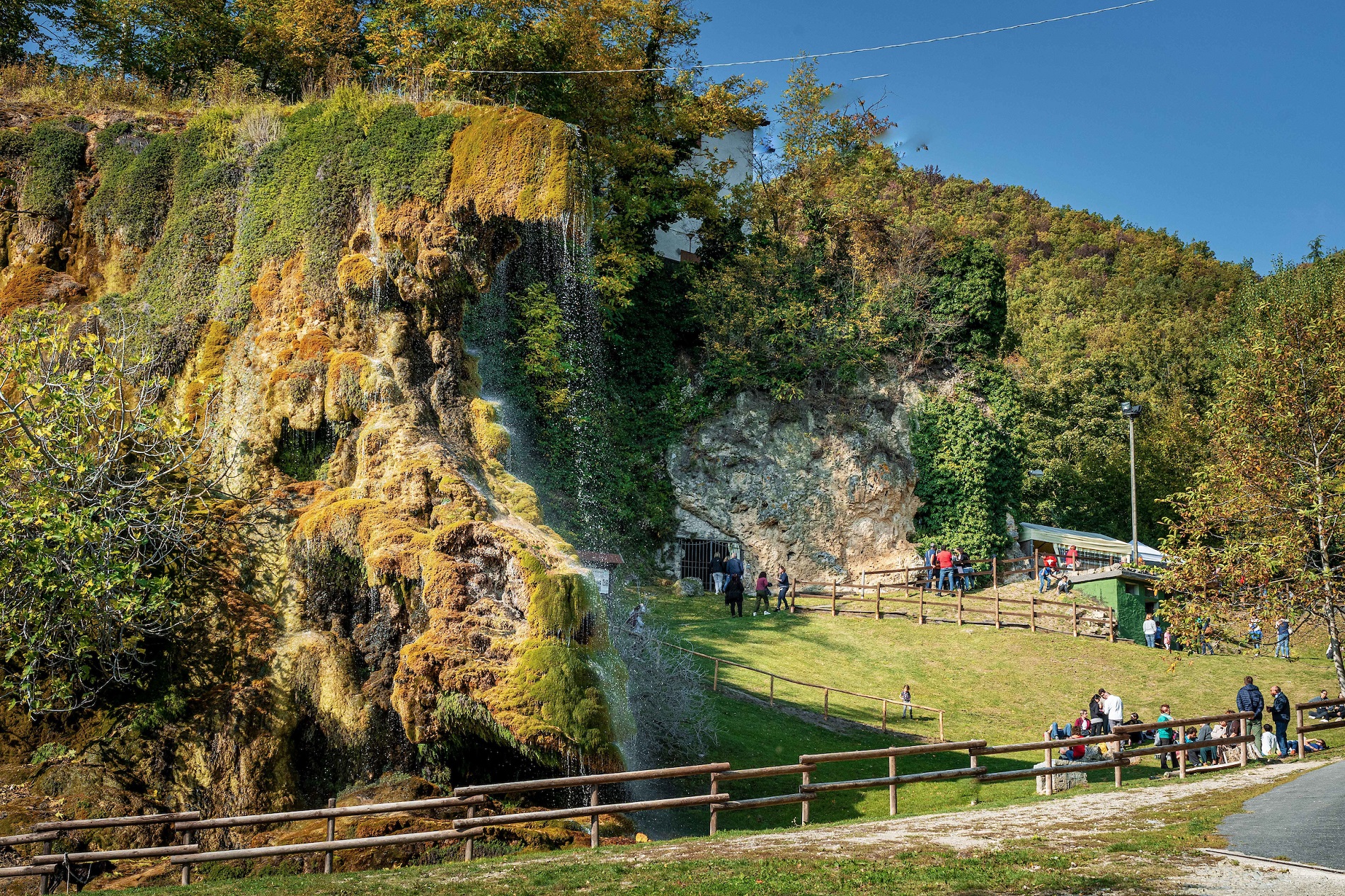
Labante Caves, Castel d'Aiano (BO)
To reach Corno alle Scale, follow the SS64 Porrettana to Silla (BO), then take the SP324 up towards Lizzano in Belvedere and Vidiciatico, before continuing on the SP71 to Cavone.
Set your sat-nav for Cavone, at the foot of the Corno alle Scale mountain range. From the centre of Bologna, it is about 82 km and a 1-hour 35-minute drive, assuming no traffic and no stops.
The initial stretch along the Reno Valley is mainly about making good progress. After Silla, the route changes: the gradient increases, as do the bends and the sections through woodland. The temperature can drop considerably compared to Bologna, even on the same day.
Stop off at Vidiciatico before the final stretch. The village centre still features the four arched entrances, the apse of the old church and the bell tower next to the little square.
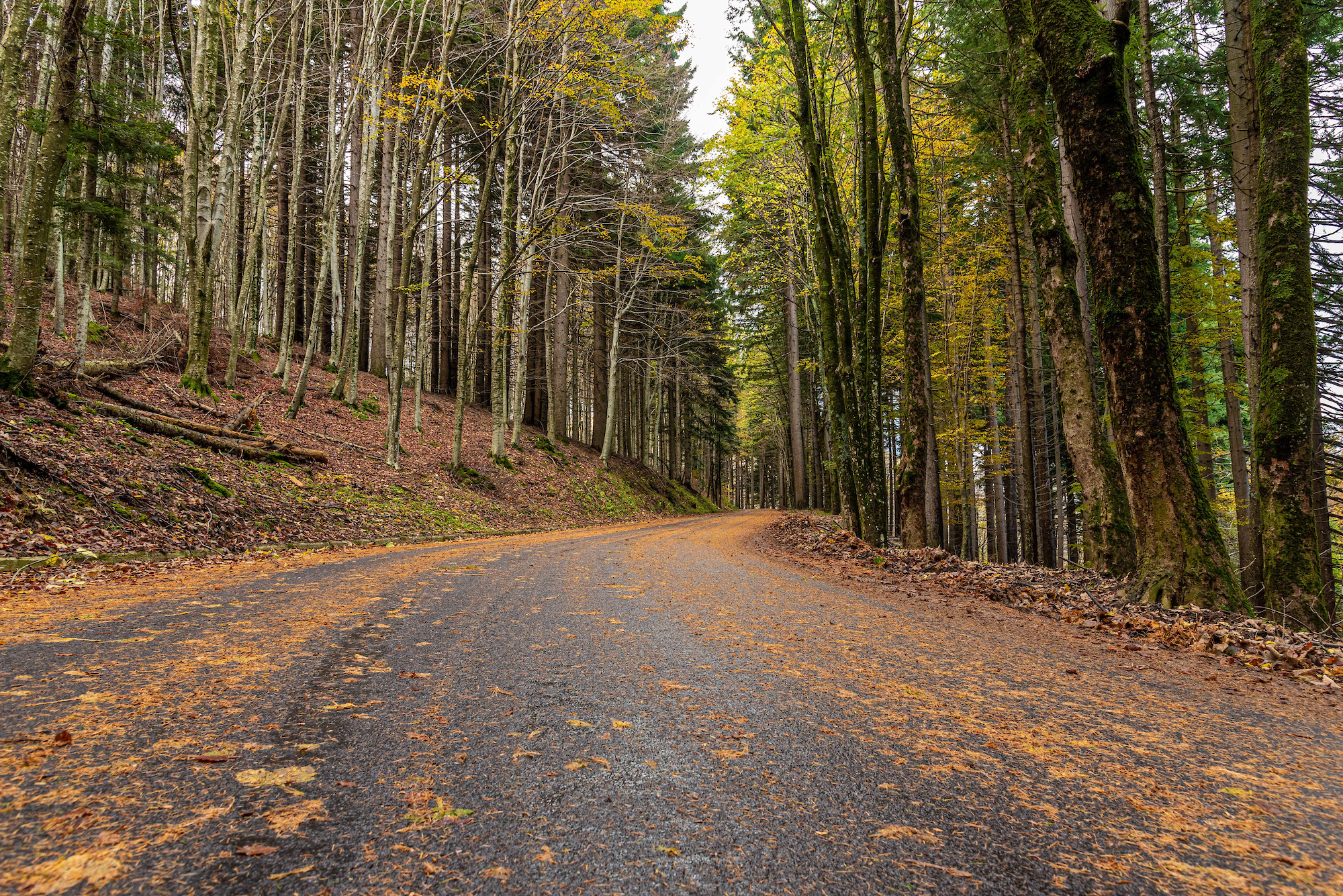
A stretch of road towards Corno alle Scale in autumn
On the climb towards Cavone, you can take a detour to the Sanctuary of Madonna dell’Acero. The path to the Dardagna Waterfalls also starts from the sanctuary; this should be tackled on foot and with suitable footwear.
At Cavone you’ll find a small lake, a mountain refuge and access to the trails. The summit (cross) of Corno alle Scale can only be reached on foot after a climb with a considerable elevation gain.
Lake Suviana is about 60 km from the centre of Bologna, a journey taking 1 hour and 10 minutes. The most direct route follows the SS64 Porrettana and leaves the Reno valley near Riola.
The bends come in the second half of the journey. The lake comes into view after a climb through woods and small villages. On the shores there are rest and picnic areas, refreshment points and spaces used for outdoor activities during the warmer months.
➝ On that note, read our guide to the perfect spots for picnics and barbecues in the Bologna area.
The route can continue towards Lake Brasimone, which is higher up and more secluded, linking the two lakes via the scenic SP40, before returning, if desired, along the SP39 towards Castiglione dei Pepoli. Allow plenty of time for the journey between the two lakes: the roads are local, and a stop in a village can easily extend the day.
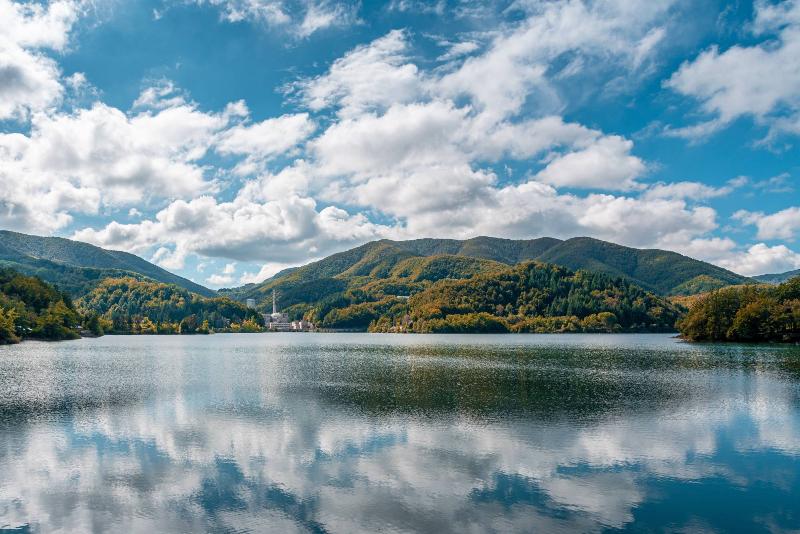
Lake Brasimone, Camugnano (BO)
Before heading up to Suviana, stop off at Riola. Here you can visit the Church of Santa Maria Assunta, designed by the Finnish architect Alvar Aalto.
A short distance away, in Grizzana Morandi, stands the Rocchetta Mattei, a 19th-century building commissioned by the eclectic Count Cesare Mattei. We recommend planning your visit by checking opening hours, availability and booking procedures.
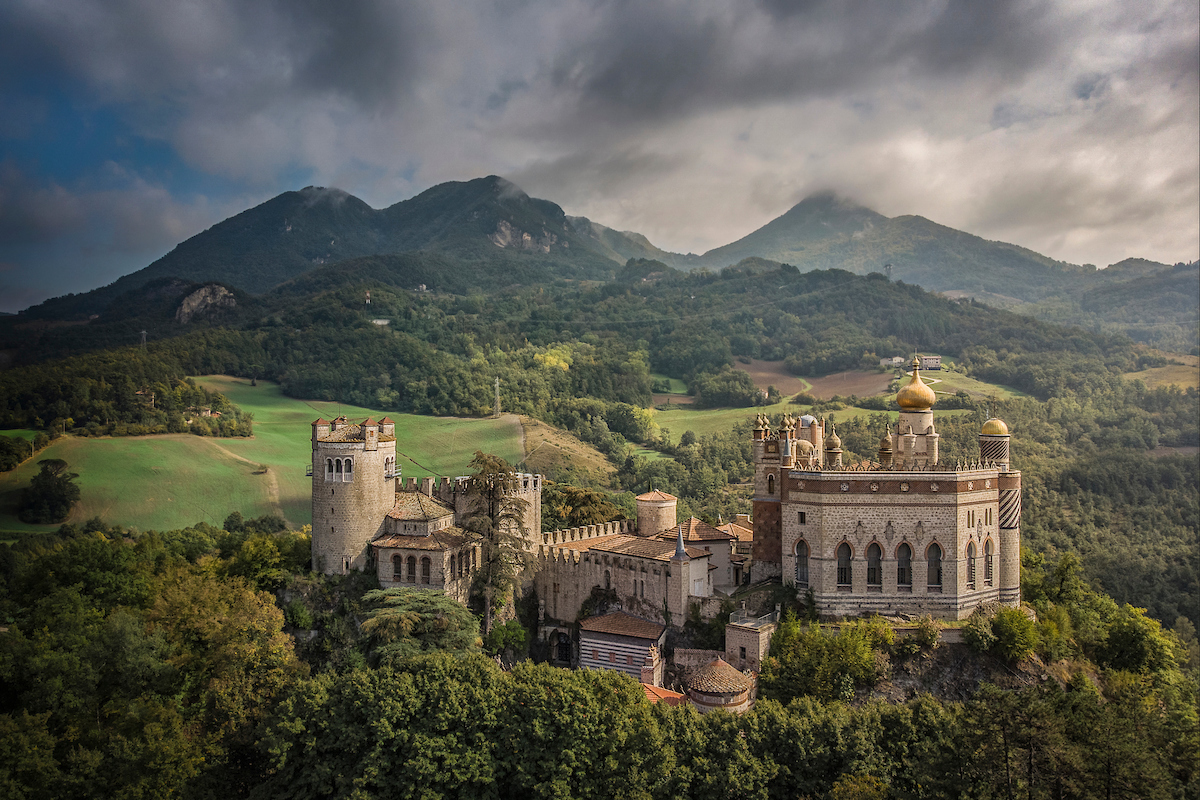
Rocchetta Mattei, Grizzana Morandi (BO)
Monteveglio is ideal for those who only have a few hours to spare and want to get out of the city without necessarily having to tackle a mountain pass. It is about 25 km from the centre of Bologna, a journey that takes 35–40 minutes depending on traffic.
You can reach it quickly from Casalecchio di Reno (BO) by taking the SS569 (Nuova Bazzanese) to the Zola Predosa/Bazzano exit, or by following the more leisurely local roads along the SP27 Valle del Samoggia, which climbs towards the ancient village. The roads through the scattered settlement of Valsamoggia wind through fields, vineyards and low hills. The bends are less tight than in the Upper Apennines, with several junctions and farm track access points.
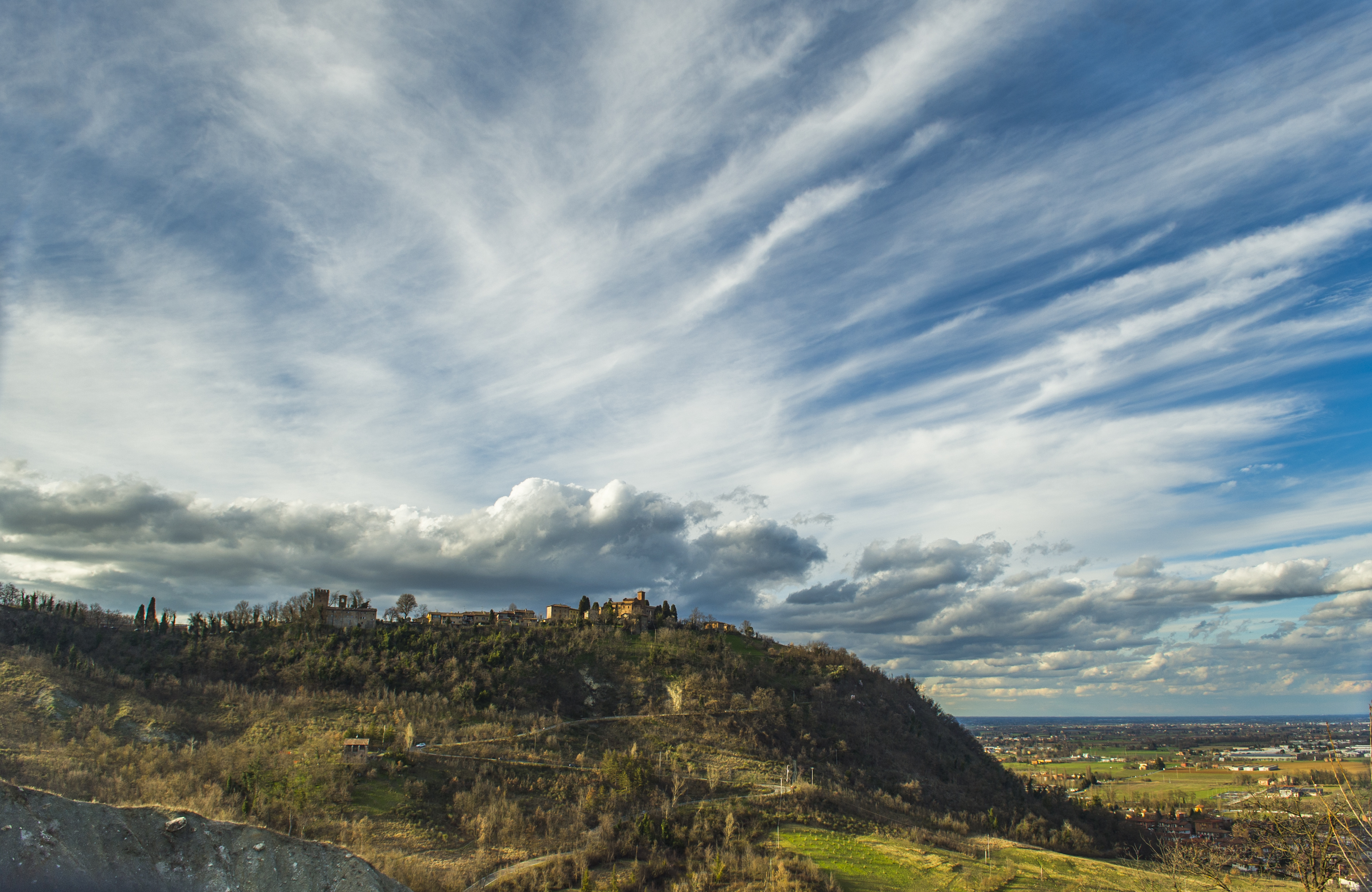
View of the historic village of Monteveglio (BO)
The main cultural stop is the Abbey of Santa Maria Assunta in Monteveglio, founded in the Middle Ages and situated within the fortified village of the same name. The entrance arch and the crenellated tower of the ancient fortress also remain.
If you have more time, you can combine your visit with a trip to the nearby village of Bazzano and the Rocca dei Bentivoglio, commissioned by Matilda of Canossa and made famous by the prominent aristocratic family, the “Bentivoglio”.
The plain offers a different kind of ride. Few inclines, long straights, embankments and country roads lead towards the villages north of Bologna.
Pieve di Cento is about 35 km from the city centre, with a journey time of around 45–50 minutes; from Bologna, head north along the SP4 Galliera to San Giorgio di Piano or Argelato, then join the SP42 Centese until you reach the outskirts of the village.
It’s a destination perfect for a morning or an afternoon.
The historic centre of the village features long stretches of arcades, four historic gates and the beautiful 14th-century fortress. The compact size of the town makes it easy to park and explore the main sights on foot.
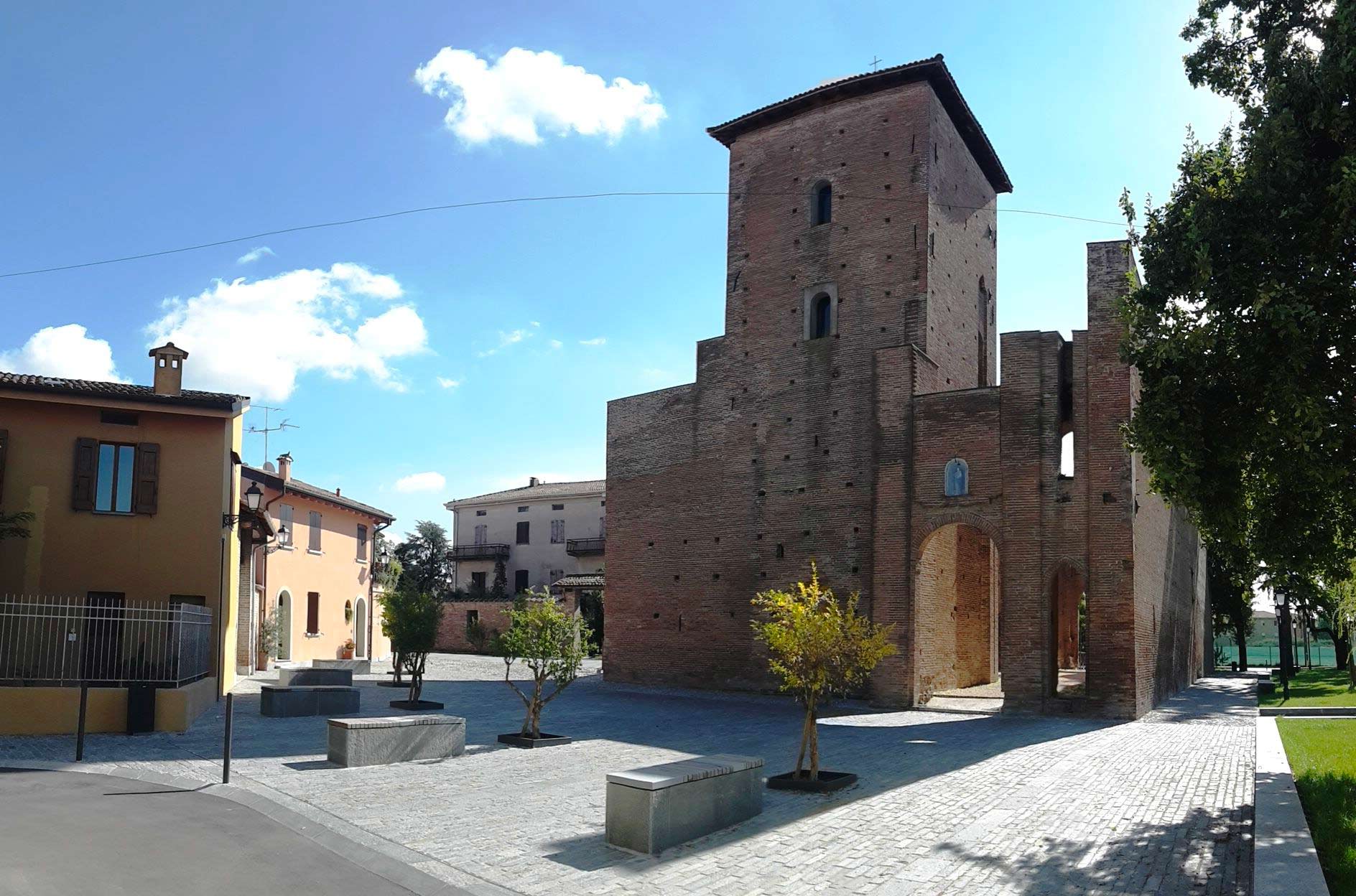
Pieve di Cento (BO)
In the Rocca, and near Porta Bologna in Pieve di Cento, is the Museo delle Storie di Pieve, dedicated to the history of the town, which was meticulously restored following the 2012 Emilia-Romagna earthquake. The Collegiate Church of Santa Maria Maggiore houses works linked to Guercino and Guido Reni.
➝ Discover our guide to the works of Guercino in the churches of Bologna and the surrounding area.
The painted village of Dozza is one of the most accessible and charming destinations for a half-day motorbike trip.
From the centre of Bologna, it’s about 37 km and takes 40–45 minutes if you take the quickest motorway route; otherwise, follow the SS9 Via Emilia to the hamlet of Toscanella, then turn off onto the SP56, which winds its way up through the vineyards to the walls of Dozza.
The village has a compact, elongated layout and is a delight to explore on foot. The walls of the houses are covered in colourful paintings and murals created as part of the Biennale del Muro Dipinto.
The motorbike route is short, so you can add a few detours between Imola and Dozza, following our guide to art, motorbikes and local flavours.
The Rocca di Dozza overlooks the village and houses the museum of the same name. The cellars also home the Emilia-Romagna Regional Wine Cellar.
Leave your motorbike in the car parks outside the walls. The centre is best explored on foot and some streets may have restricted access.
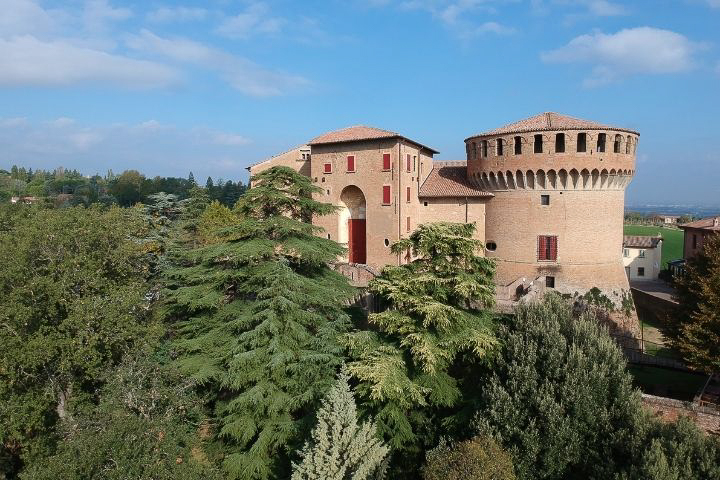
Rocca di Dozza (BO)
And what about a full day out in the Imola area? Once you’ve reached Imola via the SS9 Via Emilia, take the SP610 Montanara, the historic road that winds its way up the entire Santerno Valley towards Fontanelice, Borgo Tossignano and Castel del Rio.
The most enjoyable and challenging stretch for motorcyclists begins just past Borgo Tossignano, where the hills close in around the river and the bends become more frequent.
It’s about 70 km and 1 hour 20 minutes from the centre of Bologna to Castel del Rio, without any stops.
A detour leads to the Vena del Gesso Romagnola Park, a karst complex recognised by UNESCO in 2023 alongside the other sites in the northern Apennines. The trails and caves require separate equipment and planning: here, the motorbike is used to reach the access points, after which you continue on foot.
In Castel del Rio, stop at the Alidosi Bridge, a large humpback bridge spanning the River Santerno, and visit the village’s monumental building: Palazzo Alidosi. Furthermore, in the height of autumn, it hosts the famous IGP chestnut festival.
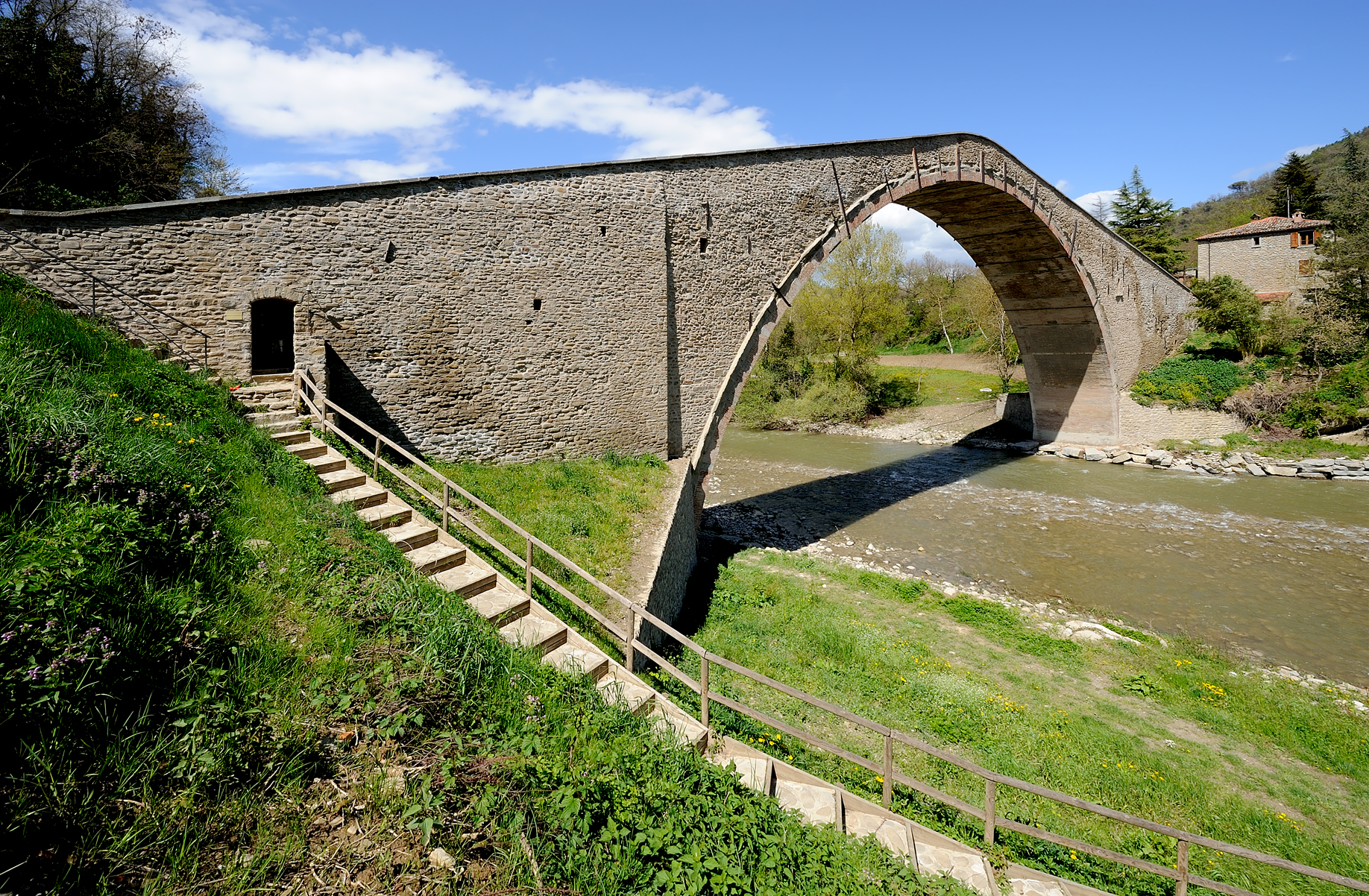
Alidosi Bridge, Castel del Rio (BO)
If you have 3 or 4 hours, choose Monteveglio. It’s close by and the village offers a comprehensive cultural experience without you having to spend the whole day in the saddle.
For a half-day trip, Tolè, Pieve di Cento and Dozza are all good options. Tolè has more bends; Pieve is the choice for flat roads; Dozza combines a short climb with a historic centre rich in art.
For a full day, choose Suviana and Brasimone, Cavone or the Santerno Valley. The Raticosa is in the middle: it can be a short ride or the first part of a loop towards the Futa.
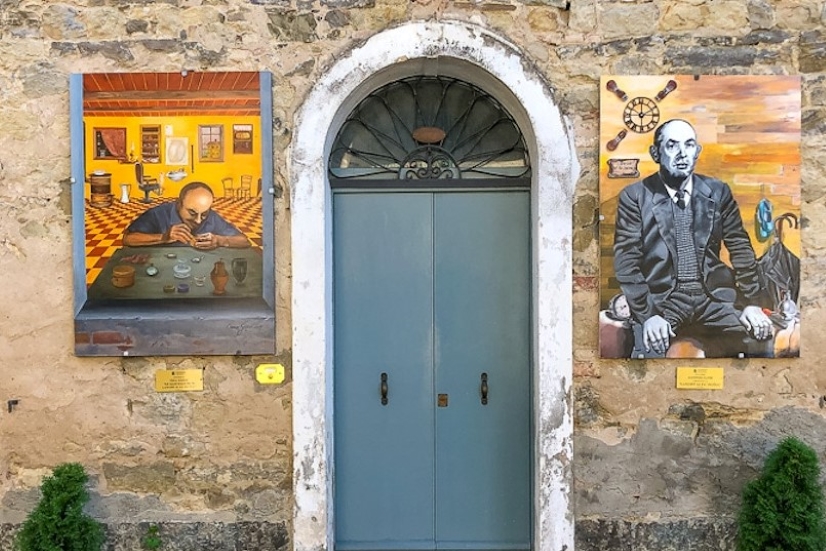
Tolè (BO)
Before setting off, you can visit the Ducati Museum in Borgo Panigale. The collection traces the history of the Bologna-based manufacturer through production bikes, competition bikes and racing models.
For circuit enthusiasts, a stop at the Enzo and Dino Ferrari Autodrome in Imola is a must. Open days and guided tours are held regularly. Check the calendar on the website.
As for cars, in Sant’Agata Bolognese you’ll find the Lamborghini Museum and in Funo Argelato the Ferruccio Lamborghini Museum.
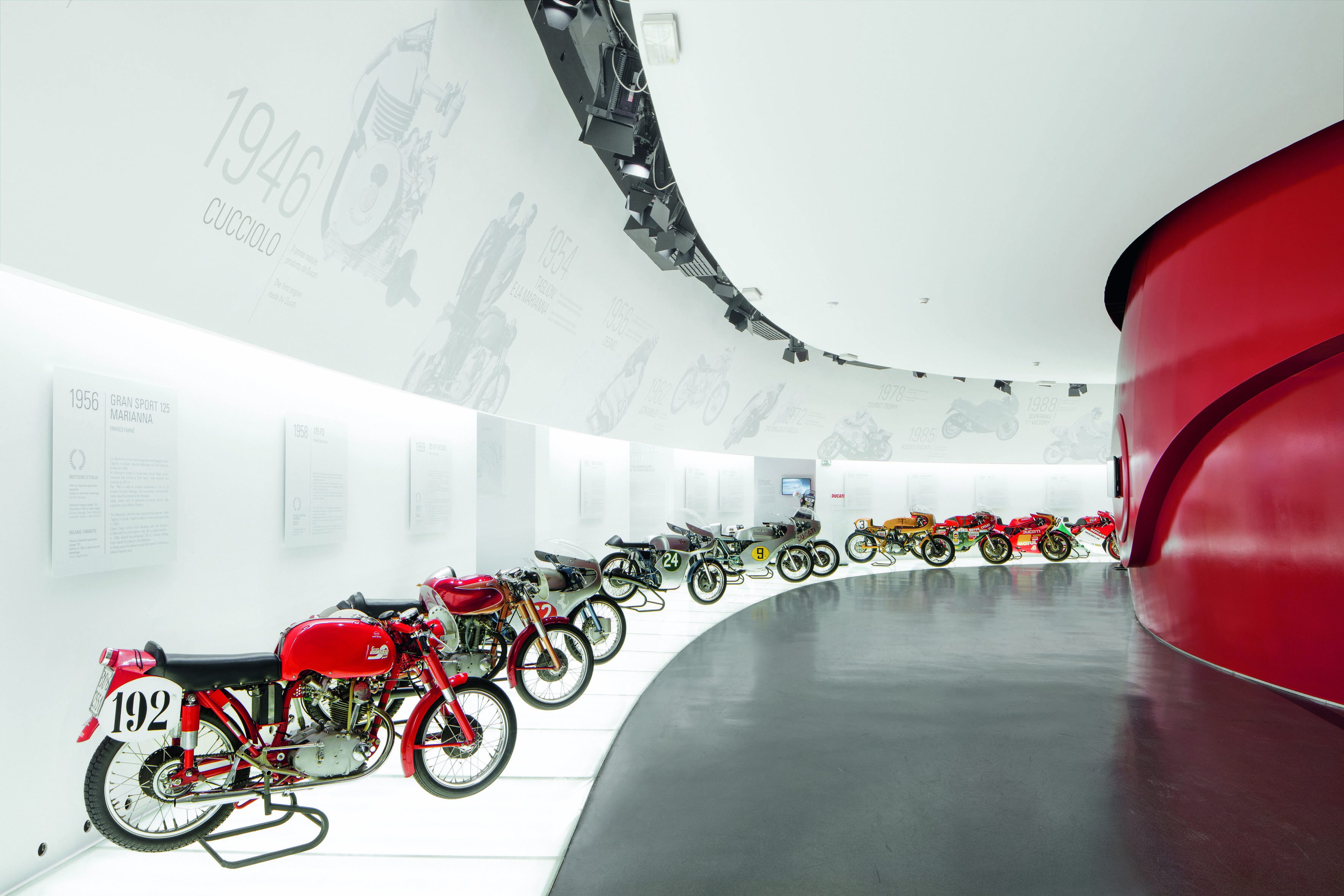
Ducati Museum, Borgo Panigale, Bologna

Inspiration from a hilly landscape featuring a motorbike. Generated by AI.