What to see in the Bolognese Reno Valley
Updated on 06 August 2026 From Martina Cavezza

Updated on 06 August 2026 From Martina Cavezza
The Reno Valley is one of the main valleys of the Bolognese Apennines
and offers a blend of history, culture, nature and wellbeing. It begins on the
outskirts of Bologna, in the municipality of Casalecchio di Reno, and stretches along the
course of the River Reno, following the historic SS64 Porrettana road to the border with
Tuscany, passing through some of the area’s most picturesque villages.
It is a destination that changes with the passing of the
seasons: in spring it offers footpaths and villages nestled in the countryside; in summer it is
perfect for hikes and days spent in the open air; in autumn it offers the colours
of the autumn foliage and the flavours of local specialities; whilst in winter it becomes the gateway
to the Corno alle Scale ski area and the thermal springs of Porretta.
This itinerary takes you from Casalecchio di Reno to
the border with Tuscany, passing through some of the valley’s most iconic
spots. It’s perfect for a day trip or a weekend
spent exploring the Bolognese Apennines.
The first stop on the itinerary is one of the landmarks
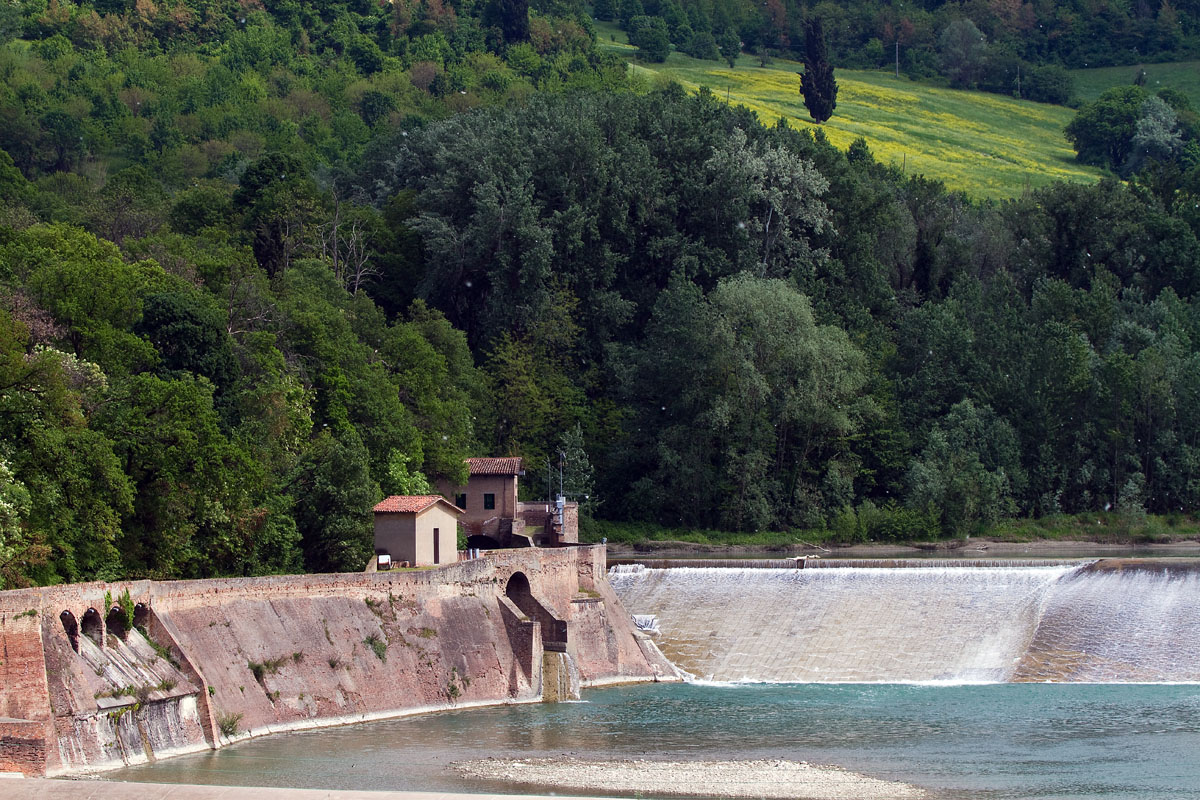
of Bologna’s hydraulic history. The Chiusa di Casalecchio (The Sluice of Casalecchio), built in the 13th
century and rebuilt in the 16th century to a design by Jacopo Barozzi, known as
Vignola, for centuries supplied water to the city’s canal system,
which made Bologna one of Europe’s leading centres for silk production. Today,
it is an ideal spot for a stroll along the Reno and serves as a perfect
starting point for exploring the valley.
How to get there by car: from Bologna, take the SS64
Porrettana towards Casalecchio di Reno.
Journey time: approximately 15 minutes (8 km).
Map: Directions to the Casalecchio Lock on Google Maps.
© Photo by Paolo Cortesi
Continuing along the Porrettana road, you reach Sasso Marconi,
a town named after the famous inventor of the wireless telegraph.
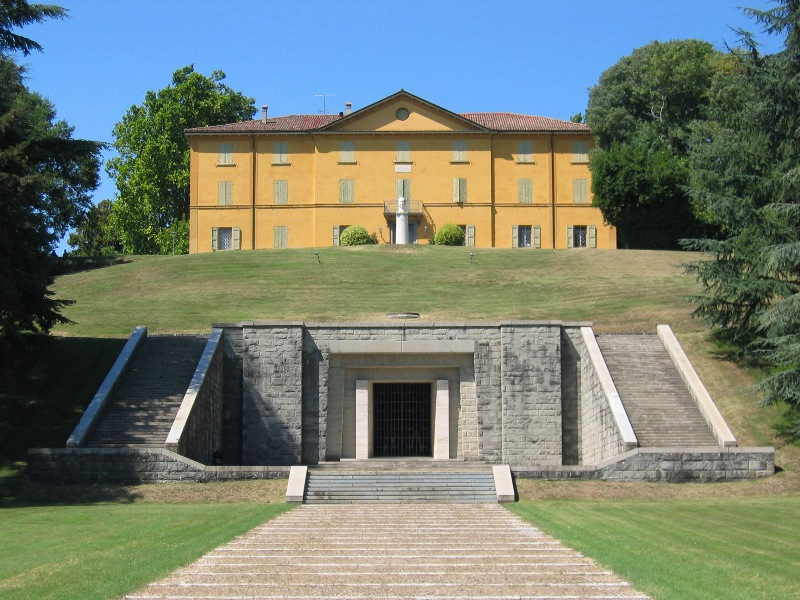
Here stands Villa Griffone, the family home where
Guglielmo Marconi carried out the first experiments that revolutionised
telecommunications. The building now houses a museum where visitors can explore the original laboratory, the
Marconi Mausoleum and the Villa Griffone Park.
Visitors to Sasso Marconi can also take a stroll at the foot of the
stunning Pliocene Spur Nature Reserve.
How to get there by car: from Bologna, follow the SS64
Porrettana towards Sasso Marconi.
Journey time: approximately 25 minutes (18 km).
Map: Directions to Villa Griffone on Google Maps.
© Photo from the archives of Sasso Marconi Town Hall
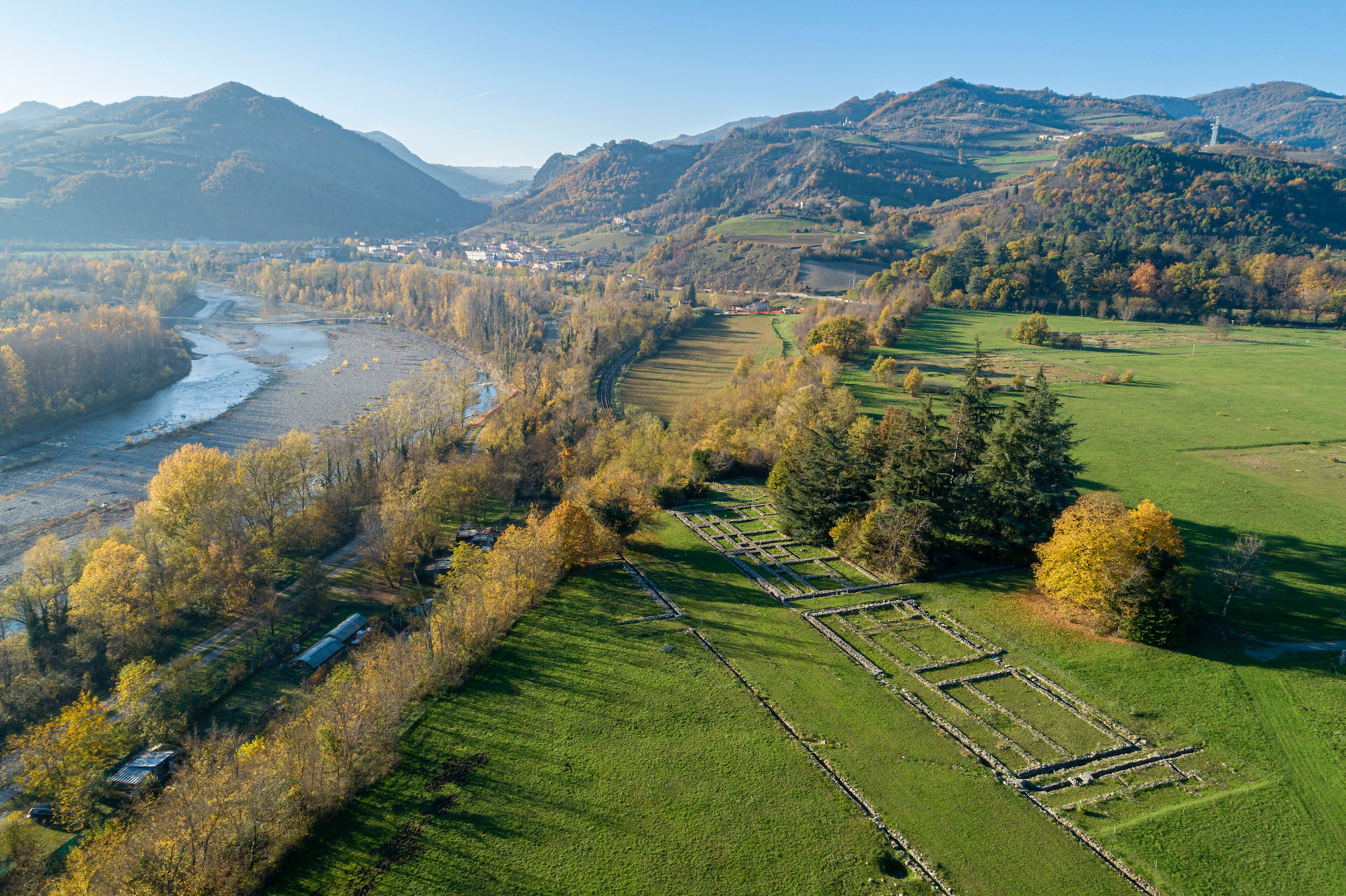
Marzabotto is home to one of the most important Etruscan archaeological sites in Italy. The archaeological site of Kainua still preserves the original urban layout of the city founded between the 6th and 5th centuries BC, with streets, dwellings, workshops, a necropolis and an acropolis that are perfectly discernible.
Also well worth a visit is the MNEMA - "Pompeo Aria” National Etruscan Museum and Kainua Archaeological Park,
which
houses the artefacts unearthed during the excavations that are still being carried out today
with dedication and commitment by the University of Bologna, Alma Mater Studiorum.
Just a few kilometres away is the Monte Sole Historical Park, a memorial to the 1944 Marzabotto massacre and now
an important centre dedicated to peace education.
How to get there by car: from Bologna, take the SS64
Porrettana towards Marzabotto.
Journey time: approximately 35 minutes (30 km).
Map: Directions to MNEMA – “Pompeo Aria” National Etruscan Museum and Kainua Archaeological Park on Google Maps.
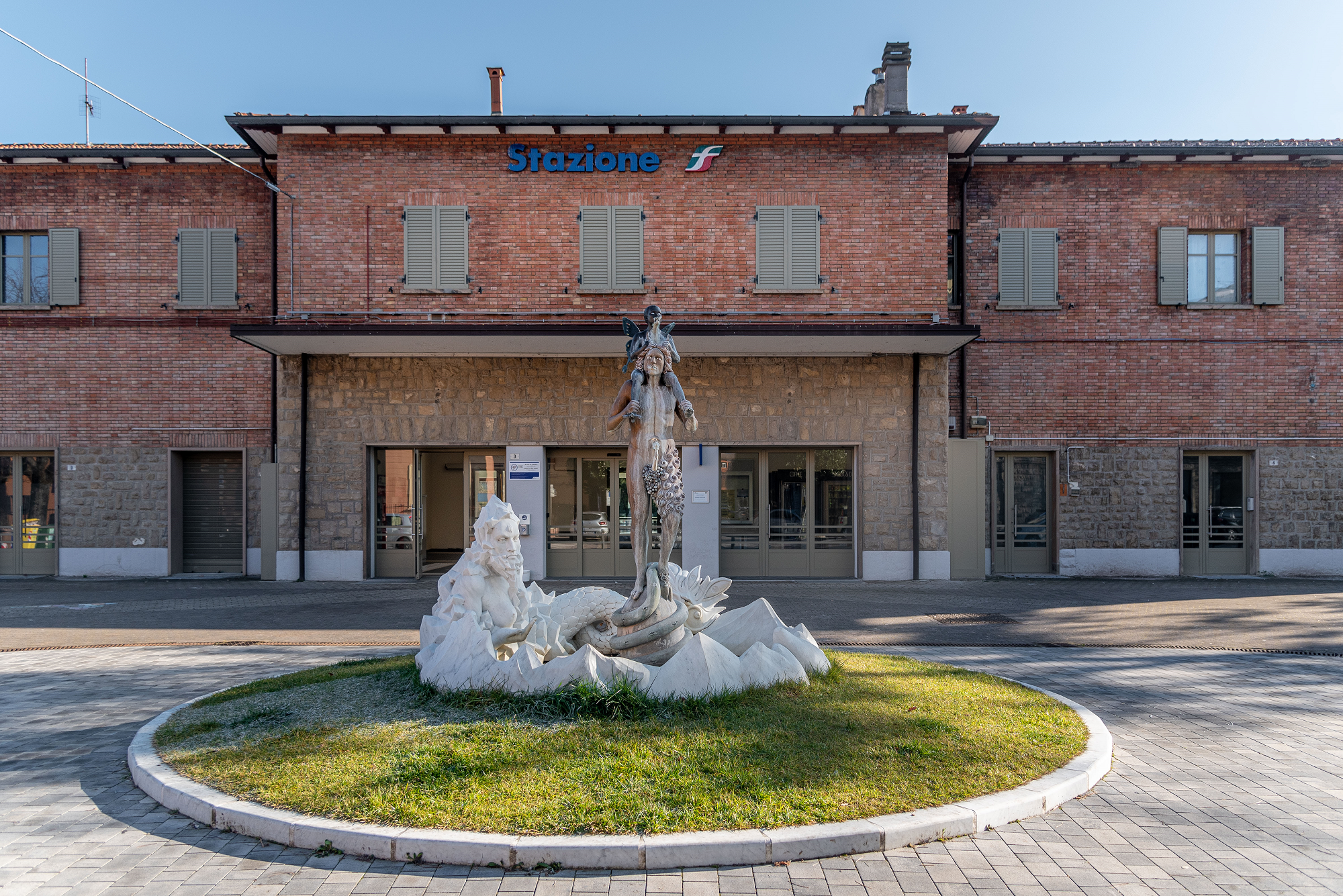
Vergato is one of the main towns in the valley. Its
most iconic building is the Palazzo dei Capitani della Montagna, built in the
15th century and now adorned with stained-glass windows by the artist Luigi
Ontani.
In the surrounding area, it is also worth visiting the Pieve di Roffeno, one of the finest examples of Romanesque architecture in the
Bolognese Apennines.
From Vergato, the route can continue in two directions:
towards the Suviana and Brasimone Lakes Park, or towards Corno alle Scale and Porretta Terme.
How to get there by car: from Bologna, follow the SS64
Porrettana towards Vergato.
Journey time: approximately 45 minutes (42 km).
Map: Directions to the historic centre of Vergato on Google Maps.
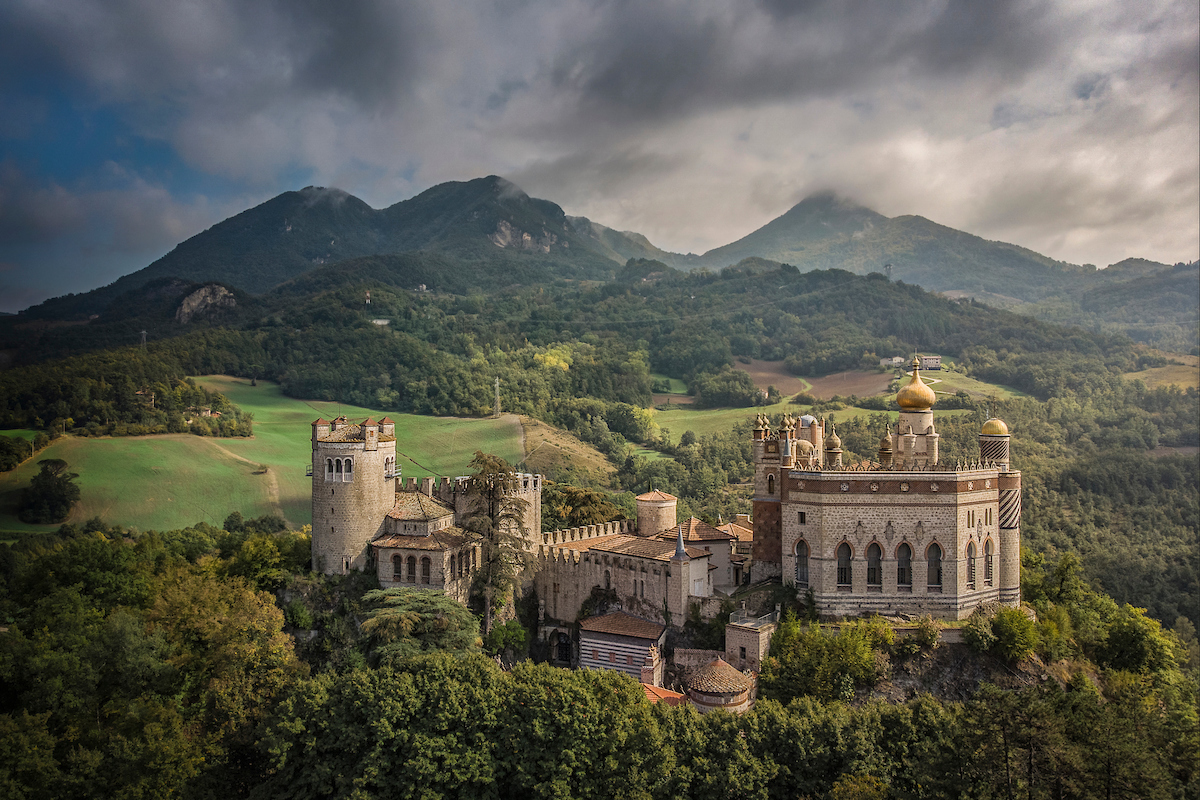
Grizzana Morandi is one of the most iconic destinations in the Rhine Valley. It was here that the artist Giorgio Morandi spent much of his summers and found inspiration for many of his famous landscapes. You can visit the Morandi House Museum and the Documentation Centre housed in the Campiaro Barns.
Not far away lie two
true gems of the Apennines: the Rocchetta Mattei, the eclectic castle
built by Count Cesare Mattei, and the Church of Santa Maria Assunta in Riola, the only Italian work by the famous Finnish architect Alvar Aalto.
For those who love small villages, La Scola is also a must-see,
one of the best-preserved in the Bolognese Apennines.
How to get there by car:
from Bologna, take the SS64
Porrettana to Riola and Grizzana Morandi.
Journey time:
approximately 1 hour (55 km).
Map:
Directions to Rocchetta Mattei on Google Maps
.
© Photo from the archives of Grizzana Morandi Town Hall
Following the road that branches off from the Porrettana, you
reach Camugnano. Here you can visit Palazzo Comelli, a historic
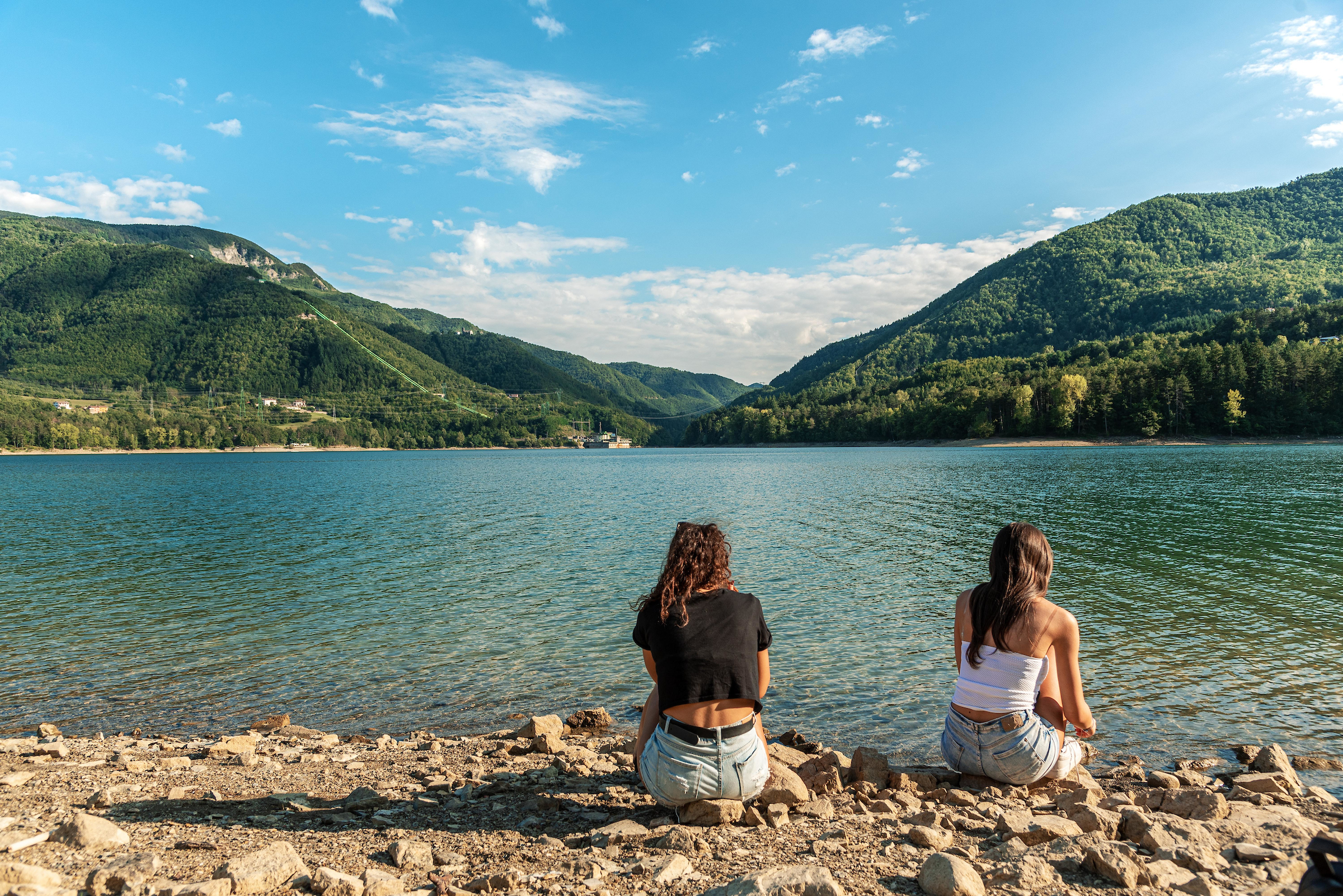
noble residence, but above all explore the Suviana and Brasimone Lakes Regional Park. The park is one of the most popular nature destinations
in the Bolognese Apennines thanks to its footpaths, picnic areas,
viewpoints and opportunities for hiking, mountain biking and
birdwatching.
How to get there by car:
from Bologna, follow the SS64
to Vergato and then continue towards Camugnano.
Journey time:
approximately 1 hour and 15 minutes (70 km).
Map:
Directions to Lake Suviana on Google Maps
.
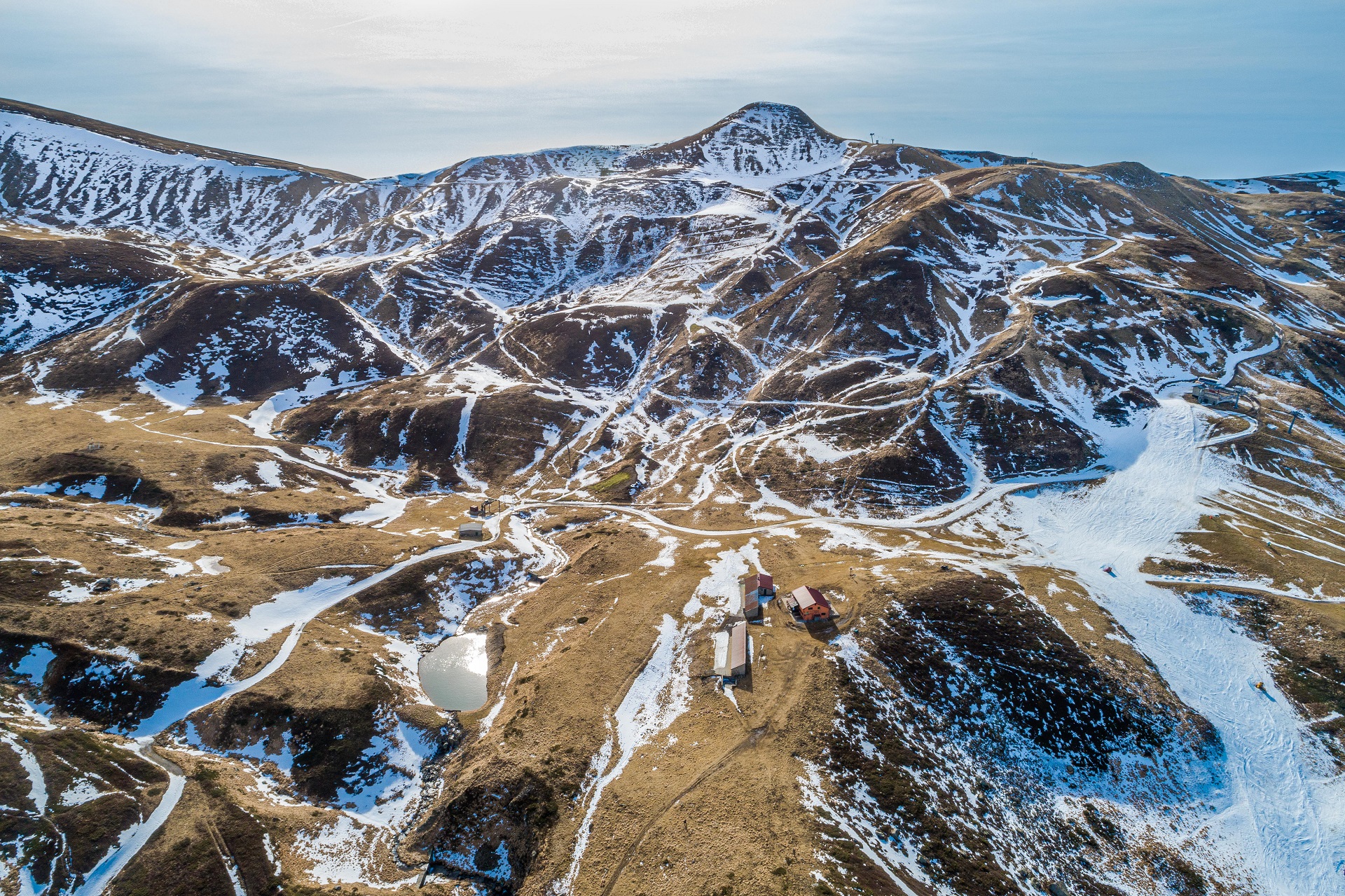
For mountain lovers, this is a must-visit destination. Lizzano
in Belvedere is the ideal starting point for exploring the Corno alle Scale Regional Park, home to the highest peak in the Metropolitan City of
Bologna. Numerous hiking trails set off from here, leading to the
Dardagna Waterfalls, Lake Scaffaiolo and the panoramic views of the
Tuscan-Emilian ridge. The area is also home to the Sanctuary of the Madonna dell’Acero and the ancient parish church of San Mamante.
How to get there by car:
from Bologna, follow the SS64
to Porretta Terme and then continue towards Lizzano in Belvedere.
Journey time:
approximately 1 hour and 30 minutes (85 km).
Map:
Directions to Corno alle Scale on Google Maps
.
The final stop on the itinerary is Porretta Terme, famous since
Etruscan and Roman times for its thermal springs. Over the centuries,
the thermal baths have welcomed illustrious travellers such as Lorenzo the Magnificent, Niccolò
Machiavelli and Andrea Mantegna.
Porretta is also an excellent starting point for
exploring the Apennine ridge and the villages of the Upper Reno.
How to get there by car: from Bologna, follow the SS64
Porrettana to Porretta Terme.
Journey time: approximately 1 hour and 20 minutes (72 km).
Map: Directions to the historic centre of Porretta Terme on Google Maps.