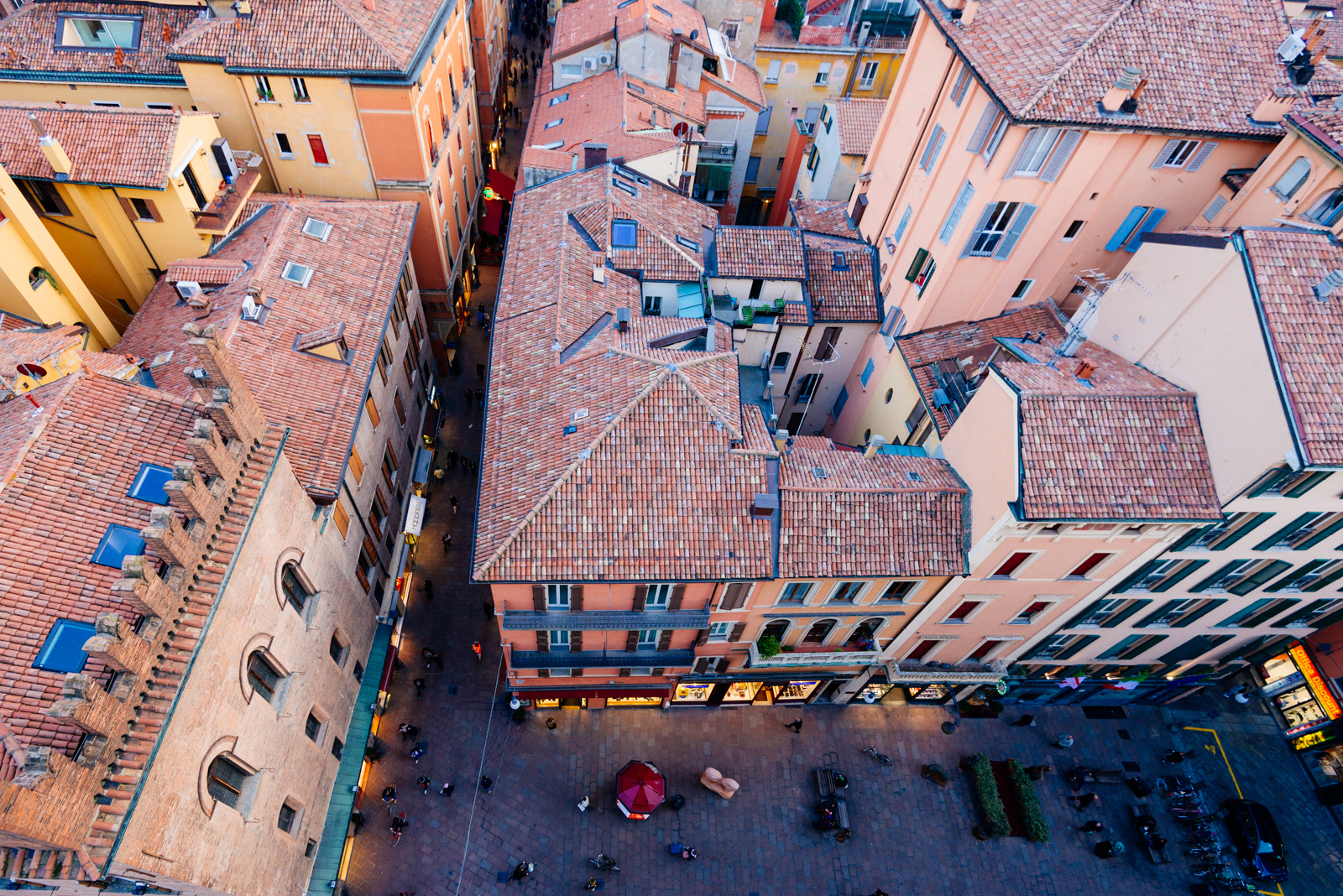
Bologna in a playlist: a walk through music
Updated on 26 October 2026 From Bologna Welcome

Updated on 26 October 2026 From Bologna Welcome
There are songs about Bologna that seem tailor-made to accompany a street, a portico or a square. Others evoke a particular season in the city’s life, a concert or a way of being together. Lucio Dalla takes us to Piazza Cavour, Guccini to Via Paolo Fabbri, and rap to the Bologna of the 1990s. Then come the rock of the PalaDozza, 50 Special heading towards the hills and San Luca towards the Sanctuary.
Discover Bologna through a playlist that becomes a veritable musical map of the city: an itinerary through squares, arcades and iconic landmarks as told through songs. Each track opens a window onto Bologna; sometimes the place is the star of the song, whilst at other times it is linked to the story of the songwriter, the music scene in which it was born, or an episode that the city holds in its collective memory.
Bologna has always been a city that thrives on music. From historic theatres to concerts in the squares, from taverns to independent clubs, different genres and generations have helped to forge a distinctive musical identity that has continued to evolve over time.
But Bologna’s musical history began long before the singer-songwriters, amongst theatres, academies and conservatoires. In 2006, the city joined the UNESCO network of Creative Cities of Music, crowning a tradition that spans centuries of history.
Mozart, Padre Martini, the Accademia Filarmonica and the City Opera House are all part of this story. Here, however, we will focus primarily on another thread: that of the songs that have transformed Bologna’s squares, streets and neighbourhoods into a soundtrack.
➝ To find out more about the institutions and historic venues of music, you can follow the itinerary dedicated to Bologna City of Music
When this first track begins, those unfamiliar with Bologna often instinctively look towards Piazza Maggiore. It’s a very common association, but the square linked to the song is actually another one: Piazza Cavour.
And it was right here, at number 2, that Lucio Dalla was born, in a house overlooking the gardens. Today, a plaque on the façade commemorates that connection; a little further on, you’ll also find the statue of the artist sitting on a bench, with his clarinet in his hands.
It is, in fact, Piazza Cavour that is traditionally associated with the Piazza Grande sung about by Dalla. Stop for a few minutes under the arcades, look out over the square and let the first track play: suddenly, the city around you becomes part of the song.
Dalla knew how to portray Bologna without turning it into a postcard: his songs feature squares, encounters, characters, nights and that everyday life capable of making a city feel familiar even to those visiting for the first time.
🎵 Listen to: Lucio Dalla, Piazza Grande

From Piazza Cavour, it takes just a few minutes to reach Via d’Azeglio 15, the house where Dalla lived and worked.
The street is now one of the best-known in the city centre, but when you stand before that front door, your connection with the singer-songwriter takes on a whole new dimension. You move from the public square into the rooms where he wrote, entertained friends and worked on his music.
Come here whilst listening to Disperato erotico stomp, and let yourself be guided by the city’s narrow streets.
The song doesn’t lead you in a straight line from one address to another: it takes detours, just as you might when wandering aimlessly through the centre of Bologna. And this is perhaps the best way to listen to it.
With a mix of irony, provocation and unpredictable situations, the track reveals a more irreverent side to Dalla’s writing, far removed from the city’s more romantic imagery.
➝ Discover Lucio by wandering through his streets and deepen the experience by visiting Casa Dalla on a guided tour. The rooms preserve furnishings, objects and artworks collected by the artist, allowing you to step into a very personal part of his Bologna.
🎵 Listen to: Lucio Dalla, Disperato erotico stomp
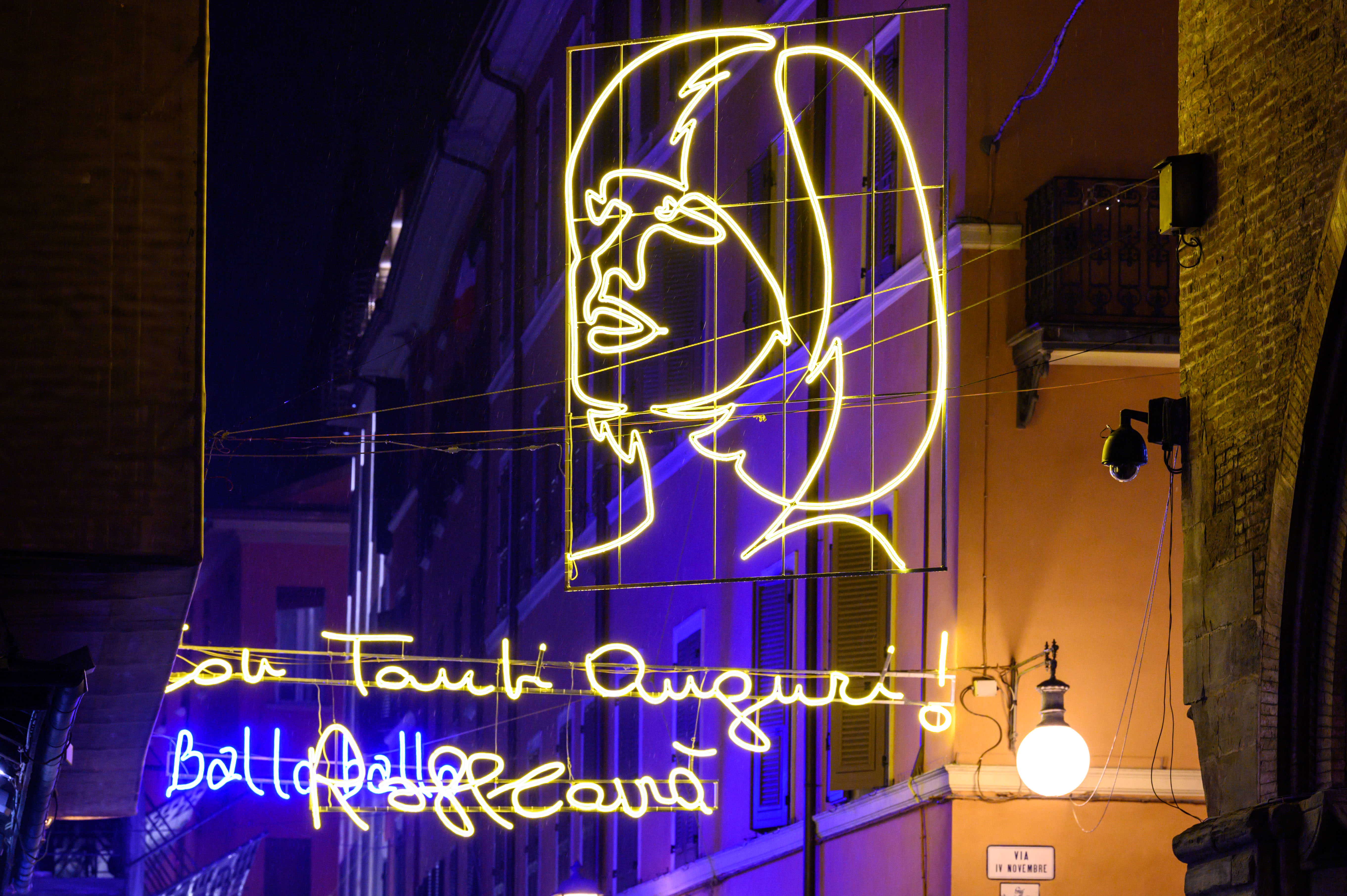
Bologna is a vibrant city, bustling every day with people, voices and diverse energies. So why not bring the Rumore of one of Bologna’s most famous artists to the historic centre?
Raffaella Carrà, born in Bologna on 18 June 1943, has become one of the most recognisable Italian figures on the international entertainment scene, spanning music, television, dance and fashion.
Her personal connection to Bologna differs from Dalla’s: she does not recount the streets and daily life of a Bolognese citizen, but she nonetheless embodies the dynamic spirit that can still be felt today as you wander through the city’s streets, and her artistic journey reminds us just how far a talent born here can go.
It is a track that brings something to the playlist that has been missing until now: pop as spectacle, physicality, freedom and the ability to speak to audiences far and wide. Carrà reminds us that Bologna’s musical scene is not just that of singer-songwriters sitting in taverns, but also the birthplace of a woman who became an international icon.
So let Rumore accompany a leisurely stroll through the historic centre: not a stop linked to a specific address, but a tribute to one of the great figures of Italian music and entertainment.
🎵 Listen to: Raffaella Carrà, Rumore
Continuing towards Piazza Maggiore and Piazza del Nettuno, you’ll reach Biblioteca Salaborsa, an ideal stop to discover another chapter in the city’s musical history. On the second floor is the Sala della Musica, an exhibition dedicated to Bolognese popular music from the post-war period to the present day.
Here, play Vita.
The song was written by Mogol and Mario Lavezzi and released by Lucio Dalla and Gianni Morandi in 1988. It was originally intended to begin with “Cara”; it was Dalla who suggested replacing that word with “Vita”, transforming a personal story into something far more universal.
“Vita, in te ci credo” thus also becomes the perfect refrain for this walk, a recurring theme set to reappear in the final track.
Because from this moment on, we won’t just be listening to songs but exploring artistic lives: those of Dalla, Morandi, Guccini, Carrà, Vasco Rossi and those who, like many, came to Bologna from elsewhere, finding here the people, studies, venues or decisive opportunities that shaped their lives.
🎵 Listen to: Lucio Dalla and Gianni Morandi, Vita

As you leave Salaborsa, you’re already in Piazza Maggiore.
On 1 June 1980, thousands of people packed this very square for the free concert by The Clash. Bologna was emerging from the years of the ’77 Movement, free radio stations and a period of intense cultural experimentation: that concert remains one of the most memorable moments in Bologna’s rock history.
Today, all you need to do is walk across the Crescentone with London Calling in your headphones to experience a completely different atmosphere and create a rather striking contrast: British punk in front of San Petronio.
Piazza Maggiore is therefore not merely Bologna’s monumental backdrop. When the occasion calls for it, it becomes a giant auditorium, a symbol of the international character and multifaceted culture the city has to offer.
It’s a different way of looking at the square: not just through its monumental history, but also through that of the people and the music that have passed through it.
And if you wander through these streets in winter, beneath a light mist and a leaden sky heavy with rain, you’ll be instantly transported to the bustling streets of London.
🎵 Listen to: The Clash, London Calling

And now the setting changes, or rather: we’re back on the streets of Bologna.
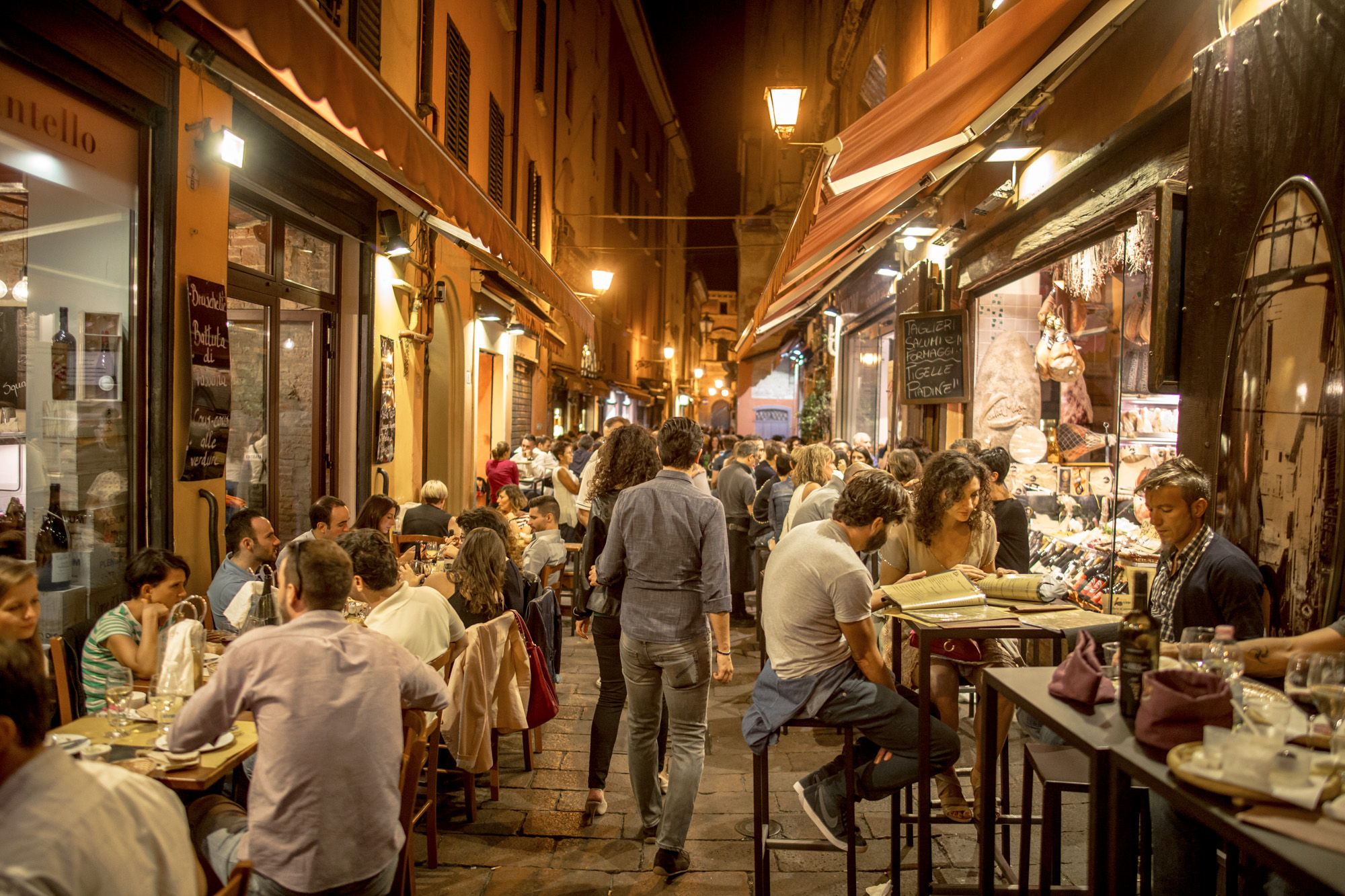
Play Francesco Guccini’s Bologna. The music transports us back to the atmosphere of the taverns, to the conversations that drag on over a glass of wine, and to that convivial Bologna that the singer-songwriter has captured in his lyrics.
Head to the Quadrilatero: amongst alleys, shops and tables, it is one of the places where this convivial side of the city can still be found.
Bohéme confortevole giocata fra casa e osterie
Quando a ogni bicchiere rimbalzano le filosofie
When philosophies bounce from one glass to the next
A cosy bohemian life played out between home and taverns
Guccini describes la Dotta in this way: a bohemian life lived “between home and taverns”, where, over a glass, discussions, philosophies, characters and artistic ambitions flow. Conviviality isn’t merely a backdrop to his Bologna: it’s one of the ways in which the city is remembered.
Discover the Osteria del Sole, documented since at least 1465 and considered one of the oldest taverns still in operation in the city, which still retains its traditional ways today: here you order drinks, whilst food can be bought from outside and brought to the tables.
It is here that Guccini’s story seems to find its natural setting. Stop for a drink, watch the people around you and let the song accompany atruly Bolognese interlude.
➝ Amidst historic alleyways, lively neighbourhoods and rolling hills, the city offers all sorts of experiences for those wishing to treat themselves to a break with a glass of wine and a few traditional tastings. Find out more in the itinerary dedicated to the Bolognese aperitif
🎵 Listen to: Francesco Guccini, Bologna
To fully immerse oneself in Guccini’s philosophy – characterised by irony and a rejection of the worldly pretensions one might expect from a successful singer-songwriter like him – the song Via Paolo Fabbri 43 becomes almost a manifesto of the Guccini universe.
A simple street, an ordinary house number on any street in Bologna, thus becomes a place of pilgrimage for those who love Francesco Guccini. It is, in fact, the address of the historic house in the Cirenaica district where the singer-songwriter lived for decades, transforming it into a symbol of his own life, his poetics and his bond with the city.
Guccini used it as the title of his album released in 1976. Since then, this ordinary house number has become part of Bologna’s musical landscape. The most interesting thing, when you stand in front of that house, is precisely the disparity between its fame and its everyday nature: not a monumental square, but a neighbourhood street.
Following Guccini’s passing on 6 August 2026, listening to this track today in front of that address takes on an even more special significance. But Via Paolo Fabbri 43 had long since entered the collective memory: an ordinary street transformed by music into a place recognisable far beyond Bologna.
This, too, is one of the distinctive features of the Bologna of singer-songwriters: the ability to transform everyday places into cultural landmarks, without erasing their simplicity. In anyone’s home, along a seemingly ordinary street (with just the right touch of artistic genius that was Guccini’s hallmark), a new Via Paolo Fabbri 43 can come to life.
🎵 Listen to: Francesco Guccini, Via Paolo Fabbri 43
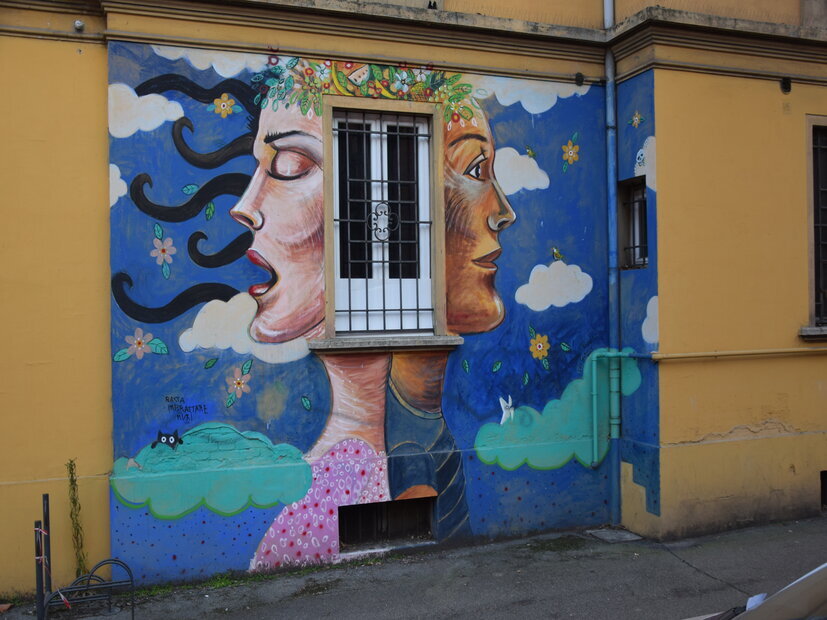
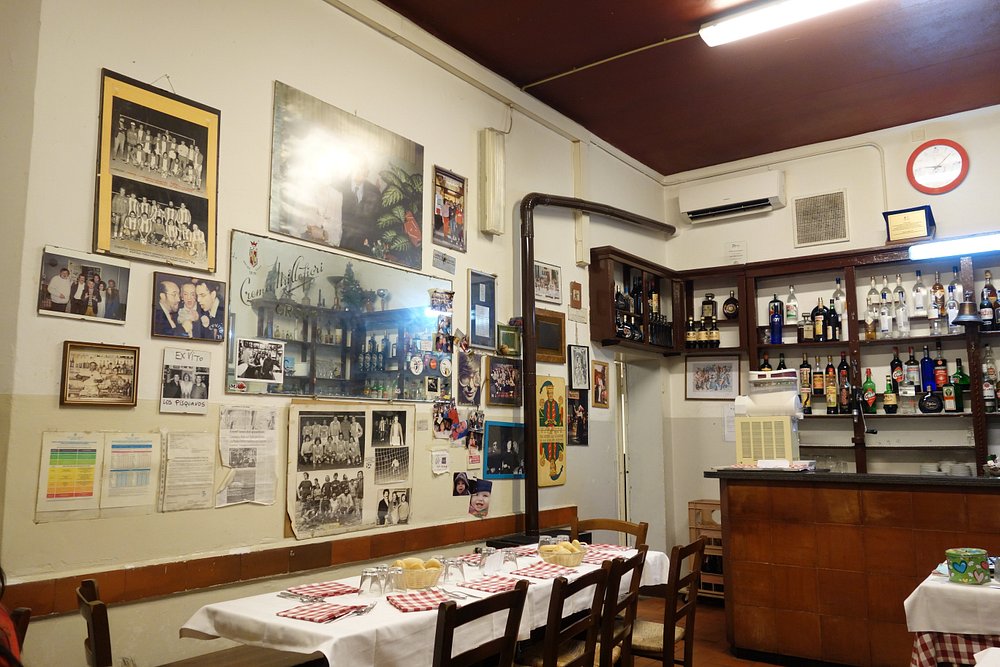
The story of Bologna’s singer-songwriters continues not far from Via Paolo Fabbri, at the Trattoria Da Vito, in Via Musolesi. For years, this venue was a meeting place for artists, musicians and leading figures in Italian culture: a place where fame gave way to the familiarity of conversations around a table.
The music still seems to echo through these rooms: this famous trattoria, which has remained true to its simplicity, is now a place of remembrance for those who used to frequent it.
In those rooms, you could breathe in the spirit of Bologna, and artists from all over Italy would gather to savour its freedom to the full: Vecchioni, Gaber and De Andrè are just some of the names who passed through here. Their memory is still preserved in the old black-and-white photographs, in the autographs and in the mementoes hanging on the walls. Those wooden tables still tell the story of a time when the trattoria was also a place for meetings and cultural exchange.
Play Vecchioni’s Sogna, ragazzo sogna. The song doesn’t mention Bologna directly, but here it becomes a tribute to the generation of singer-songwriters who passed through these places and to the stories that were woven here. Its lyrics, looking towards the future, capture something of the spirit of this city that looks to the future and continues to open up possibilities for tomorrow.
🎵 Listen to: Roberto Vecchioni, Sogna, ragazzo, sogna
From the singer-songwriters’ taverns, we now move on to another side of Bologna: that of experimentation, provocation and underground culture.
Bologna is young, made up of lively streets and dynamic spaces. The young people born here and those adopted by the world’s oldest university meet every day, and where the philosophical musings over a drink in Piazza Verdi come to an end, the fun begins!
Playing through my headphones is Sono un ribelle mamma by Skiantos, the soundtrack to a generation that grew up in the 1970s but is still capable today of embodying the rebellious spirit that these streets evoke.
By the end of that decade, the university district was one of the city’s most vibrant cultural hotbeds. The DAMS had broken new ground in music, theatre and the performing arts, and Freak Antoni, founder of the Skiantos, studied there until graduating with a thesis on the Beatles. The band transformed that very freedom into a deliberately absurd, grotesque and unpredictable style of rock, bringing a form of rock characterised by provocation and irony to Italian music.
Walking between Via Zamboni and Piazza Verdi, Sono un ribelle mamma does not describe a place, but captures an atmosphere: the cultural climate from which a band like the Skiantos could emerge.
🎵 Listen to: Skiantos, Sono un ribelle mamma
The rhythm changes, the themes change, but the music continues to grow and thrive on the city’s streets: Lo straniero by Sangue Misto takes us on a journey to discover Bologna hip hop.
In the 1990s, the city became one of the key centres for the emergence of Italian hip hop.
The story leads to L’Isola nel Kantiere, an initiative born out of the occupation of several spaces at the Arena del Sole in the late 1980s. Rap, graffiti, DJing, politics and street culture began to coexist, and from that environment, pivotal initiatives took shape.
Shortly afterwards came the Link Project, another key venue for independent cultures and musical experimentation in Bologna.
When Sangue Misto’s SxM was released in 1994, featuring Neffa, Deda and DJ Gruff, Bologna was no longer simply a city that hosted rap: it had become one of the places where Italian rap was forging its own language.
This milestone is not linked to a monument, but to the memory of cultural spaces that changed the way music is made in Italy. Listening to Lo straniero also means journeying through this part of Bologna’s history.
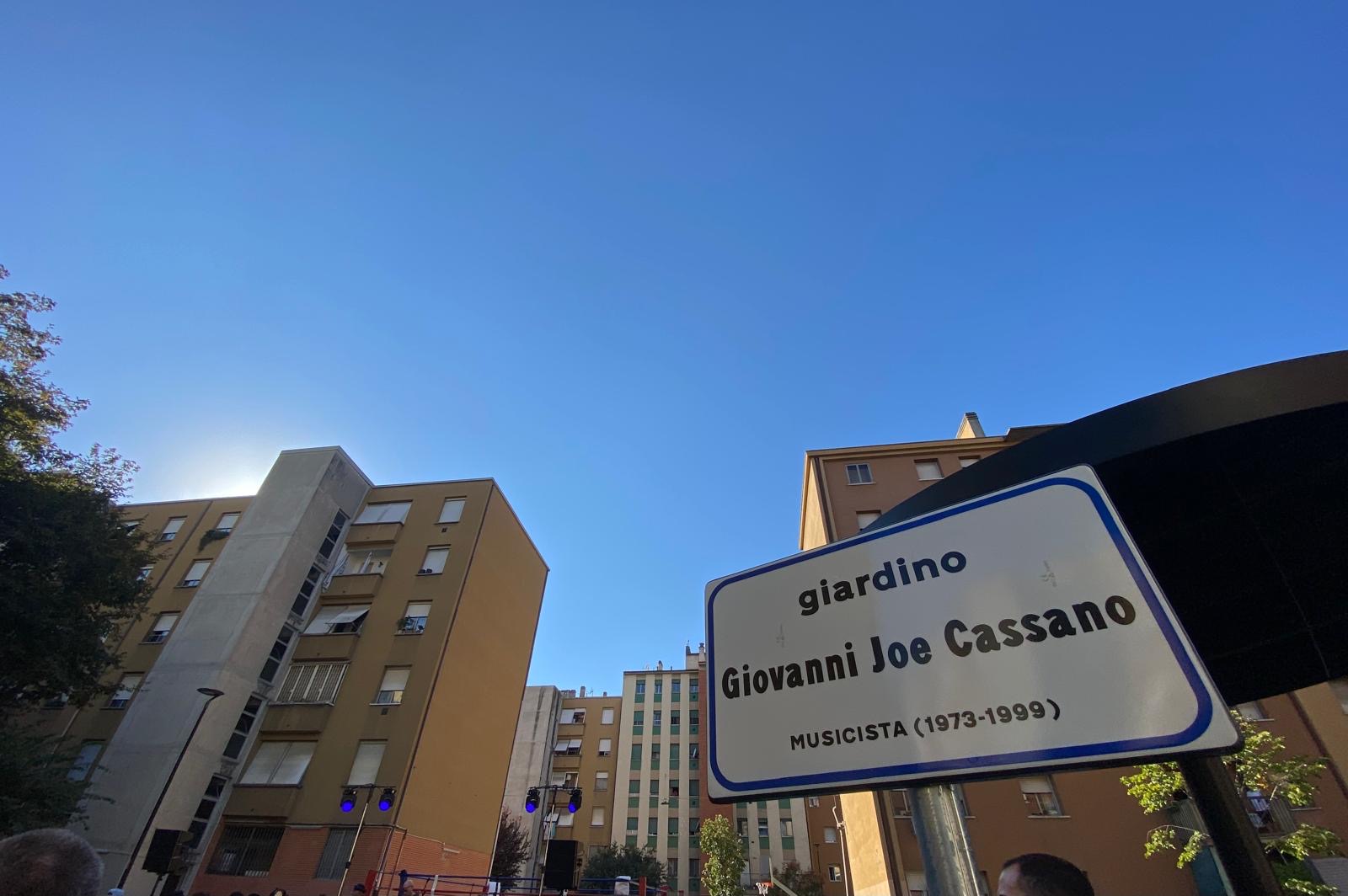
A legacy that the city continues to cherish: on 3 October 2026, the former Giardino delle Popolarissime, in the Scalo-Malvasia district, was named after Joe Cassano, a Bolognese rapper and leading figure in Italian hip hop, who passed away in 1999 at the age of just 25. Today, this space – which also hosts events dedicated to hip-hop culture and the younger generation – keeps alive the connection between music, the neighbourhood and the community.
🎵 Listen to: Sangue Misto, Lo straniero
As well as the music that springs from these streets, there are also those who tell the stories of these very streets.
With Bologna by Night 2004, Inoki brings to the fore another side of the city, told through the eyes and language of the rap scene. It is a Bologna experienced at first hand, made up of neighbourhoods, encounters and nightlife.
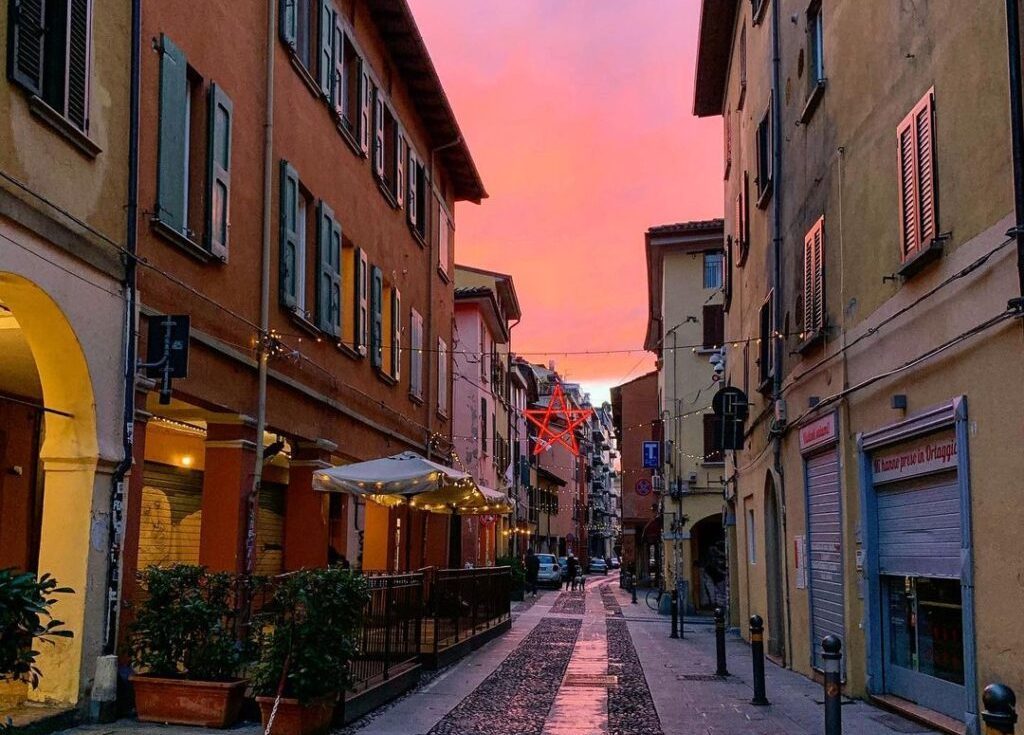
Wander its streets: Via Zamboni, Via Marsala, Via del Pratello and all those narrow lanes that always seem to have a story to tell. Squares, vistas and streets have been the backdrop to protests, music and gathering places. Today, Bologna is a place best explored as evening falls, when the tables fill up and the city centre takes on a different rhythm.
The best way to experience the city’s nightlife? Treat yourself to a gig: Estragon Club, Locomotiv Club, Freakout and the city’s other music venues offer varied programmes throughout the year.
Bologna’s musical vitality isn’t just a thing of the past: from small clubs to major concerts, the city continues to offer opportunities to meet artists and discover new sounds. Discover the full programme
🎵 Listen to: Inoki, Bologna by Night 2004
The playlist now leaves the city centre streets and moves on to another chapter in the city’s musical history: that of the great international concerts.
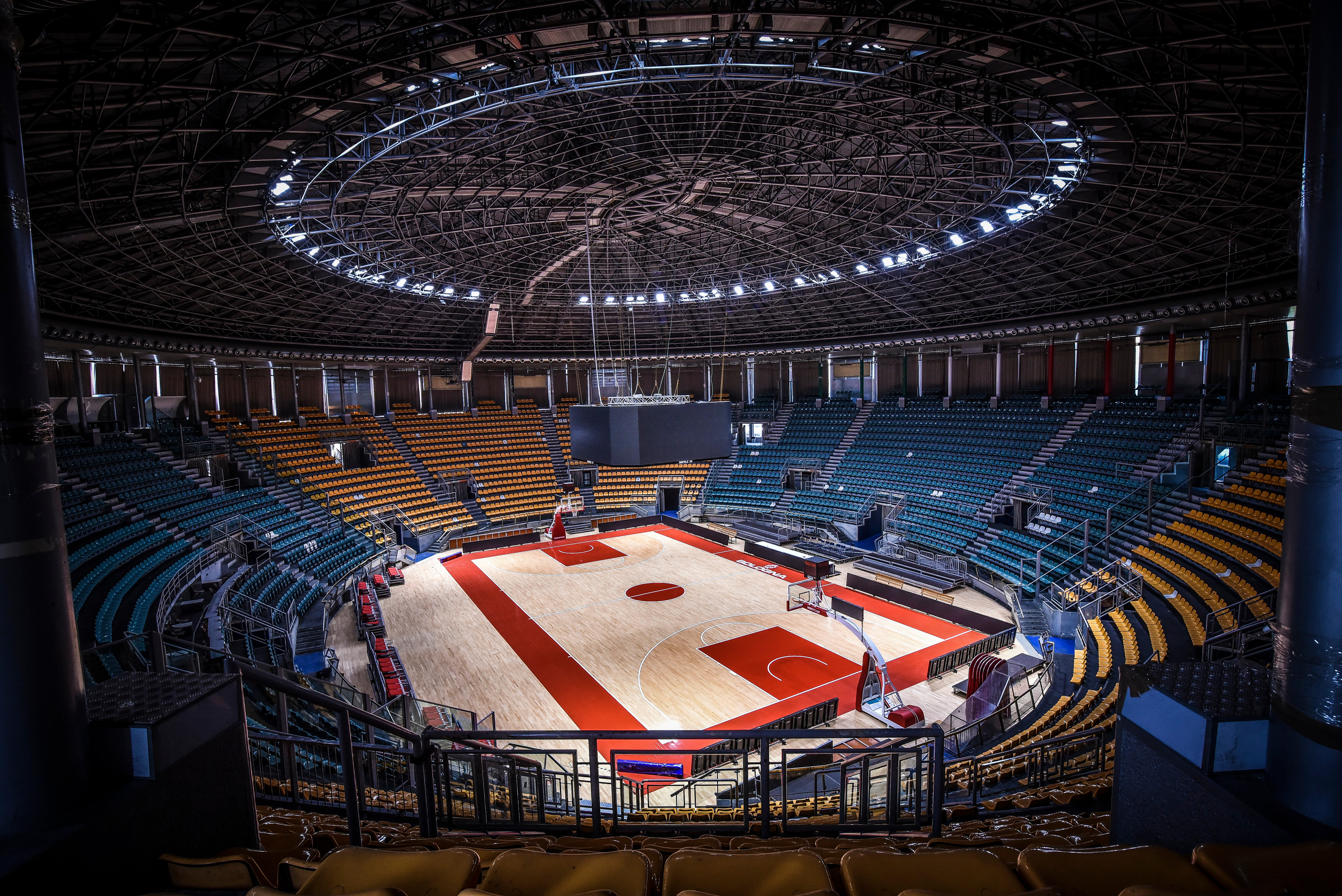
Play Paint It, Black by the Rolling Stones and head to the PalaDozza, the historic sports arena in Piazza Azzarita.
Best known for basketball, the arena also holds an important part of the city’s international musical history. In 1967, the Rolling Stones came here during their first Italian tour.
Looking at the PalaDozza today whilst listening to Paint It, Black means imagining Bologna as it was back then, in the presence of one of the bands that would leave an indelible mark on the history of rock.
🎵 Listen to: The Rolling Stones, Paint It, Black
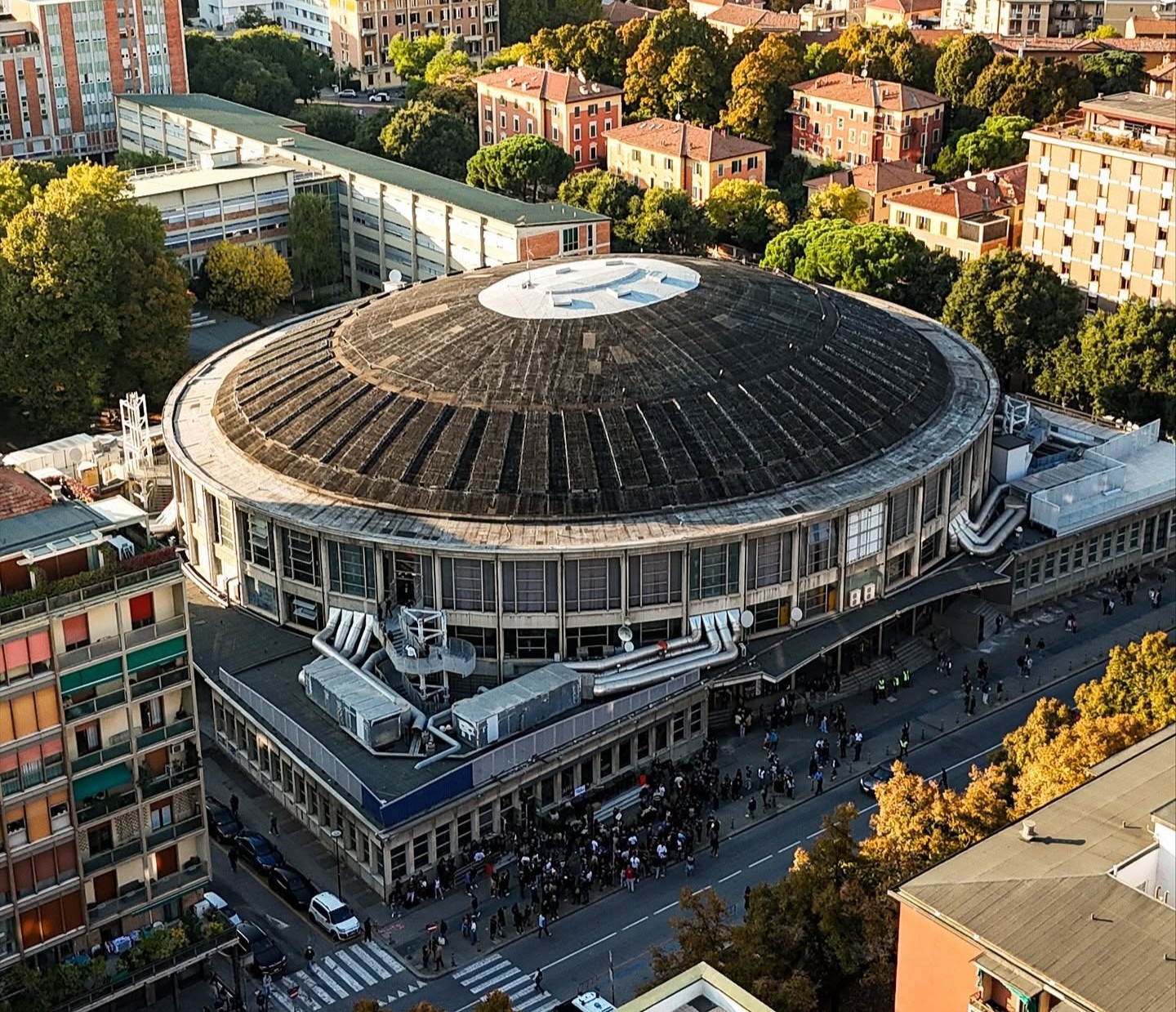
There’s no need to change location to listen to the next track. In 1968, in fact, the Palazzo dello Sport itself also hosted Jimi Hendrix.
Play Purple Haze and try to imagine those guitars inside the Palazzo dello Sport in the late 1960s.
Purple haze all in my eyes
Don’t know if it’s day or night
You’ve got me blowin’, blowin’ my mind
Is it tomorrow, or just the end of time?
The PalaDozza thus becomes a little time machine: in just a few metres, it takes you from the Rolling Stones to Hendrix and reminds you just how quickly Bologna entered the international music scene.
Not all the songs on the playlist are directly about Bologna: some, like these, preserve the memory of a concert that left its mark on the city’s musical history.
🎵 Listen to: Jimi Hendrix, Purple Haze
From international rock, we return to Italian music. The next track is Vita spericolata by Vasco Rossi, an artist whose story is closely intertwined with Bologna.
The singer wasn’t born in Bologna, but his connection with the city runs much deeper than simply spending time there. Bologna welcomed him during his formative years, and it was here that he met people who proved pivotal to his career. This bond has also been recognised by the City Council, which awarded him the Nettuno d’Oro.
The place that gives this connection tangible form is Fonoprint.
These Bologna studios were one of the cradles of Italian music. Vasco worked on his first records there, and it was also here that Bollicine was produced – the album featuring Vita spericolata.
It is therefore right in front of this recording studio that this song takes on a different meaning. Because Bologna has not only inspired musicians: it has also provided them with venues, engineers, producers and instruments to turn their ideas into records.
🎵 Listen to: Vasco Rossi, Vita spericolata

After the energy of rock and a reckless life, the playlist changes pace once again. With Silvia lo sai, Luca Carboni paints a more intimate picture of Bologna, one made up of adolescence, friendships and everyday fragility. A city that doesn’t need grand stages to find its way into a song.
Silvia lo sai belongs to a Bologna different from that of The Clash, the Skiantos or hip hop: more intimate, everyday and generational.
Carboni has built much of his artistic identity by exploring relationships, growing up, fragility and ordinary life. On this stroll, it serves precisely to shift gears.
After taverns, punk, rap and big concerts, Bologna returns to being a city filled with ordinary people.
Just a few lines are enough to evoke a familiar atmosphere for those who know Bologna: that of May evenings, when the streets take on a different scent and the city seems to slow down.
Listen to Silvia lo sai as you approach the Saragozza area, letting this more intimate interlude set the scene for the journey towards the hills.
🎵 Listen to: Luca Carboni, Silvia lo sai

And whilst Carboni’s song evoked the scents of the city, it’s time to change the pace once more and head towards the hills, accompanied by 50 Special by Lunapop.
Few pop songs have linked an image of Bologna to a generation as much as this track, which embodies movement, adolescence, freedom and, above all, a specific image: the Bolognese hills.
And this time, the landscape appears just when you need it.
From Porta Saragozza begins the stretch leading towards the Portico di San Luca. Whether you walk it or choose another means of transport, let 50 Special accompany the moment when the city centre begins to fade into the distance.
At this point, the chorus and the view before you begin to speak of the same place.
🎵 Listen to: Lunapop, 50 Special
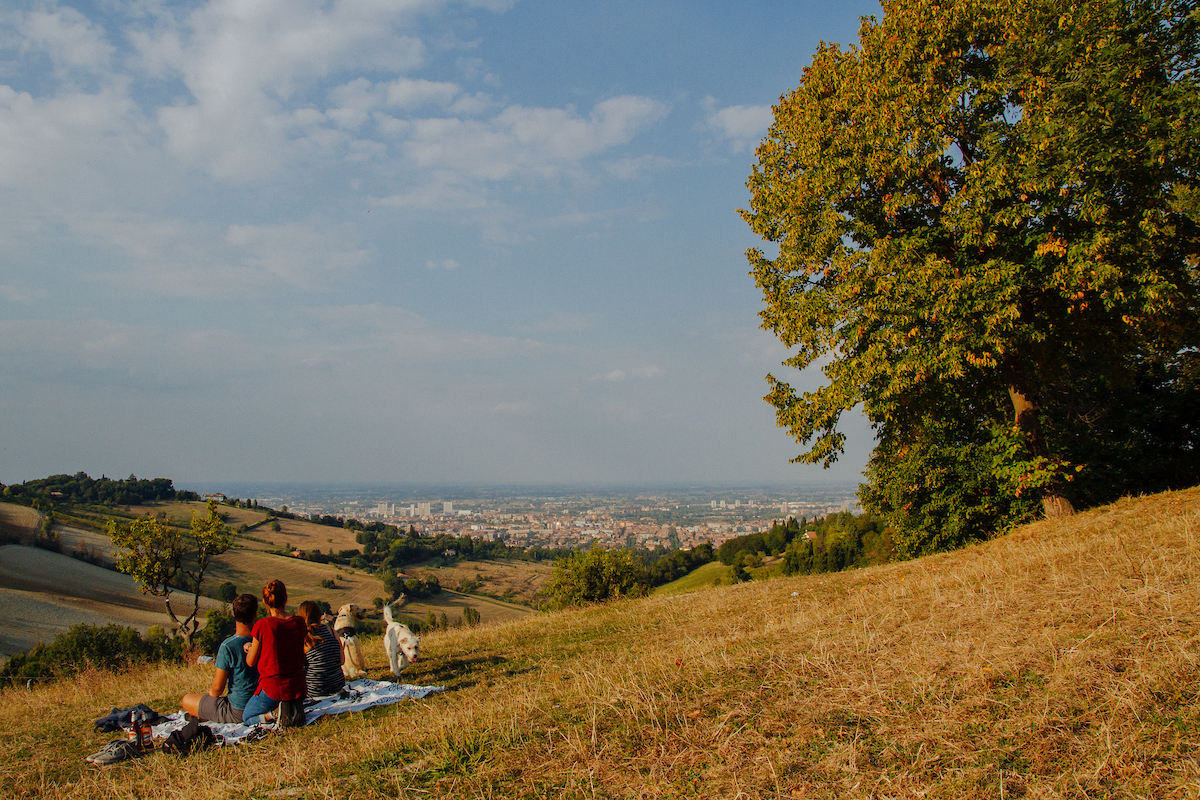
The walk is drawing towards its final stop: the Sanctuary of San Luca. Accompanying the climb is San Luca, the track in which Cesare Cremonini and Luca Carboni – representing two generations of Bolognese music – come together to tell the story of one of the city’s most recognisable landmarks.
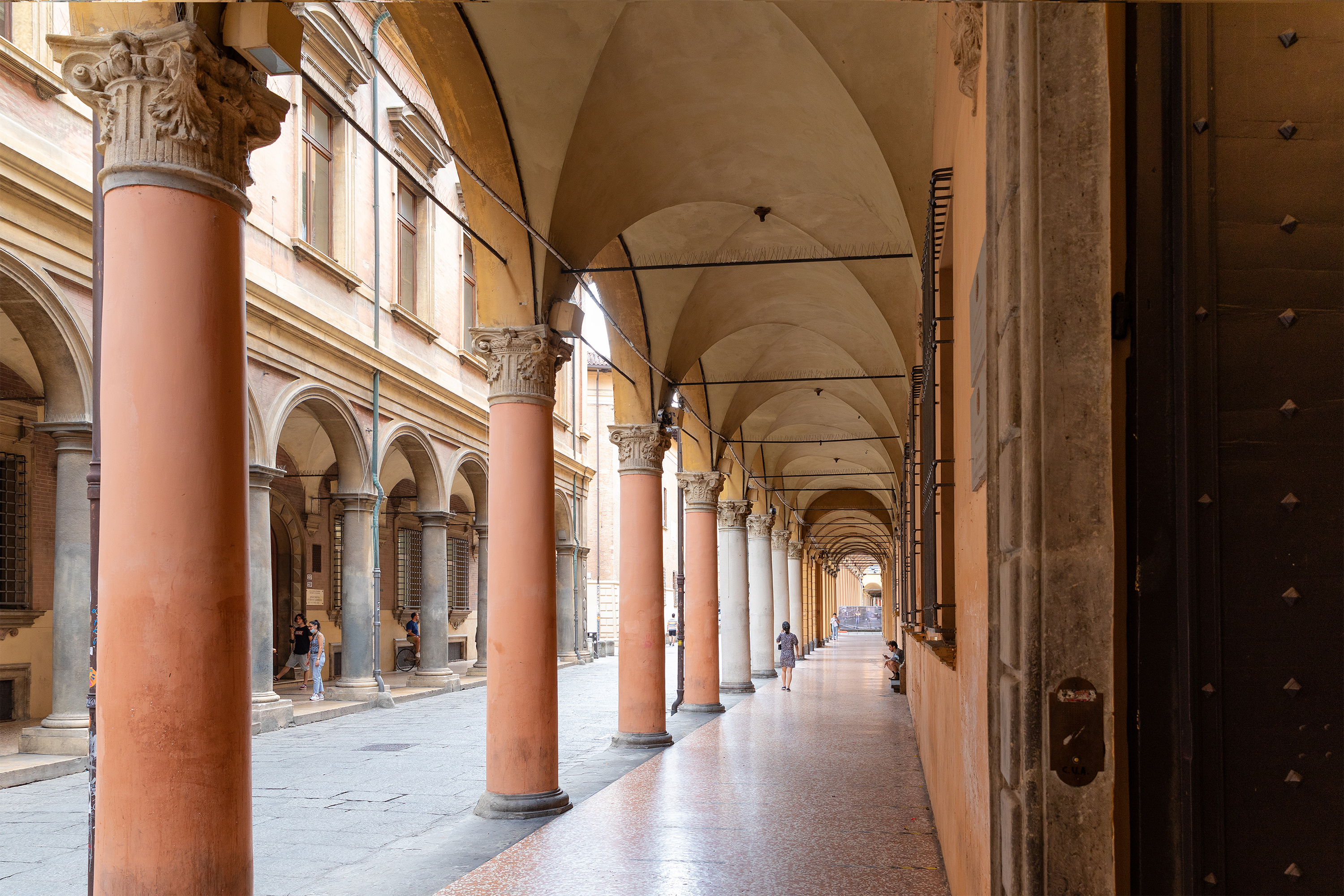
The portico runs alongside the road all the way to the Sanctuary of the Madonna di San Luca, on the Colle della Guardia. Here, it’s best to let your pace set the rhythm of the playlist: arch after arch, the city centre slips further and further into the distance.
The track, released in 2024, thus accompanies one of the most evocative moments of the route. After passing through squares, neighbourhoods, taverns and musical landmarks, Bologna reveals itself from a different perspective. From above, the individual stops along the walk seem to come together into a single panorama.
It is also the point where the different facets encountered so far begin to coexist within the same panorama: the city of songwriters, the underground scene, the pop city, the rock venues and the city of the new generations.
🎵 Listen to: Cesare Cremonini and Luca Carboni, San Luca

Our journey through Bologna’s songs is drawing to a close, but the city’s musical history continues. Alongside the great singer-songwriters and bands that have shaped the city’s past, new voices and new styles continue to help tell its story today.
One of the recurring themes throughout this history is Bologna’s ability to welcome artists from outside the city and create opportunities for those just starting out.
This is not merely a perception. Today, the city boasts live clubs, festivals, training programmes, calls for applications and projects dedicated to nurturing new talent; the Bologna Città della Musica platform brings together professional and training opportunities, whilst numerous events showcase both established artists and emerging talents.
Bologna is a university city and every year thousands of students and those living away from home bring new music with them. Some tracks end up becoming part of the city’s everyday life through shared flats, concerts, parties and nights out, even when the people who wrote them come from elsewhere.
This is where Calcutta comes in with Gaetano, which has become a familiar fixture for a generation that grew up amidst university life and the Italian indie scene.
Joseph Beuys by Gio Evan also chooses Bologna as part of its imagery. It is another example of how you don’t need to have been born in the city to tell its story through music.
It is yet another small indication of the city’s ability to attract artists, students, writers and musicians, and to temporarily become their city too.
The bond between Bologna and those who pass through it also reaches the stage of the Sanremo Festival. In 2025, Lucio Corsi, with Volevo essere un duro, evoked Bologna railway station, a symbolic place of departures, arrivals and encounters. A brief reference, yet one capable of highlighting the city’s role as a crossroads of stories and people: some arrive to stay, whilst others merely to change trains, yet all take an image of Bologna with them.
🎵 Listen to: Calcutta, Gaetano | Gio Evan, Joseph Beuys | Lucio Corsi, Volevo essere un duro
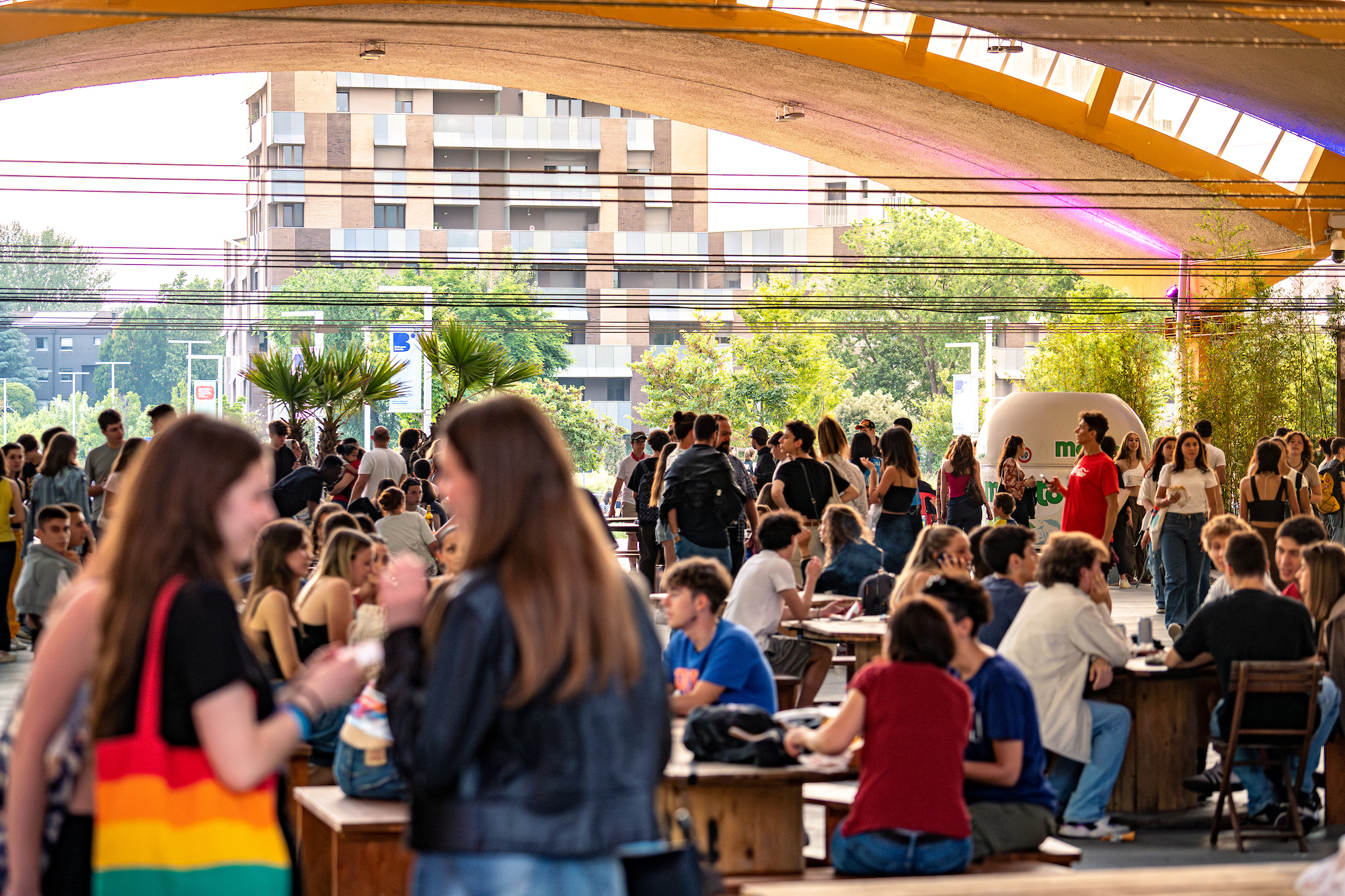
Alongside the artists who have chosen Bologna as a place of passage or inspiration, there are those who have grown up within its music scene. This is the case with Lo Stato Sociale, a band formed in the city that has managed to make the leap from the independent circuit to the mainstream. With Una vita in vacanza, the band took second place at the Sanremo Festival in 2018, bringing one of the expressions of contemporary Bolognese music to the national stage.
And it is precisely in 2026, the year marking the 20th anniversary of Bologna’s designation by UNESCO as a Creative City of Music, that an event occurs which seems to bring this playlist full circle.
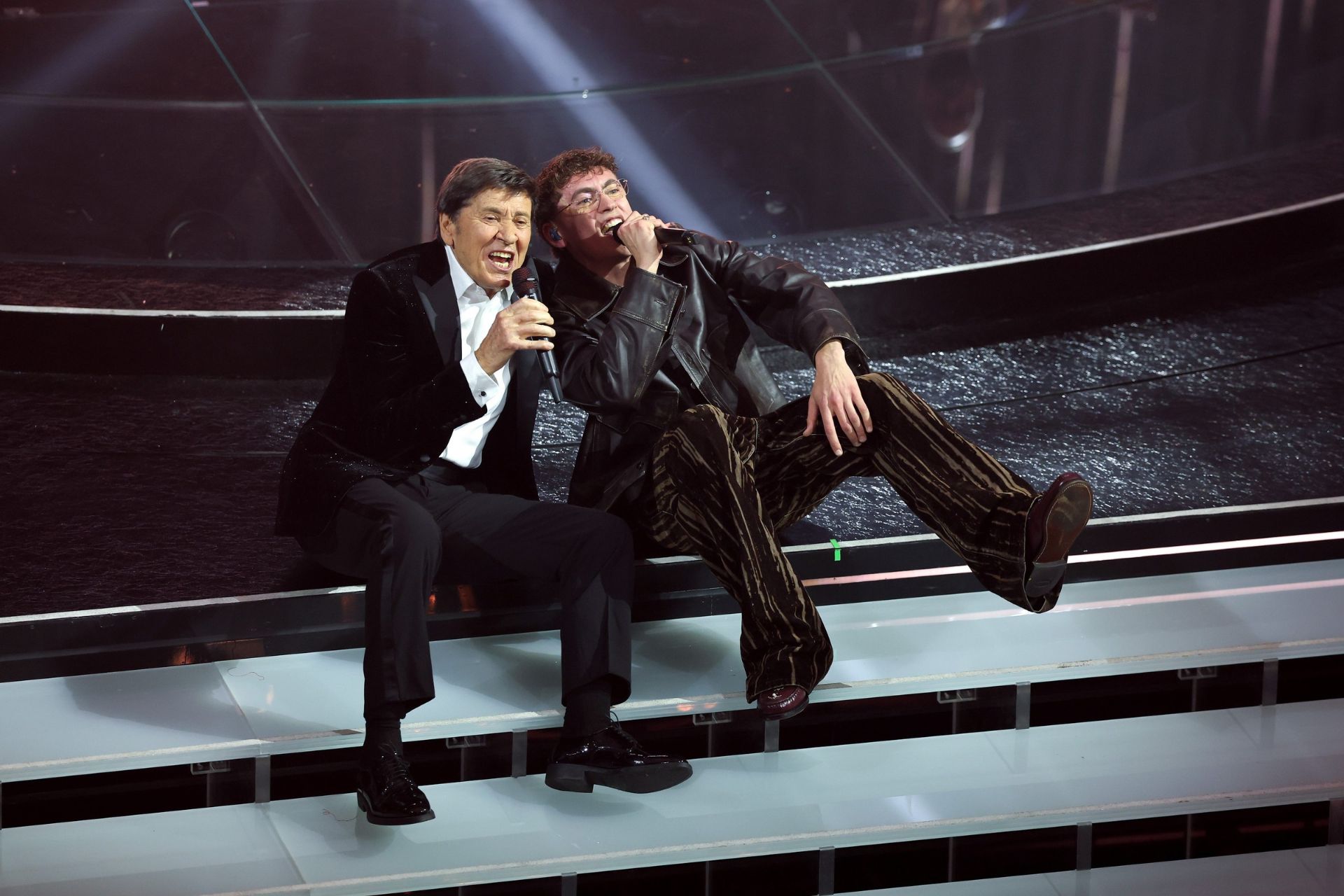
Tredici Pietro, a Bolognese artist and son of Gianni Morandi, makes his debut among the ‘Champions’ at the Sanremo Festival with Uomo che cade. During the cover night, he chooses to reinterpret Vita – the song we encountered earlier in this journey – in the version made famous by Lucio Dalla and Gianni Morandi in 1988.
He is accompanied by Galeffi and Fudasca & Band, but the surprise comes when Gianni Morandi also appears on stage. Father and son thus find themselves singing a song that, almost forty years earlier, had brought together two leading figures of the Bolognese music scene.
The song recorded by Dalla and Morandi in 1988 is thus passed on to the next generation. A song passes from voice to voice, changes meaning and lives on.
From father to son, the playlist thus returns to where it began. A passing of the baton between generations, which perhaps better than any definition illustrates what it means to be a City of Music: to preserve one’s history and continue, every day, to write a new one.
🎵 Listen to: Lo Stato Sociale, Una vita in vacanza | Tredici Pietro, Uomo che cade | Tredici Pietro, Galeffi, Fudasca & Band and Gianni Morandi, Vita – Sanremo 2026 cover