What to do and see for free in Bologna
Updated on 09 July 2026 From Bologna Welcome

Are you looking for free museums, places to visit without an admission fee, or walking routes? Bologna offers plenty of opportunities to explore the city without spending a penny. From the medieval historic centre to the city’s parks, from free-entry museums to monumental churches, here is a selection of free experiences to help you experience the city in an authentic way.
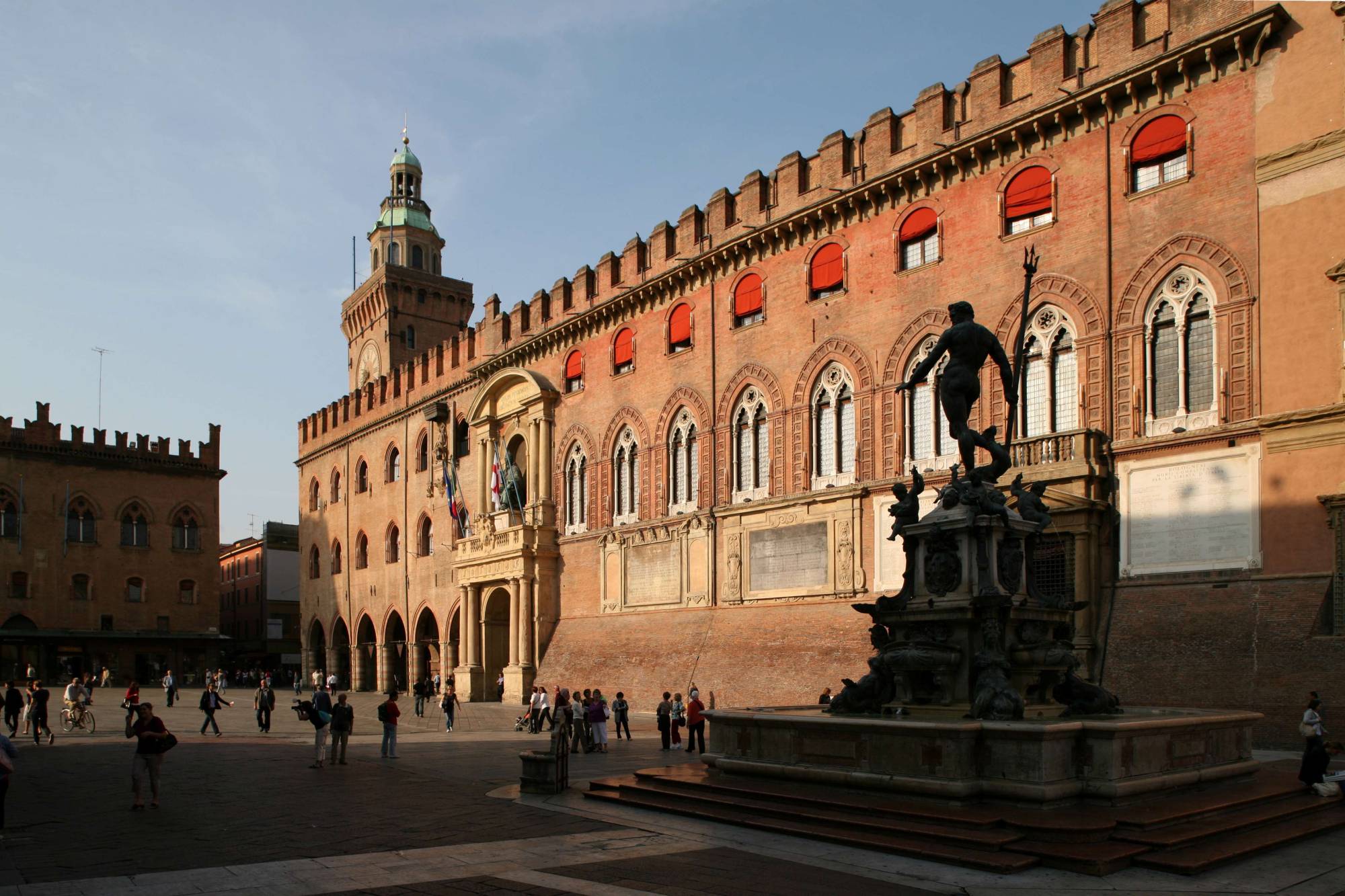
One of the best ways to get to know Bologna is simply by walking. The medieval historic centre, one of the largest and best-preserved in Europe, is a veritable open-air museum where every street tells a story.
During a stroll, you can discover some of the city’s most intriguing and frequently photographed spots, often cited among the famous “seven secrets of Bologna”: the Little Venice of Via Piella, the three arrows hidden in the truss of Corte Isolani, the “wireless telephone” of the Voltone del Podestà and many other curiosities that reveal themselves only to those who look closely.
➝ Want to discover all 7 secrets of Bologna? Read the dedicated blog post
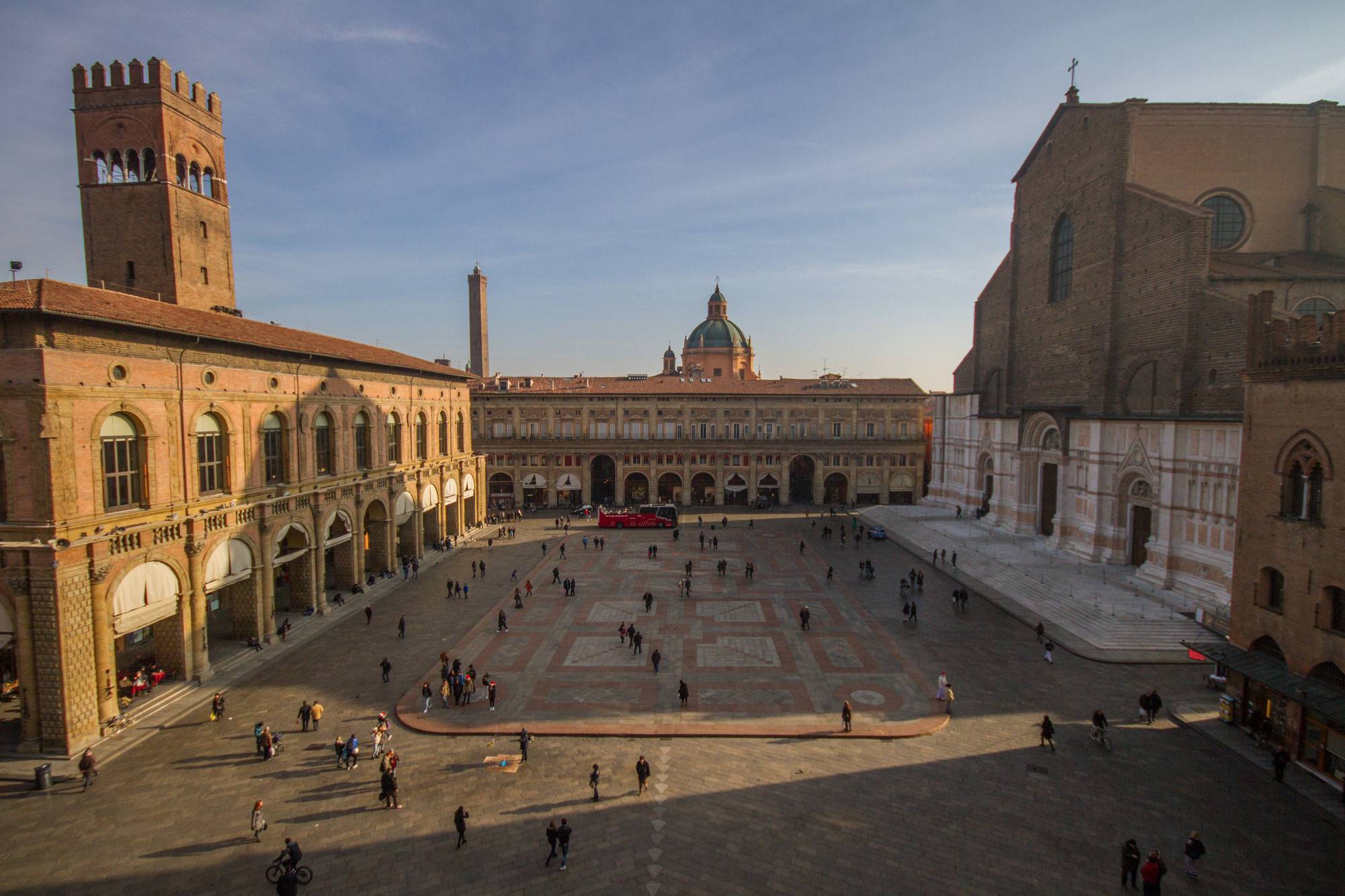
The route also takes you past some of the city’s most iconic landmarks: Piazza Maggiore, the Two Towers, the Quadrilatero, the Archiginnasio and the UNESCO porticoes, making it one of the most comprehensive free experiences to enjoy in Bologna.
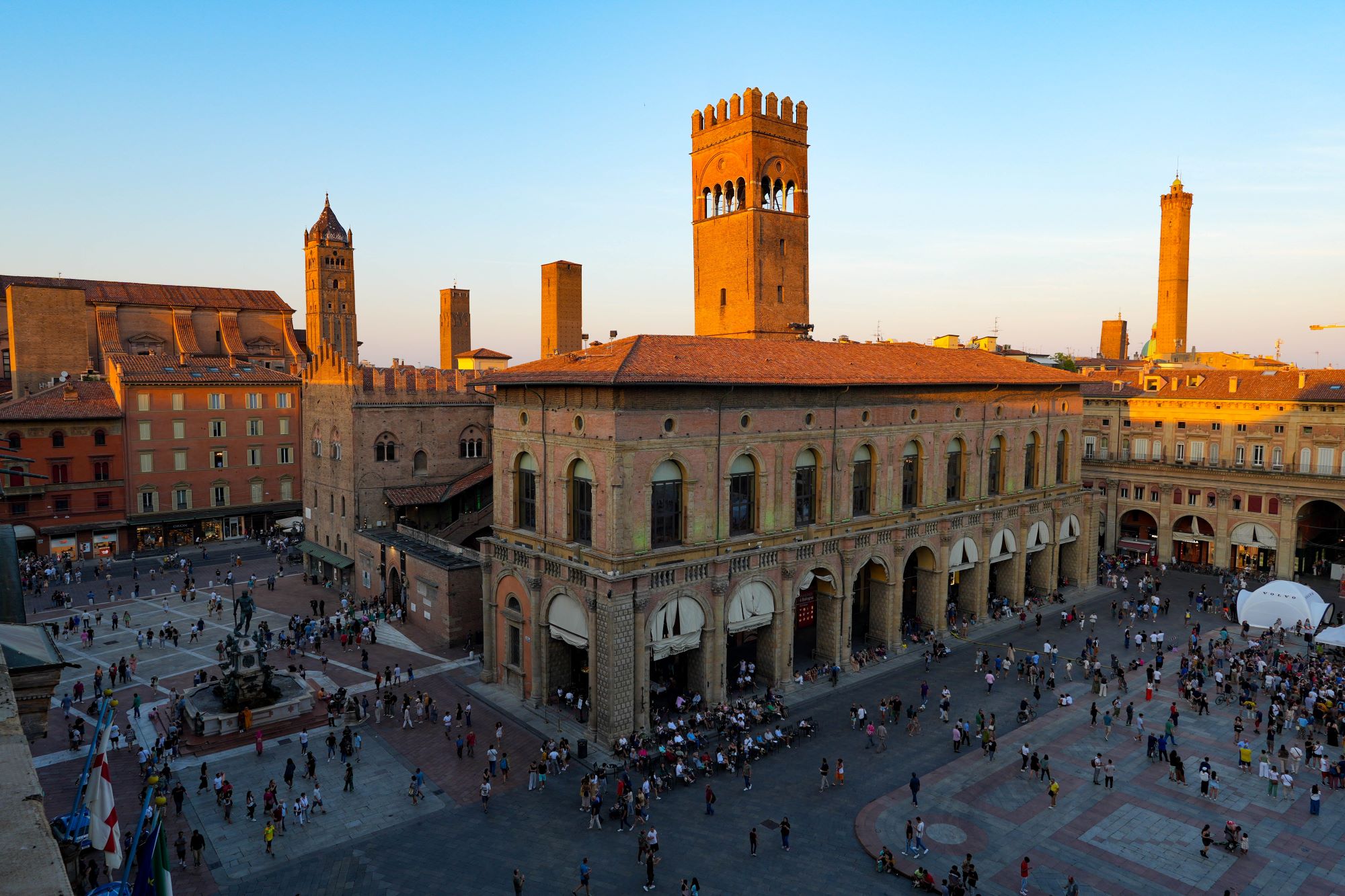
Among the free attractions not to be missed is Palazzo d’Accursio, overlooking Piazza Maggiore and home to Bologna City Council. By walking up the spectacular staircase attributed to Bramante, you can freely access the palace’s historic rooms, monumental halls and chapels.
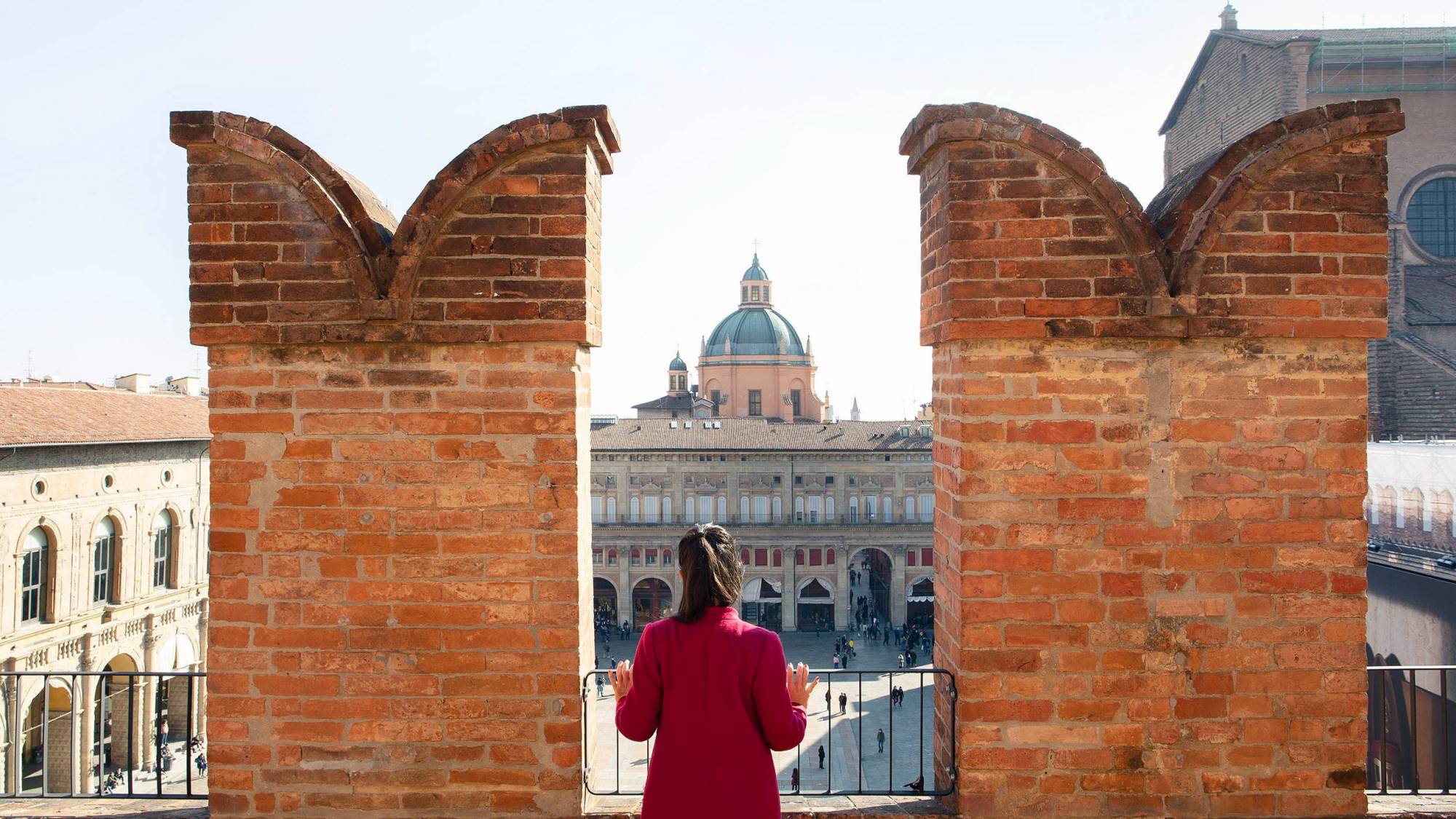
The Collezioni Comunali d’Arte, on the other hand, require an admission ticket: you can find all the information here. And if you’d like to admire Bologna from a privileged vantage point, you can round off your visit by climbing the Torre dell’Orologio, which offers a splendid 360° panoramic view of the historic centre.
➝ Buy your ticket online to climb the Torre dell’Orologio
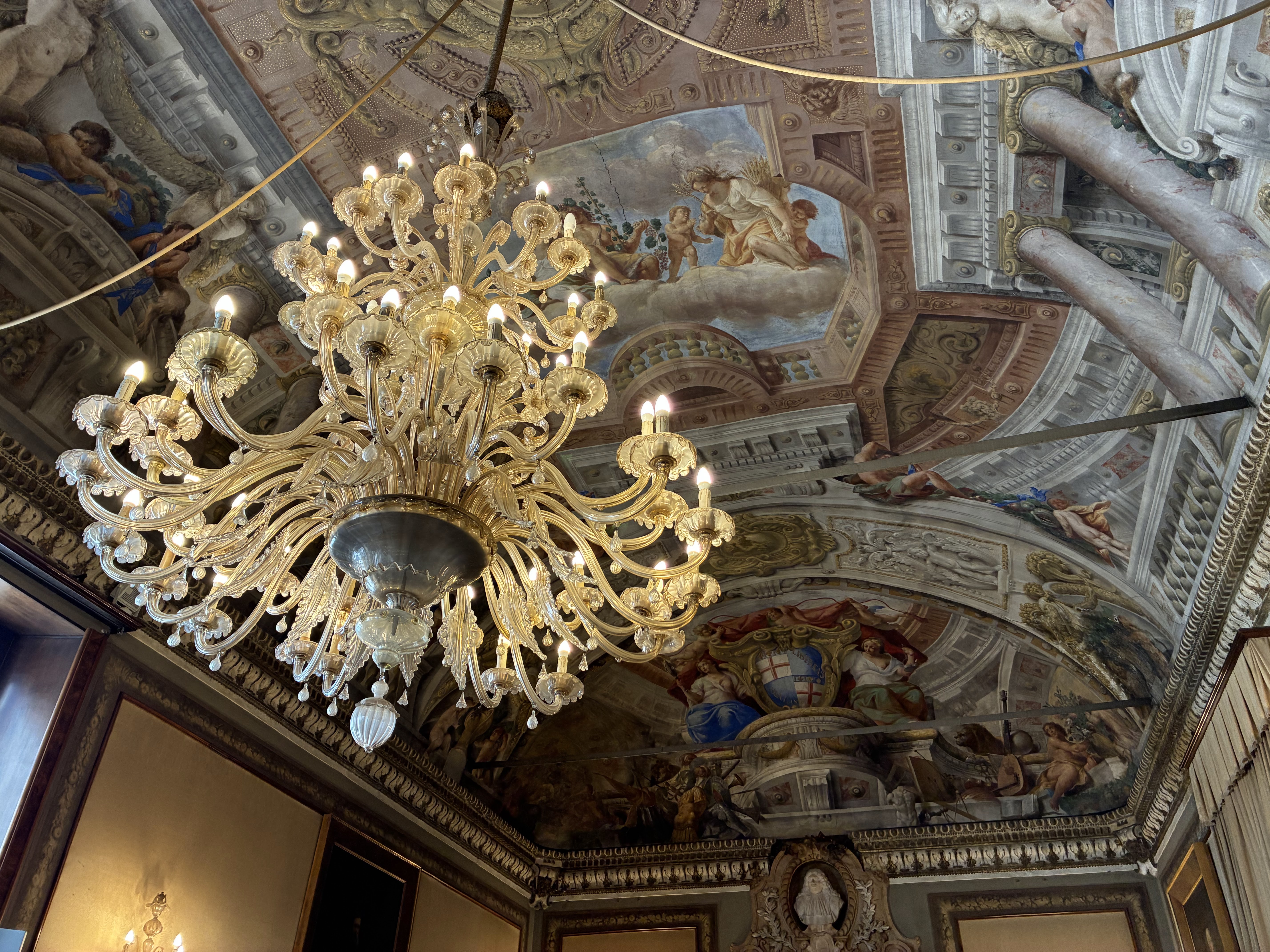
Next to the palace is Salaborsa, one of the city’s most popular cultural venues. Through the glass panels in the floor, you can see the archaeological remains of Roman Bologna, whilst the library’s rooms are open to the public.
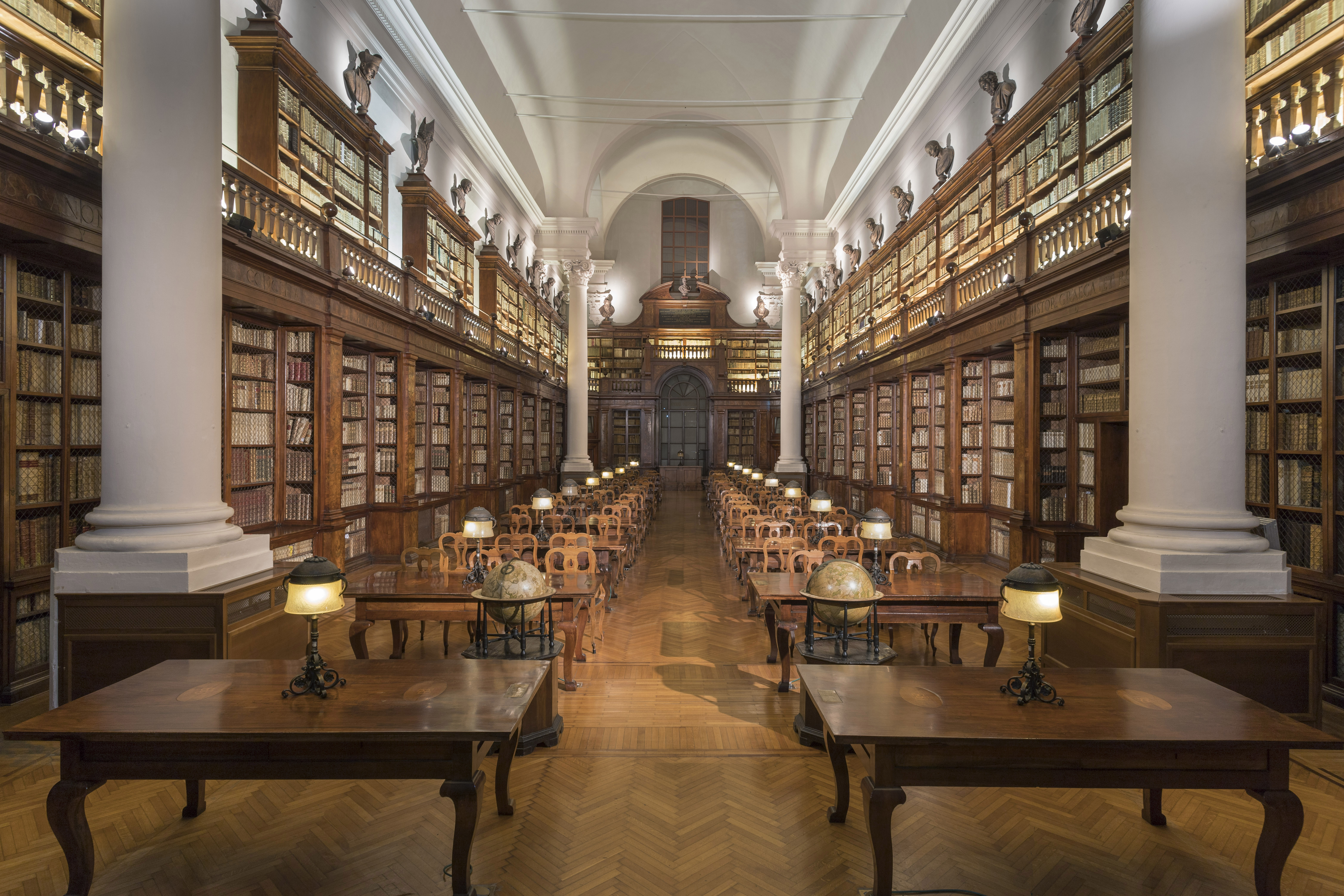
The University Library is also well worth a visit; it houses historic rooms and important artefacts reflecting Bologna’s academic tradition. Access to the historic rooms is available via guided tours organised within Palazzo Poggi.
➝ Discover all of Bologna’s libraries
 ©Antonio Cesari
As well as the famous Giardini Margherita, Bologna offers numerous green spaces that are ideal for a break in the open air. Villa Ghigi and Villa Spada provide access to vantage points overlooking the city, whilst the city’s parks are perfect places for a stroll, a read or a picnic.
For botany enthusiasts, the Botanical Garden of the University of Bologna houses four historic greenhouses – two tropical and two dedicated to succulents – as well as a greenhouse for carnivorous plants and botanical collections of great interest.
Also forming part of the university’s heritage, the Zoology Collection houses one of Italy’s most important natural history collections, featuring rare and fascinating specimens from all over the world.
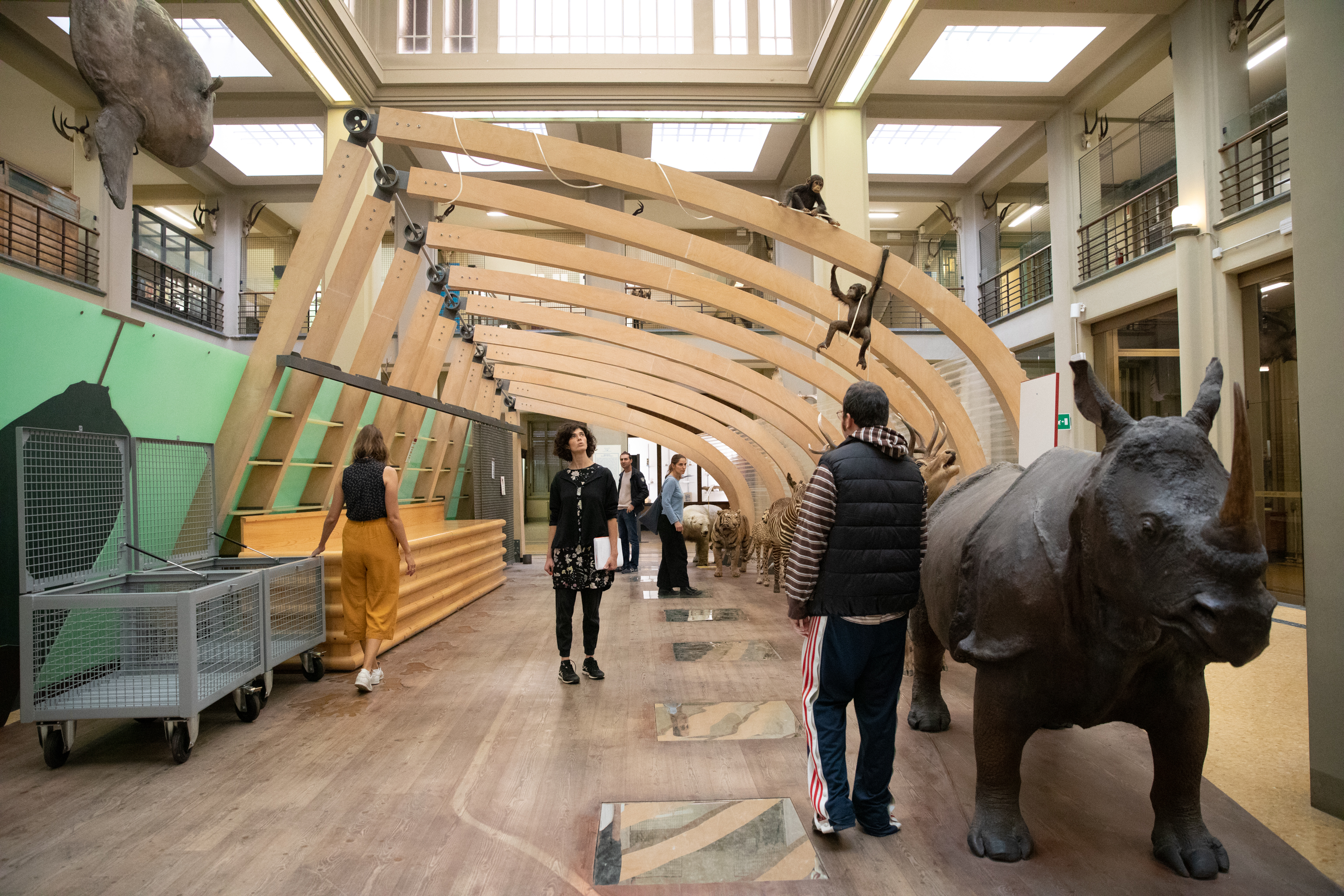
Those wishing to discover lesser-known aspects of the city can choose from a wide range of museums with free admission.
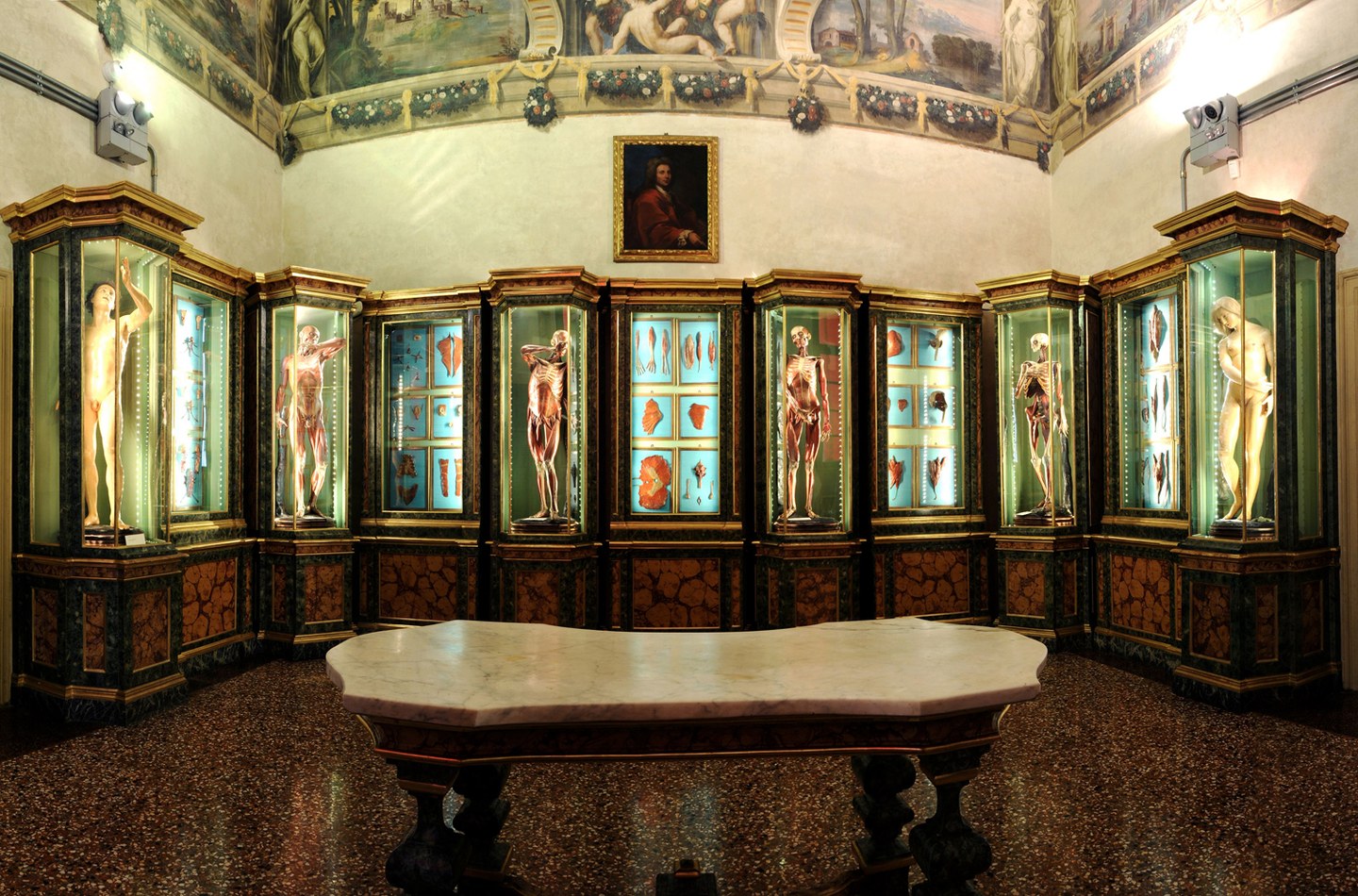
The “Luigi Cattaneo” Anatomical Wax Collection houses precious 19th-century anatomical models that tell the story of medicine and the study of the human body.
If, on the other hand, technology, art and innovation are your passions, the MAST Foundation offers projects focused on integration between business and the community, with free activities for all ages, as well as a programme of consistently engaging exhibitions.
The exhibition at the Ustica Memorial Museum is particularly moving; it houses the wreckage of the Itavia DC9 that crashed on 27 June 1980 whilst flying from Bologna to Palermo, incorporated into the evocative permanent installation created by the artist Christian Boltanski.
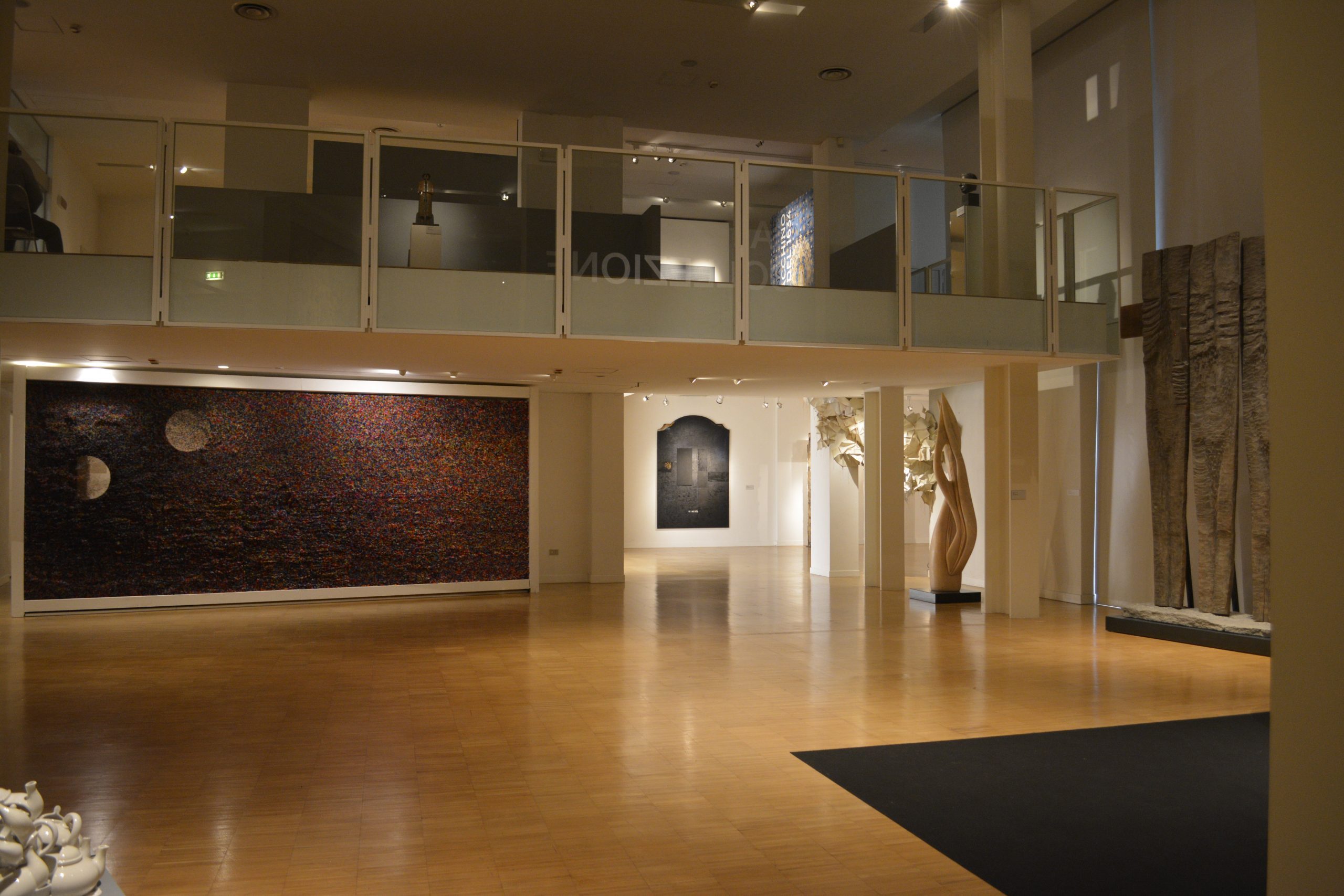
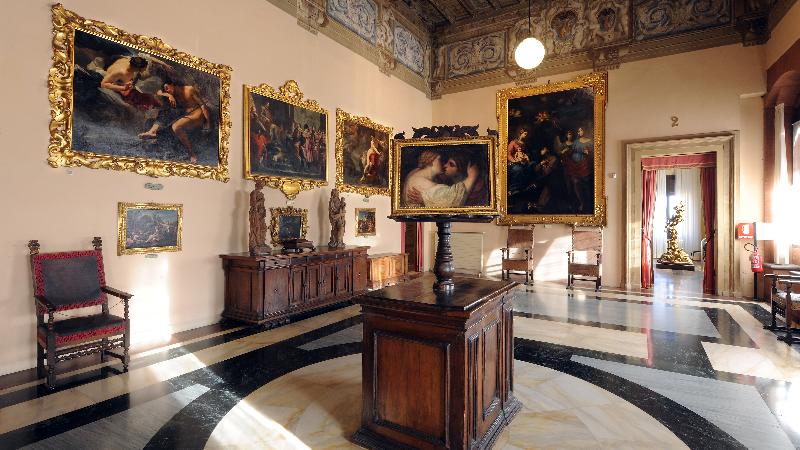
Among the lesser-known but most fascinating collections are also the Davia Bargellini Museum, featuring furniture, works of art and applied arts, and the Lercaro Collection, which brings together works by artists such as Giorgio Morandi, Giacomo Balla and Mimmo Paladino.
➝ Discover all the free museums and special concessions here
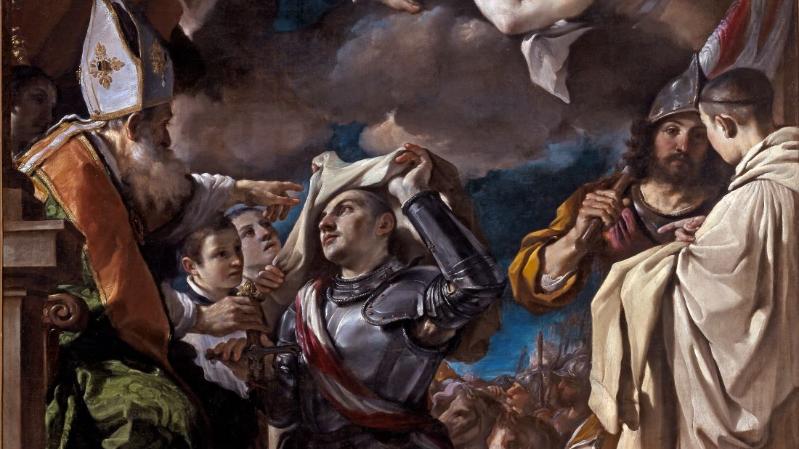
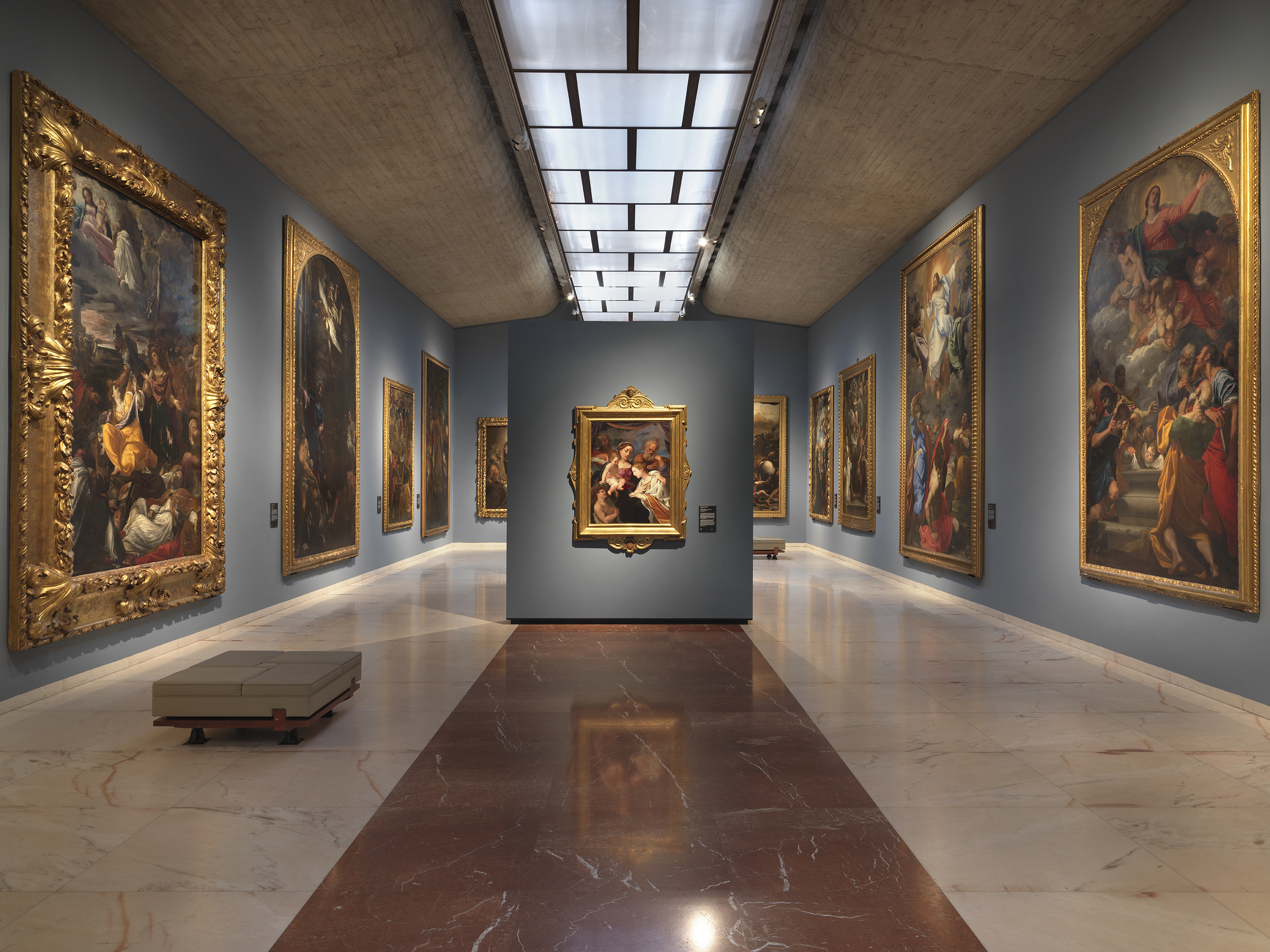
The #DomenicalMuseo initiative returns on the first Sunday of the month, offering free entry to state museums throughout Italy. The Pinacoteca Nazionale di Bologna and its branch at Palazzo Pepoli Campogrande (currently closed for renovation) are also taking part in the initiative and look forward to welcoming you to explore their magnificent galleries. The exhibition traces the evolution of Emilian painting from the 13th to the 18th century and houses masterpieces by artists such as Giotto, Perugino, Raphael, Titian, Guido Reni and the Carracci brothers.
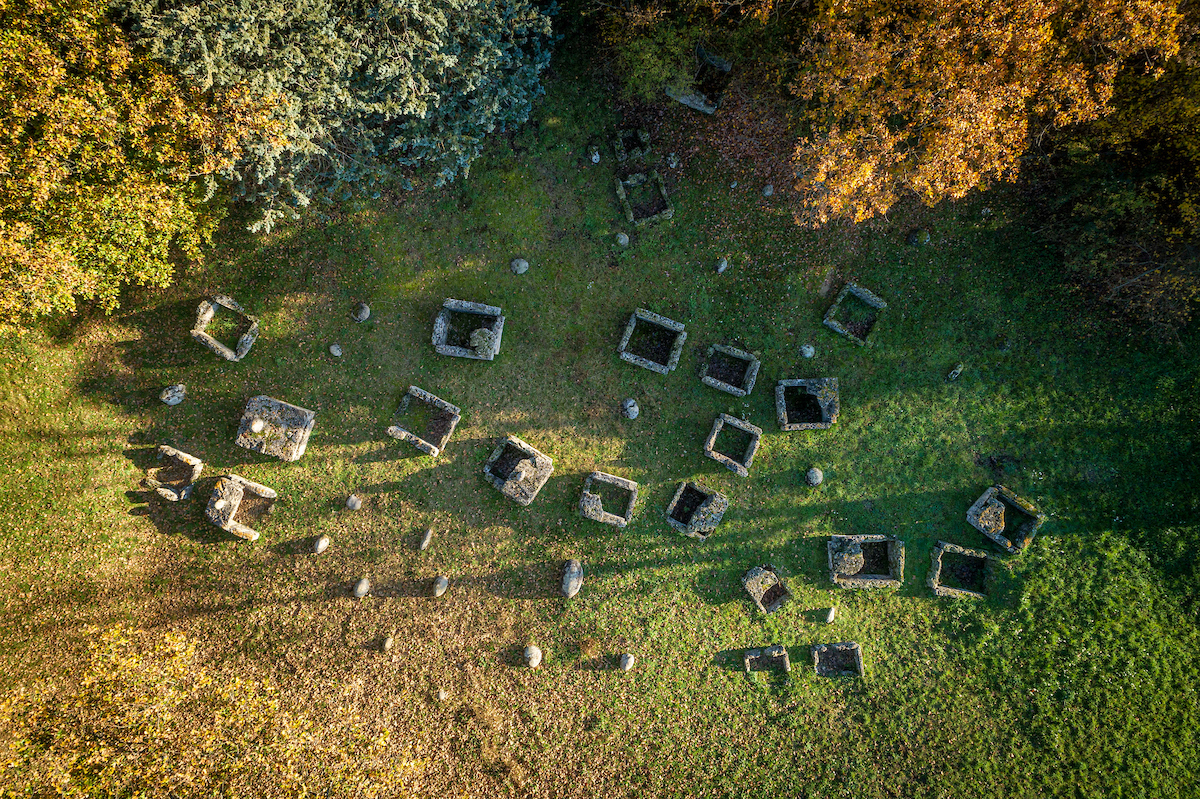
For those wishing to venture beyond the city, the first Sunday of the month also offers the perfect opportunity to visit Marzabotto, with free entry to the MNEMA – “Pompeo Aria” National Etruscan Museum and Kainua Archaeological Park. As you stroll amongst the ruins of the ancient Etruscan city, you can follow the layout of the streets, houses, temples and shops, immersing yourself in daily life as it was over two thousand years ago.
Many of Bologna’s main churches are open to visitors free of charge and house genuine artistic treasures.
From San Petronio to the Santo Stefano Complex, from San Domenico to the Sanctuary of San Luca, each building tells a part of the city’s religious and cultural history.
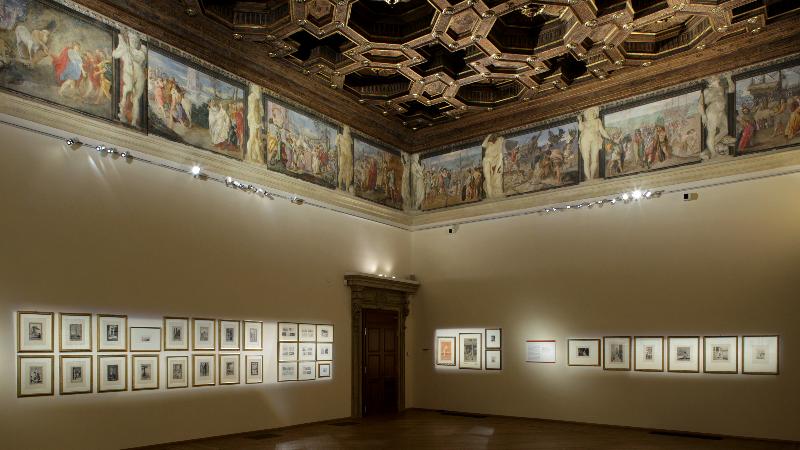
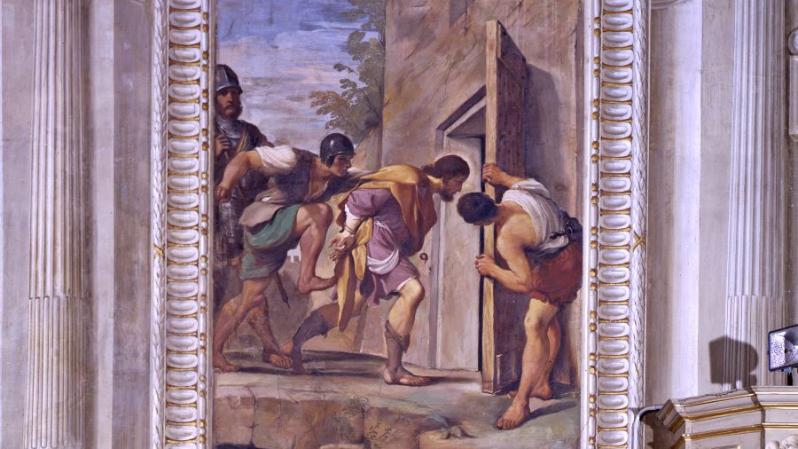
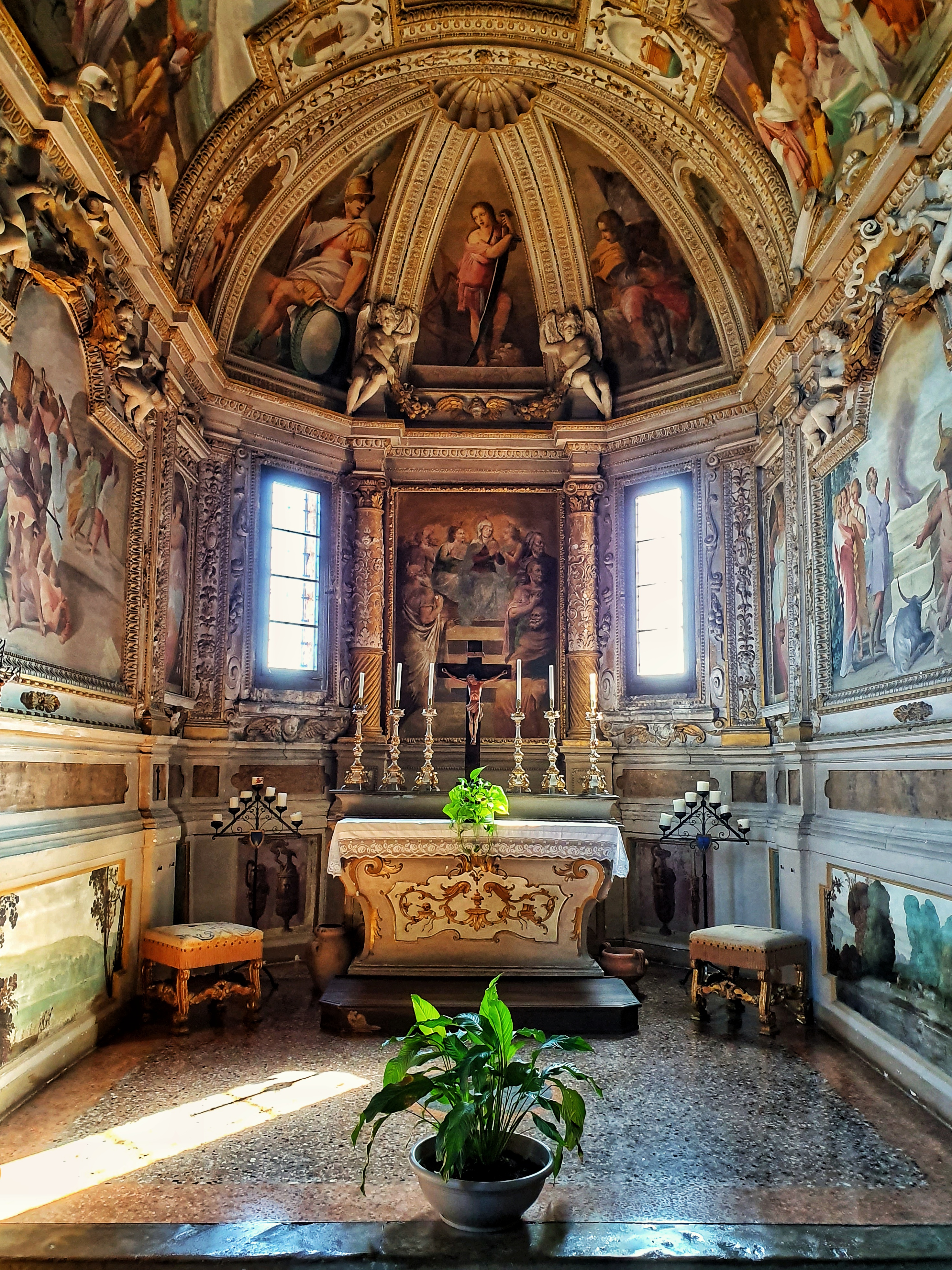
Among the most remarkable sites is the Oratory of Santa Cecilia, next to the Basilica of San Giacomo Maggiore, which houses one of the most important cycles of paintings from the Bolognese Renaissance.
➝ If, on the other hand, you’re interested in a guided or self-guided tour, book the City Pilgrimage experience
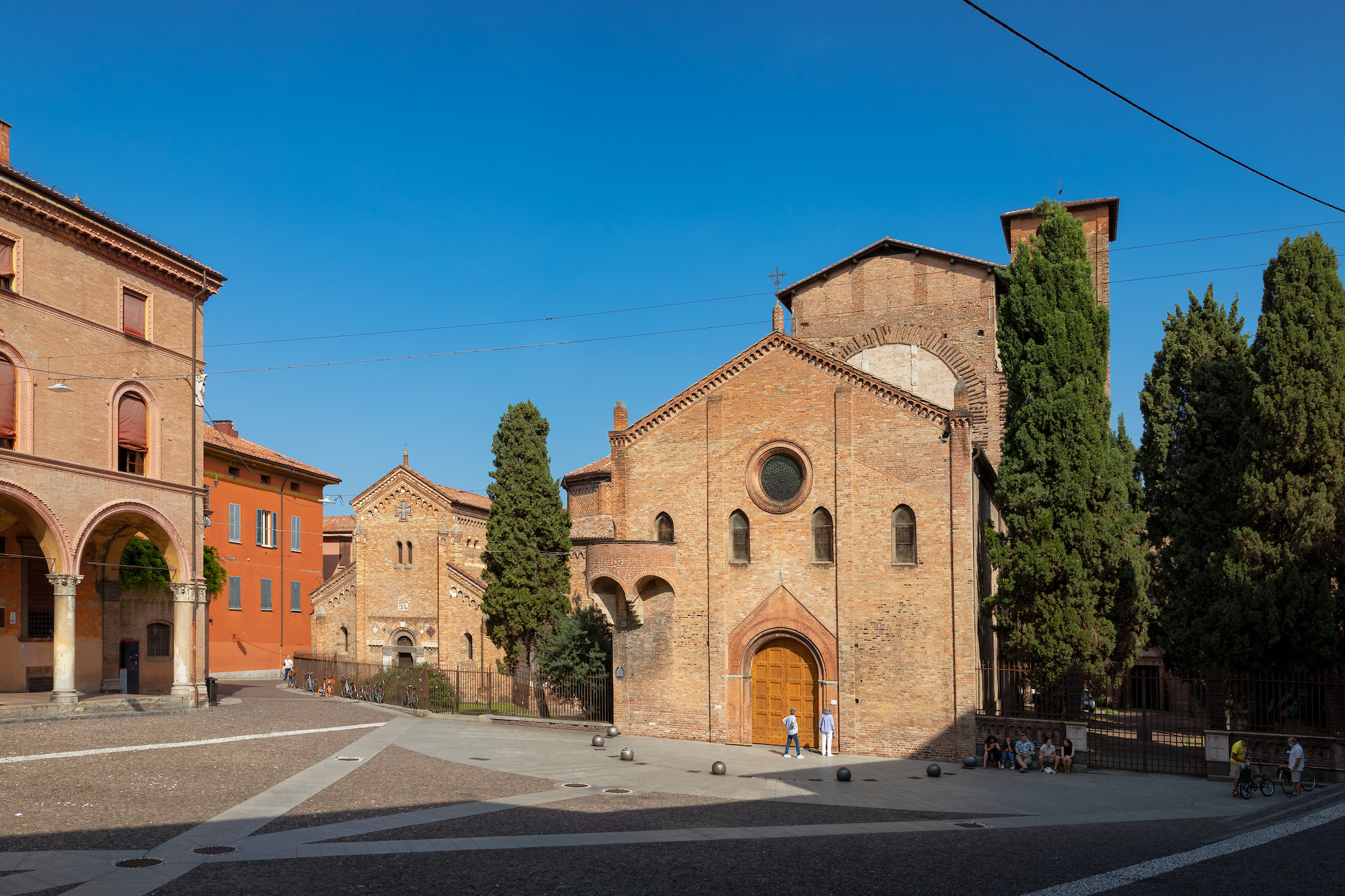
Another unmissable visit is to the Monumental Cemetery of the Certosa di Bologna, one of Europe’s most important historic cemeteries. Here lie figures such as Lucio Dalla, Giosuè Carducci and Giorgio Morandi, amongst funerary monuments of great artistic value.
Finally, on the city’s hills lies the San Michele in Bosco Complex, famous for the striking perspective effect of the ‘telescope’, as well as for its cloisters, frescoes, historic rooms and the unmissable refectory designed by Giorgio Vasari.
Eating completely for free in Bologna isn’t easy, but there are a few places where you can keep costs down considerably.
The most famous example is the Osteria del Sole, a historic tavern in the Quadrilatero where you only pay for drinks and can bring your own food from home, buy it from nearby shops or prepare it yourself.
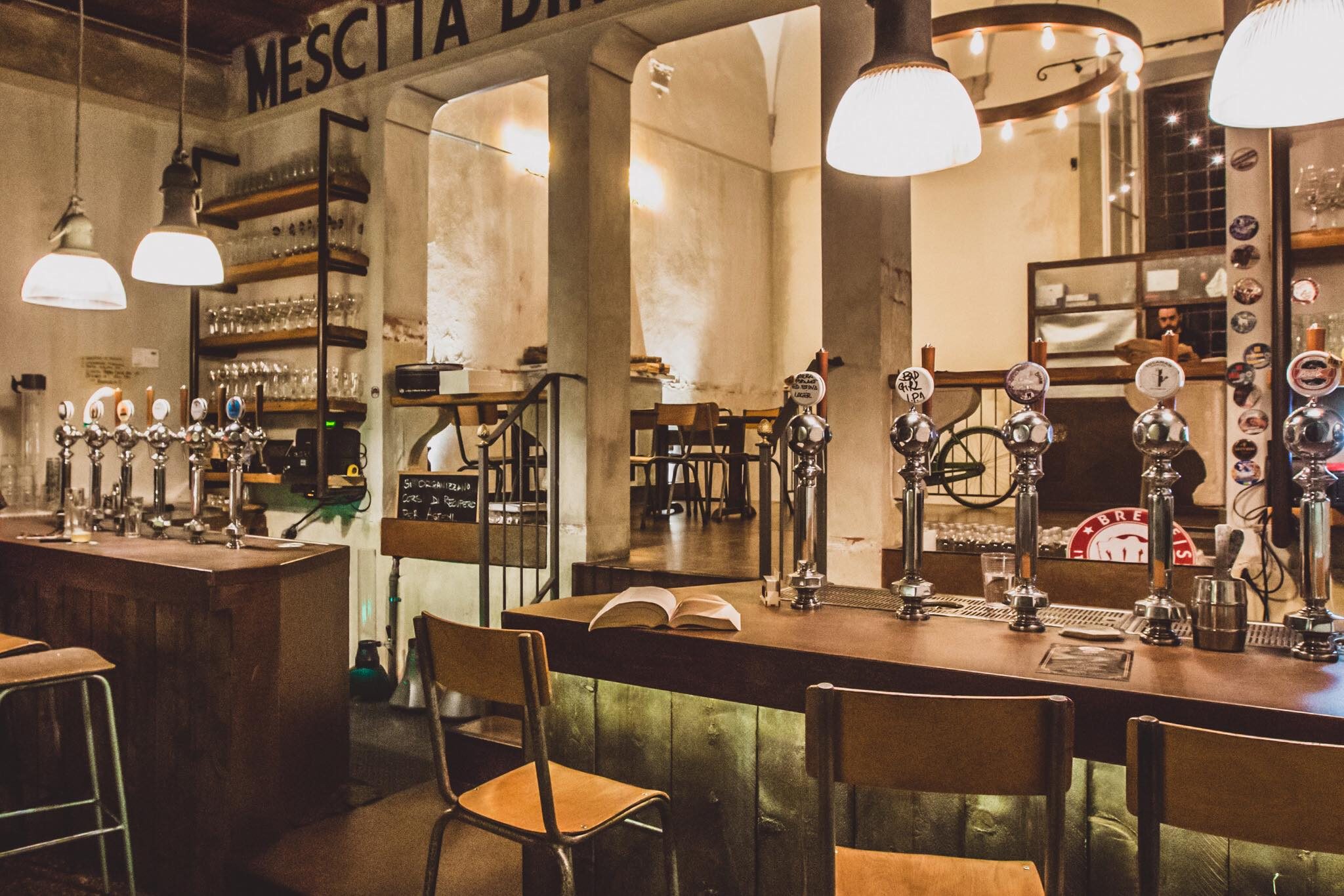
A similar arrangement is offered by the Birreria Popolare, where you can enjoy food brought from outside alongside the pub’s beers.
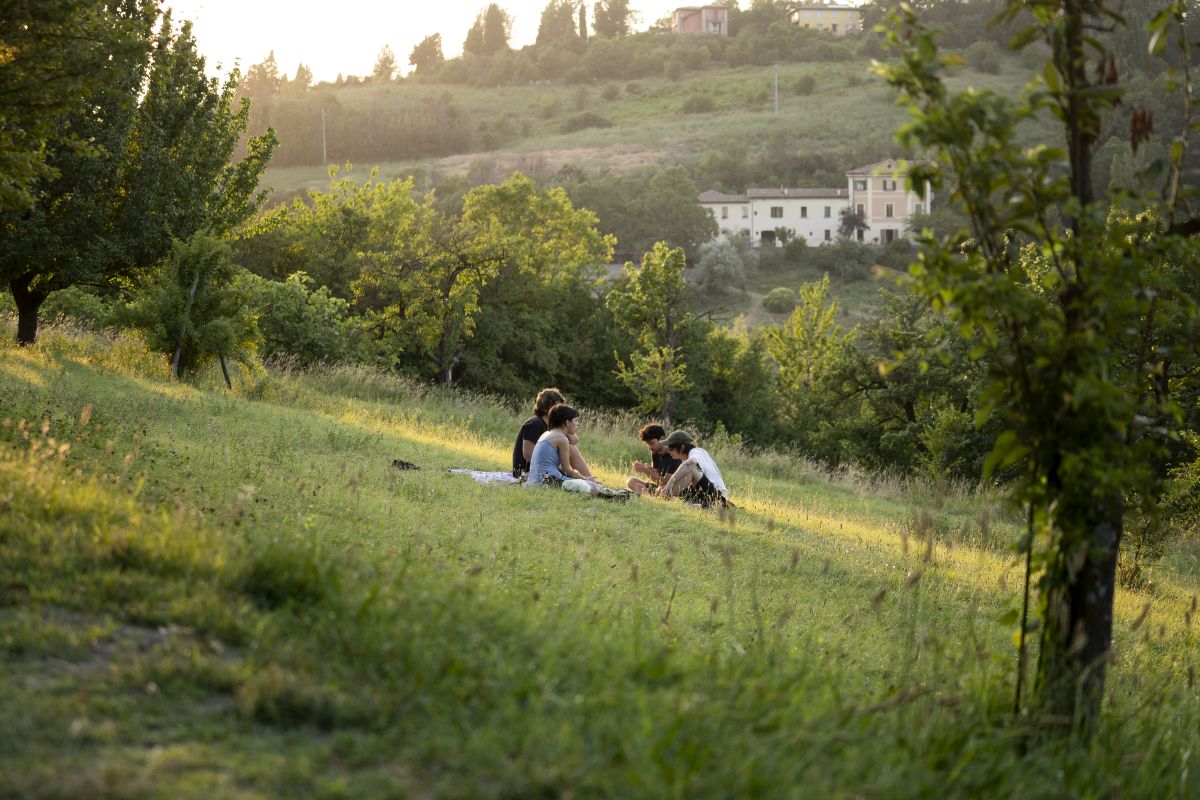
On sunny days, moreover, one of the most enjoyable alternatives is to organise a picnic in the city’s parks. The Giardini Margherita, Villa Ghigi, Villa Spada, the Parco della Montagnola or the Parco di Villa Angeletti offer spacious green areas where you can spend a few hours outdoors without spending a penny.
 ®Wildlab