The Botanical Garden of the University of Bologna is one of the oldest in Italy. It was founded in 1568 on the initiative of Ulisse Aldrovandi (1522-1605).
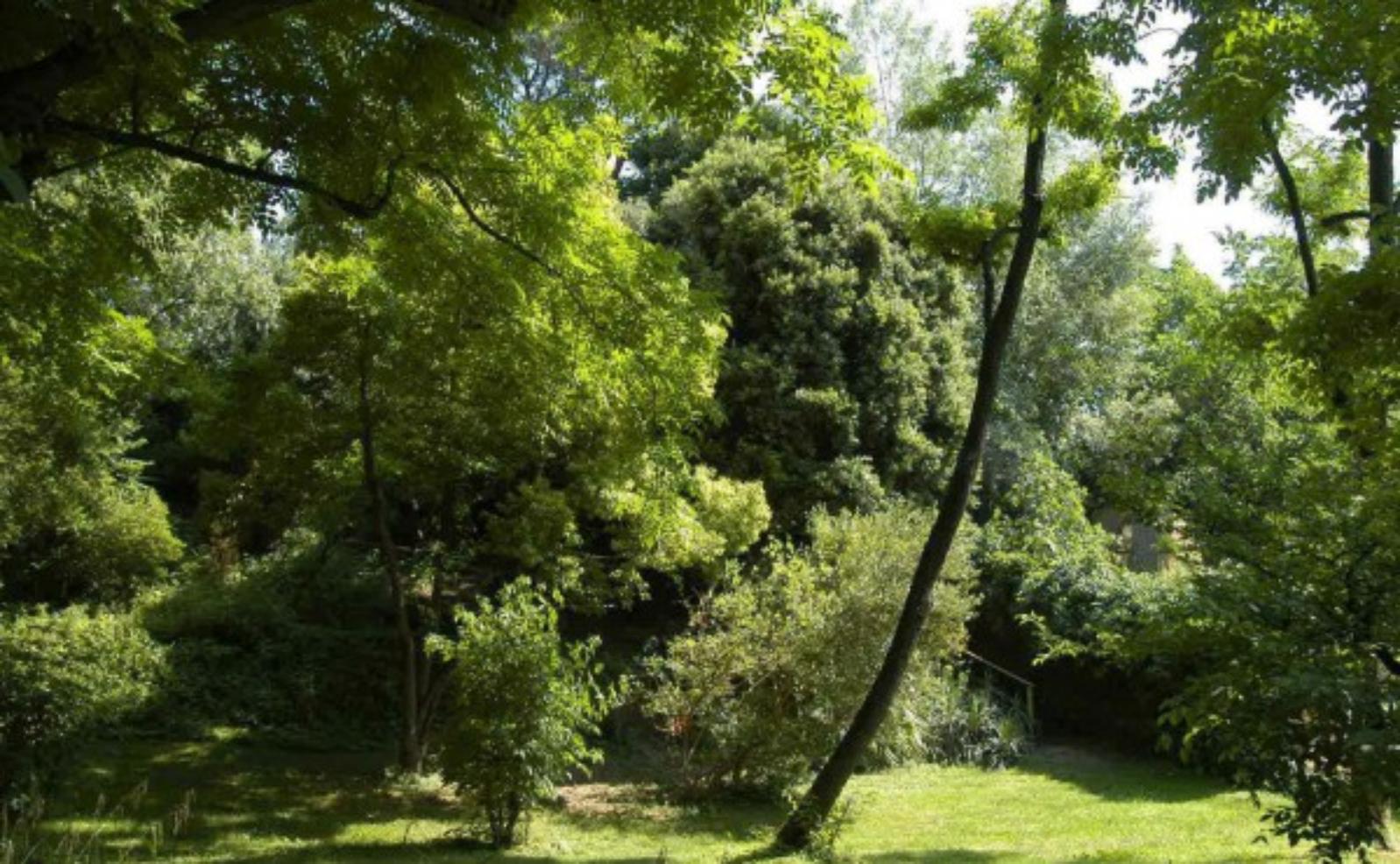
After several transfers found its permanent home in Via Irnerio, in the heart of the University area. The total area is about two hectares, reaching the ancient city walls. It shows unique collections of plants and the reconstruction of natural areas in which the species are associated one another just like in natural areas. The greenhouses are four: two contain tropical plants and two others a collection of succulents.
Other sectors include medicinal plants, ornamental area, the forest. Beside the didactic activity with the University and schools the Botanical Garden has an intense research activity, supporting and developing university projects, both at a national and international level. The Botanical Garden is part of the University Museum System Alma Mater Studiorum University of Bologna - SMA
Telephone: +39 051 2091309
Email: sma.ortoerbario@unibo.it
Site/minisite/other: http://www.sma.unibo.it/il-sistema-museale/orto-botanico-ed-erbario
Entrance
free
Interests
- Nature & Landscape
Details
Accessibility
Hearing impediments
The entrance does not present any difficulty for the hearing impaired.
Introductory panels help guests access and visit the facility on their own.
At the entrance and along the museum itinerary there are a few theme panels with a map; at a few points, a QR code is available to obtain more in-depth information.
The itinerary dedicated to children is marked with a specific symbol.
Further explanatory panels are currently being prepared for some sections, e.g. “useful plants”.
Further information on the herbarium are available through the link to the website, which also features downloadable pdf guides (only in italian).
The language used in the explanatory panels requires discrete language skills, also due to the presence of many technical notions.
There are no means of visual communication in case of emergency in the bathrooms.
Motor disability and mobility issues
At the main entrance, there is a 65 cm wide gate and an 8 cm barrier on the lower part.
An automatic gate is found after the entrance. Visitors need to buzz to gain access and, upon request, they may enter with their car.
The garden paths are made of pebbles and the main parts feature a grid (plasticised).
Some stretches are uneven and consist of dirt tracks.
Visual impediments
The itinerary is mainly outdoors on pebbles, dirt tracks, and grass partly covered with grids. The paths are partially identifiable by the visually impaired, but an escort is recommended.
The vegetation in the Botanical Garden can be partially explored manually, but the presence of a local member of staff is preferable to indicate the plants that can be touched and to offer explanations.
There is also a collection of educational plant or trunk section models which are also suitable for tactile exploration by the visually impaired.
Operators are committed to carrying out specific training to welcome visually impaired guests.
There are no Braille or large-font explanatory texts and even partially-sighted visitors will find labels difficult to read.
Timetables
Summer opening hours
From 1 April to 30 September
Tuesday to Sunday and public holidays: 10:00 AM - 6:00 PM*
Winter opening hours
From 1 October to 31 March
Tuesday to Sunday and public holidays: 9:00 AM - 3:00 PM*
*Last admission 30 minutes before closing time
Closures
Non-holiday Mondays, 1 January, 1 May, 15 August, 24 and 25 December
Access restrictions
In the event of severe past or ongoing weather conditions, such as heavy rainfall, snow or strong winds, access to the Garden may be restricted or completely prohibited. Whenever possible, the Educational Services staff will notify booked groups in advance.
Herbarium
The Herbarium collections are accessible by appointment for documented study purposes.
Map
Orto Botanico
Via Irnerio, 42 - 40126