What to see in Bologna in 3 hours
Updated on 21 July 2026 From Bologna Welcome
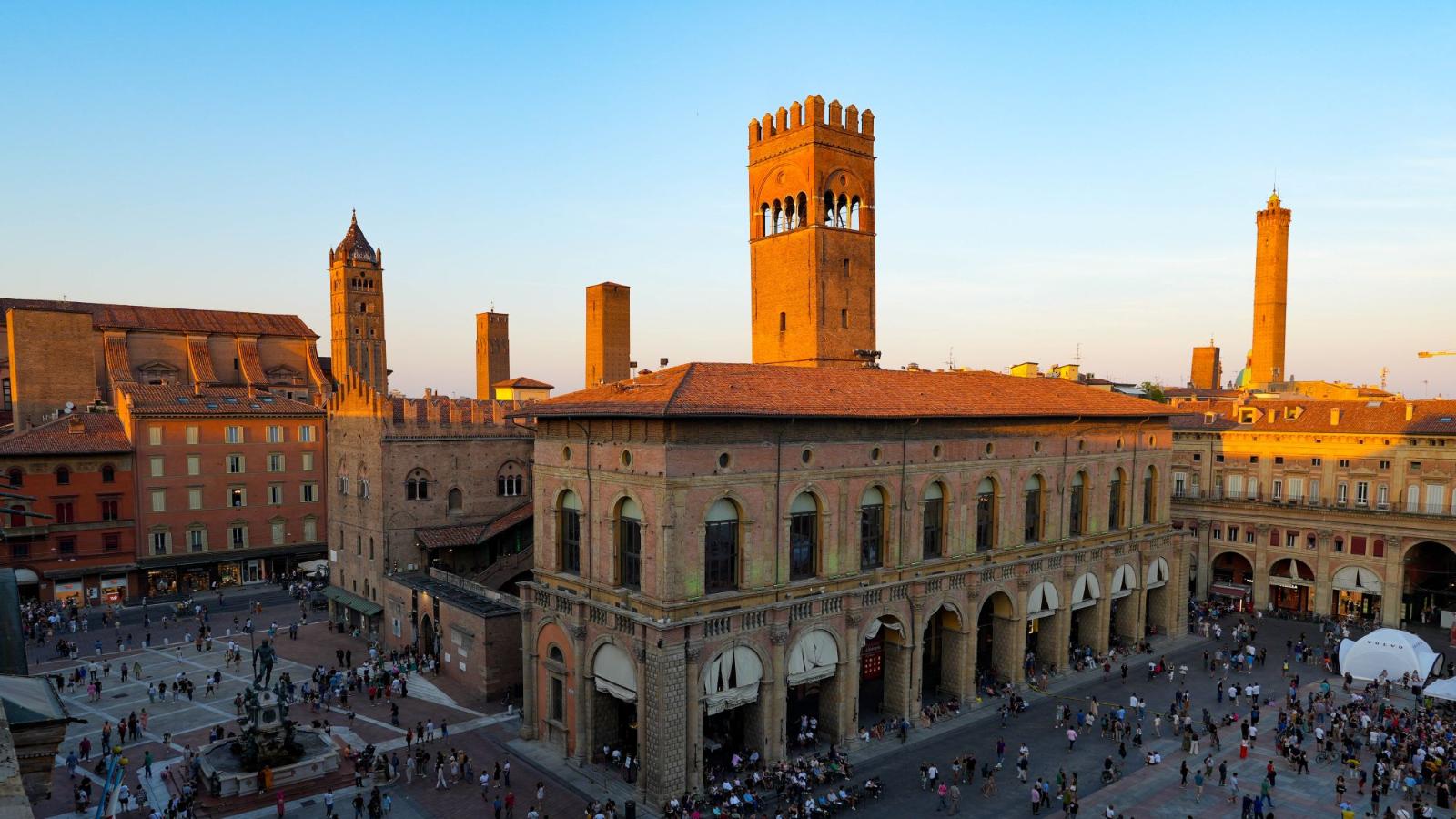
Do you only have three hours to visit Bologna? This walking tour takes you on a journey of discovery through the iconic sites of the historic centre, including medieval squares, museums, towers and historic markets. The route is approximately 2.5 km long, is entirely on foot and allows you to see the city’s main attractions, with optional stops at museums. All outdoor attractions are free of charge. Museums and towers, however, require an admission ticket.
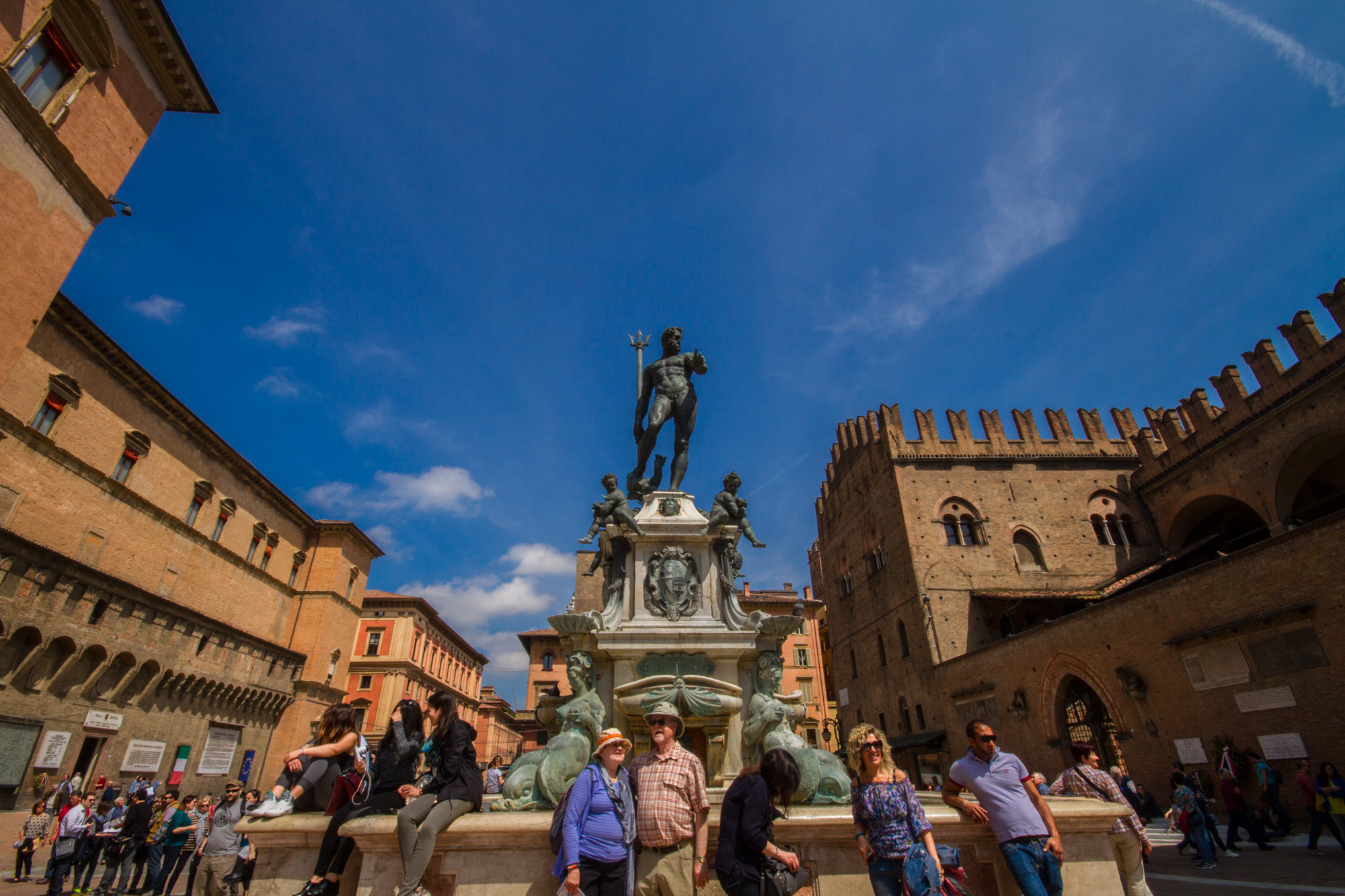
One of the main squares in the historic centre of Bologna. A square adjacent to Piazza Maggiore, home to the majestic Fontana del Nettuno and the Sala Borsa, one of Italy’s most vibrant and innovative multimedia libraries, where Roman archaeological excavations can be seen beneath the glass flooring. This is the perfect starting point for a tour lasting a few hours in the heart of the city.
Address: Piazza del Nettuno, Bologna
Cost: Free
Admission: Always free. Opening hours vary only for the Salaborsa Library,
which can be checked on the official website.
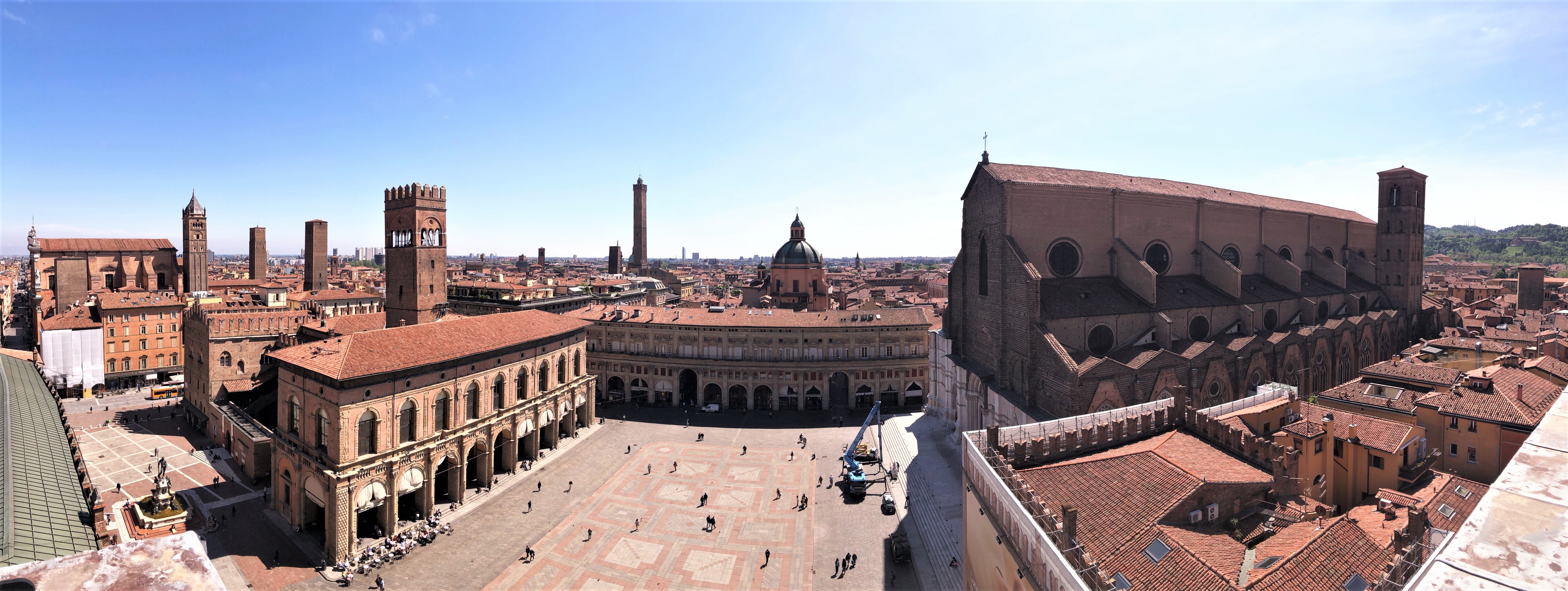
The beating heart of city life in Bologna since the Middle Ages. Dominated by the majestic central ‘Crescentone’, the pink and white granite platform beloved by the people of Bologna. Overlooking the square are the palaces of power: the historic Palazzo dei Banchi, the medieval Palazzo dei Notai, the charming Palazzo del Podestà, Palazzo d’Accursio, and also the Basilica of San Petronio. Right in front of the Basilica, beneath the vaulted ceiling of the Palazzo del Podestà, you can play a fun little game: if you whisper something into one of the four corners of the vault, it will be heard by anyone standing in the opposite corner.
The historic seat of Bologna City Council and
the city’s administrative hub. A majestic architectural complex that
houses monumental courtyards, the 16th-century grand staircase and the magnificent Sala
Farnese on the second floor. Outside, the 13th-century bronze statue of Pope Gregory
XIII stands out on the façade, whilst inside we recommend the monumental staircase
attributed to Bramante, the Collezioni Comunali d'Arte (Municipal Art Collections) and a visit to the Clock Tower
.
The latter has marked the passage of time for the people of Bologna since the 15th century. It offers an
exceptional 360-degree panoramic view over the city. During your
visit, you can admire the complex mechanism of the astronomical clock, the
richly frescoed interior rooms and the incredible panoramic view over Piazza
Maggiore.
Address: Piazza Maggiore, 6, Bologna
Cost: Free for the external courtyards; an admission fee applies for the
Municipal Art Collections and the Clock Tower (full price €10.00;
concession €7.00. The Clock Tower ticket also includes access to the
Municipal Art Collections)
Access: The Clock Tower is not accessible to people with mobility impairments due to
architectural
barriers Opening hours:
The Courtyard of Honour is open daily from 08:00 to 20:00. The
Clock Tower is open daily from 10:00 to 18:20 (summer opening hours
extended until 20:20). For opening times of the Municipal Art Collections,
we recommend visiting the official website.
Official website: Clock Tower bookings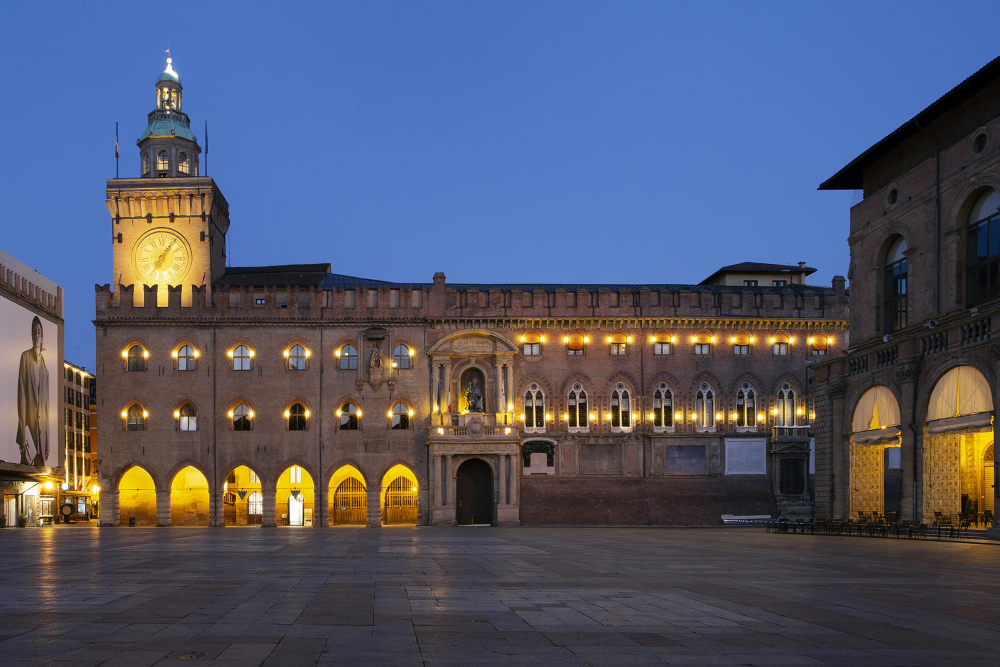
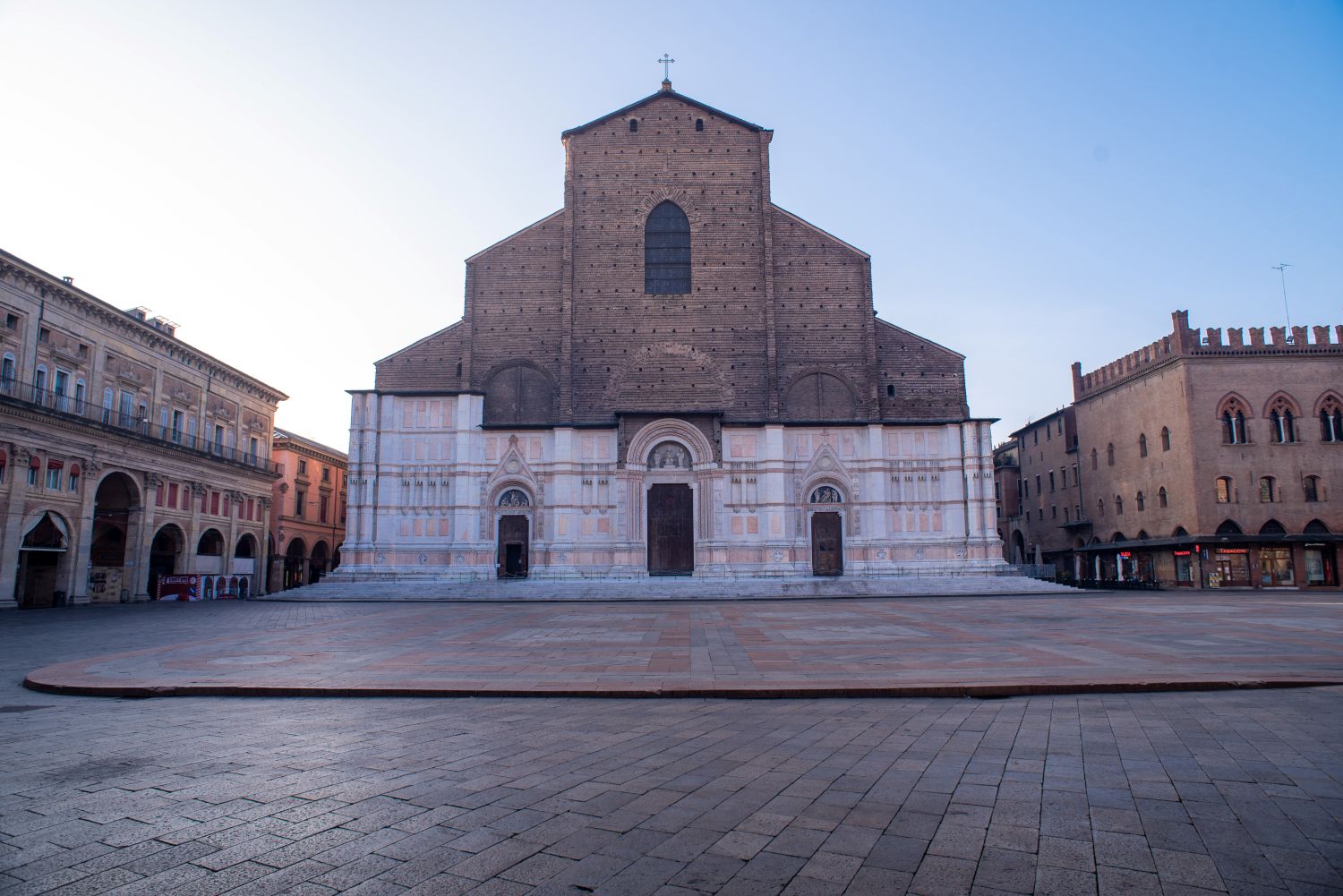
One of the largest churches in Europe,
famous for its monumental façade, which remains half-finished. Inside,
it houses priceless works of art and a scientific marvel of
international significance. Particularly noteworthy are Gian Domenico Cassini’s sundial
(the longest in the world in an indoor setting), the Chapel of the Three Kings, frescoed
by Giovanni da Modena, and the entrance portal sculpted by Jacopo della Quercia.
Address: Piazza Maggiore 1/e, Bologna
Cost: Free entry to the Basilica; €5.00 for the Chapel of the Three Kings
Access: Open to all (appropriate attire required in places of worship)
Opening hours:
please check the Basilica’s website.
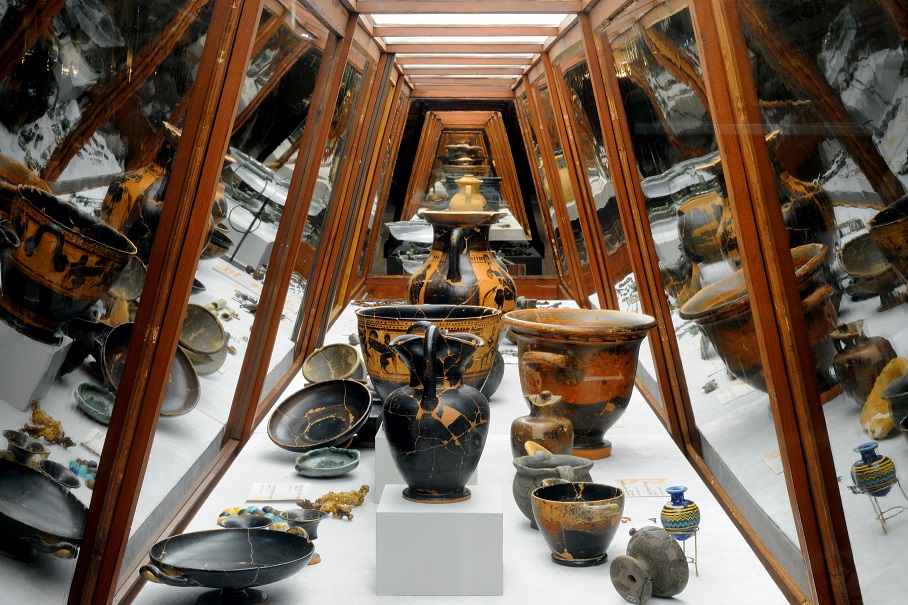
Housed in the 15th-century Palazzo Galvani, it houses one of Italy’s most important archaeological collections, with a particular focus on artefacts from the Etruscan, Roman and Celtic periods. However, the highlights of the exhibition are the spectacular Egyptian collection (one of the most important in Europe), the vases and artefacts from the Villanovan civilisation, and the majestic headless statue of Nero.
Address: Via dell’Archiginnasio, 2, Bologna
Admission:
full price €6.00; concessions €4.00 or €2.00; free with the Card Cultura and Bologna Welcome Card
Access: Easy access and barrier-free
Opening hours:
visit the museum’s website.
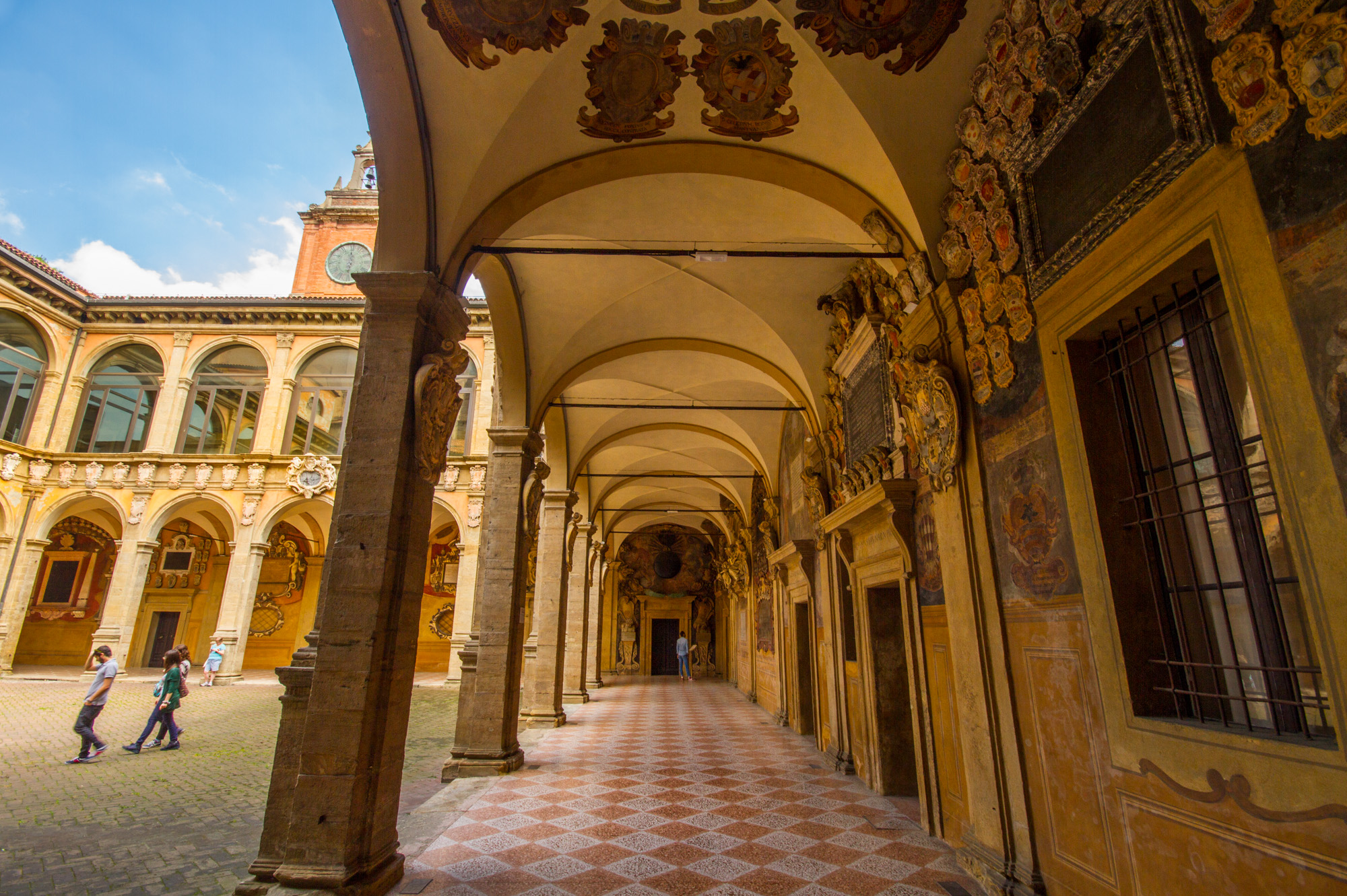
The historic home of the University of Bologna,
founded in the 11th century and considered the oldest in the Western world.
Inside, a porticoed courtyard is revealed, magnificently decorated with thousands
of students’ coats of arms. Highlights include the splendid 17th-century
Anatomical Theatre, carved from fir wood, the imposing
Stabat Mater Hall and the dense array of coats of arms lining the walls
of the loggia.
Address: Piazza Galvani, 1, Bologna
Cost: Free access to the courtyard; admission to the Anatomical Theatre and Stabat Mater Hall costs
€12.00 with a guided tour (concession €10.00) or €10.00 with an audio guide
(concession €8.00).
Access: People with mobility impairments can access the library or
visit the Palazzo via the entrance at Via de’ Foscherari 2 (see map).
Opening hours:
Monday to Saturday from 09:00 to 19:00. Closed on Sundays. Book your visit here.
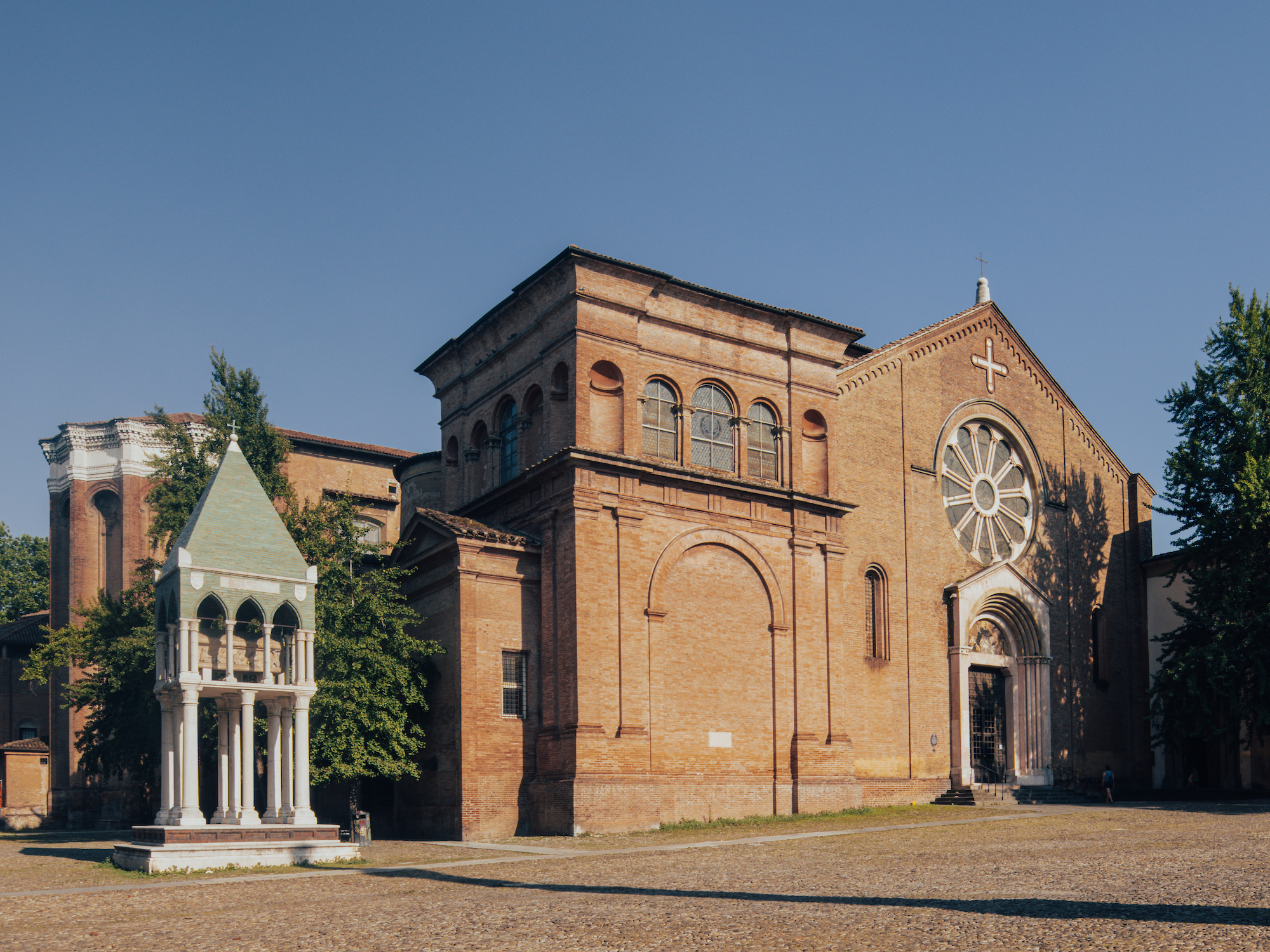
One of the city’s most important religious complexes, built to house the remains of Saint Dominic of Guzmán, founder of the Order of Preachers. It houses absolute masterpieces of Renaissance sculpture, including the Tomb of Saint Dominic adorned with early sculptures by Michelangelo, the precious inlaid wooden choir by Fra Damiano da Bergamo and the elegant 14th-century bell tower.
Address: Piazza San Domenico, 13, Bologna
Cost: Free
Admission: Free (tourist visits suspended during liturgical services)
Opening hours: Please check the
official website.
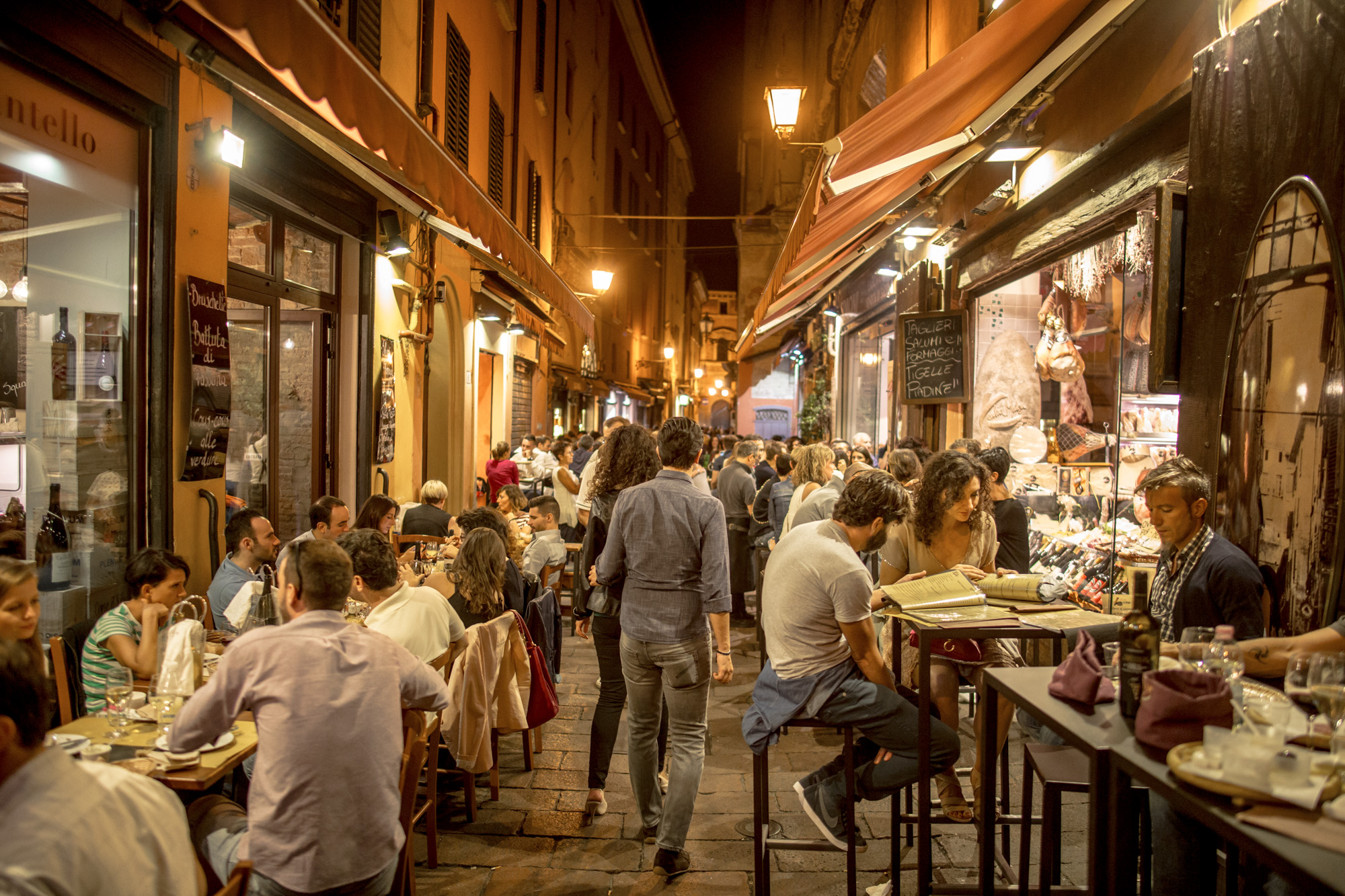
The historic commercial district of Bologna, where the main craft guilds had been based since the Middle Ages. A labyrinth of lively, pedestrianised alleyways brimming with historic shops, fruit stalls and taverns. As you stroll through the area, your gaze will be drawn to the shop windows of the historic delicatessens on Via Drapperie, the façade of the Palazzo della Mercanzia and the extraordinary “Lamentation over the Dead Christ” by Niccolò dell’Arca in the church of Santa Maria della Vita.
Address: Area between Via Rizzoli, Via dell’Archiginnasio, Via Farini and Via Castiglione, Bologna
Cost: Free; admission fee applies for the “Lamentation over the Dead Christ”
(full price €8.00; concessions €5.00; free with the Card Cultura and Bologna
Welcome Card)
Access: Always free. Opening hours vary only for the “Lamentation over the Dead Christ
”, which can be checked on theofficial website and at individual businesses.
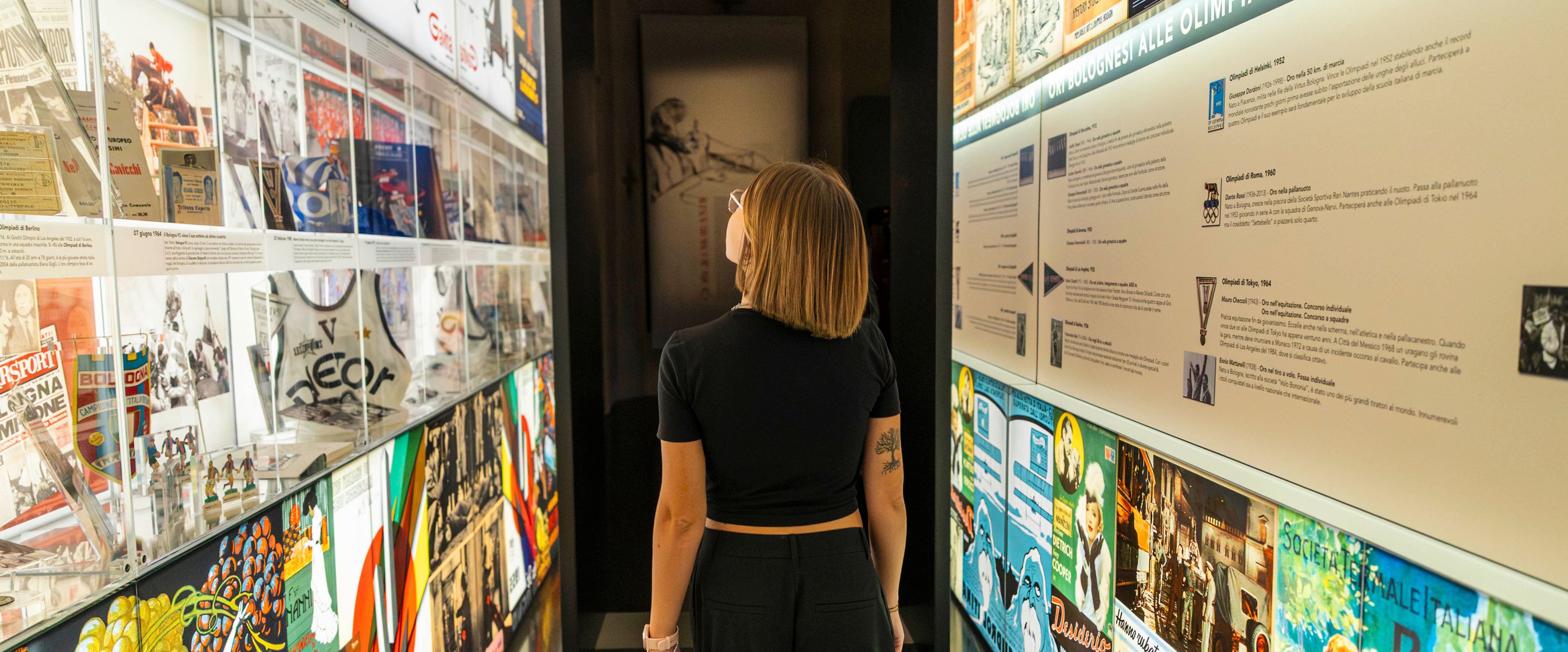
A superb example of medieval
fortified architecture, the former residence of the noble Pepoli family of Bologna. Today
it houses a multimedia and interactive museum exhibition entirely dedicated
to the city’s historical development. Don’t miss the spectacular, modern inner courtyard
covered by a steel-framed glass roof, the immersive reconstruction
of the ancient Via Etrusca and the fascinating interactive three-dimensional model
of medieval Bologna.
Address: Via Castiglione, 10, Bologna
Cost:
Free entry to the Corte Coperta. Full-price museum ticket €10.00; concessions
€7.00 or €5.00; free with the Card Cultura and Bologna Welcome Card
Access: The museum is largely accessible, though visitors with reduced
mobility may encounter difficulties in the first room (Bologna
Etrusca), where an Etruscan street has been reconstructed with very
uneven
paving.
Opening hours:
Monday, Wednesday, Thursday, Friday, Saturday and Sunday: 10.00 – 19.00. Closed
on Tuesdays. Book your visit here.
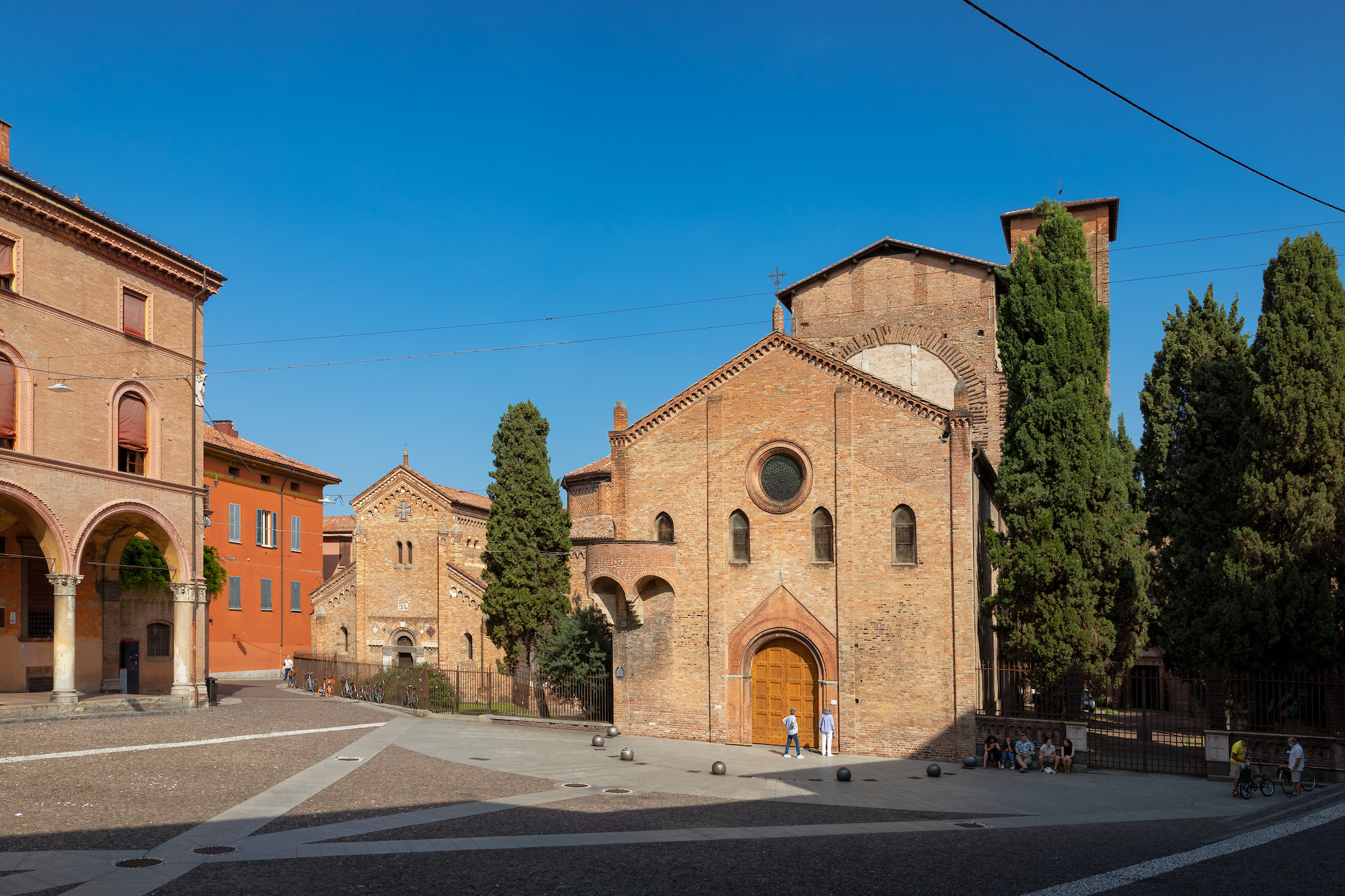
Also known as Piazza delle Sette
Chiese, it is one of Bologna’s most evocative, picturesque and beloved spots. A
splendid, elongated square dominated by the ancient
monastic complex of the same name. Within the complex, the evocative
Basilica del Santo Sepolcro (which is modelled on the one in Jerusalem), the tranquil
medieval cloister with its double loggia and the elegant senatorial palaces that
frame the pedestrian area are all well worth a visit.
Address: Piazza Santo Stefano, 24, Bologna
Cost: Free access to the square; entry to the complex by voluntary
donation Opening hours:
Check
the official website
.
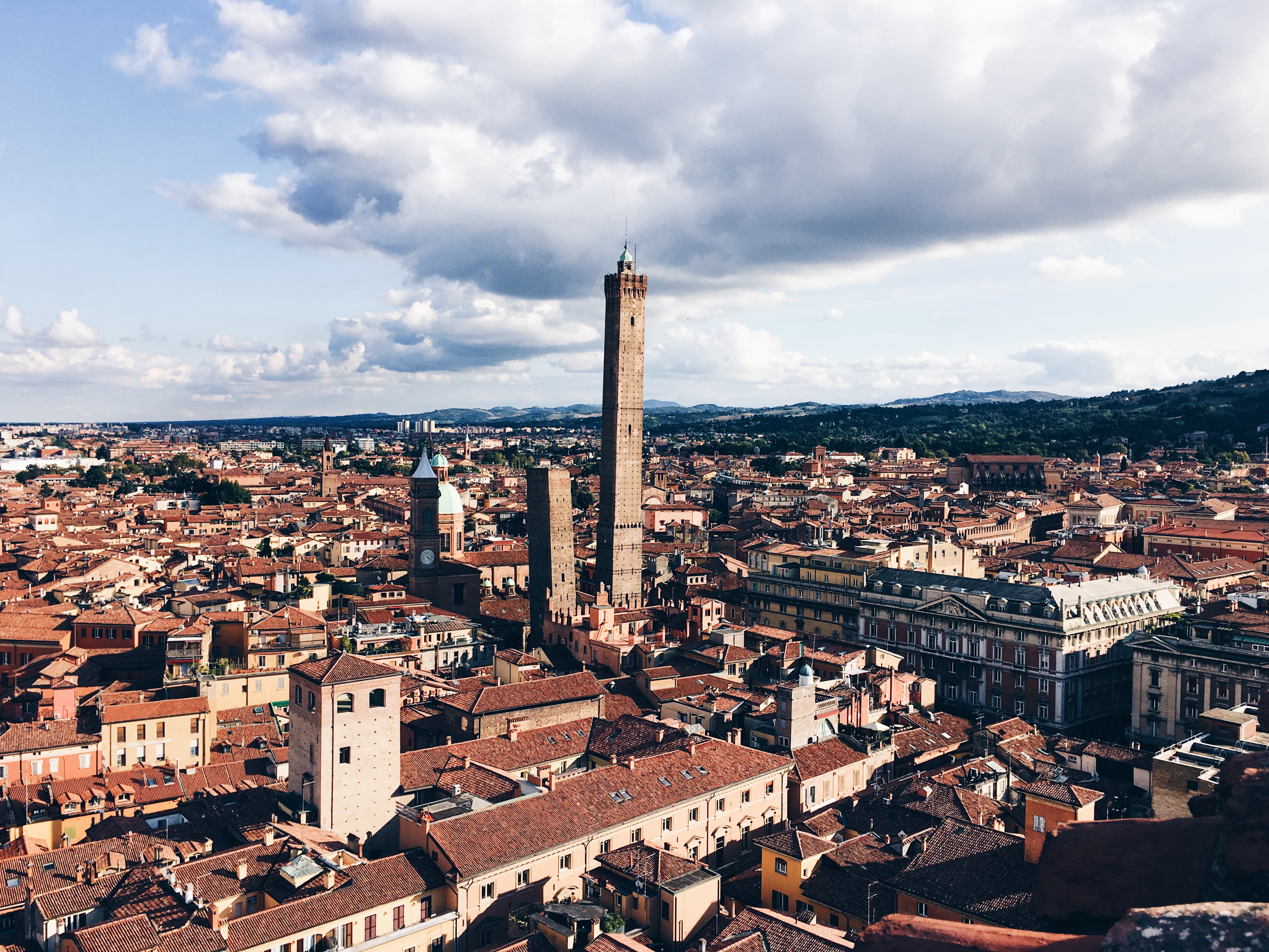
The two brick giants that dominate the
skyline of Bologna. The Asinelli Tower, the tallest of Italy’s
leaning medieval towers, stands alongside the sharply sloping Garisenda Tower.
One’s attention is immediately drawn to the striking tilt of the
Garisenda (also mentioned by Dante Alighieri), the soaring height of the
Torre degli Asinelli and the 17th-century statue of Saint Petronius situated at the
base of the monuments.
Address: Piazza di Porta Ravegnana, Bologna
Cost:
Free outdoor parking; admission to the Torre degli Asinelli – currently closed for restoration
– €5.00.
Access: The exterior is always accessible. The area surrounding the Garisenda is
currently cordoned off for restoration and safety works.
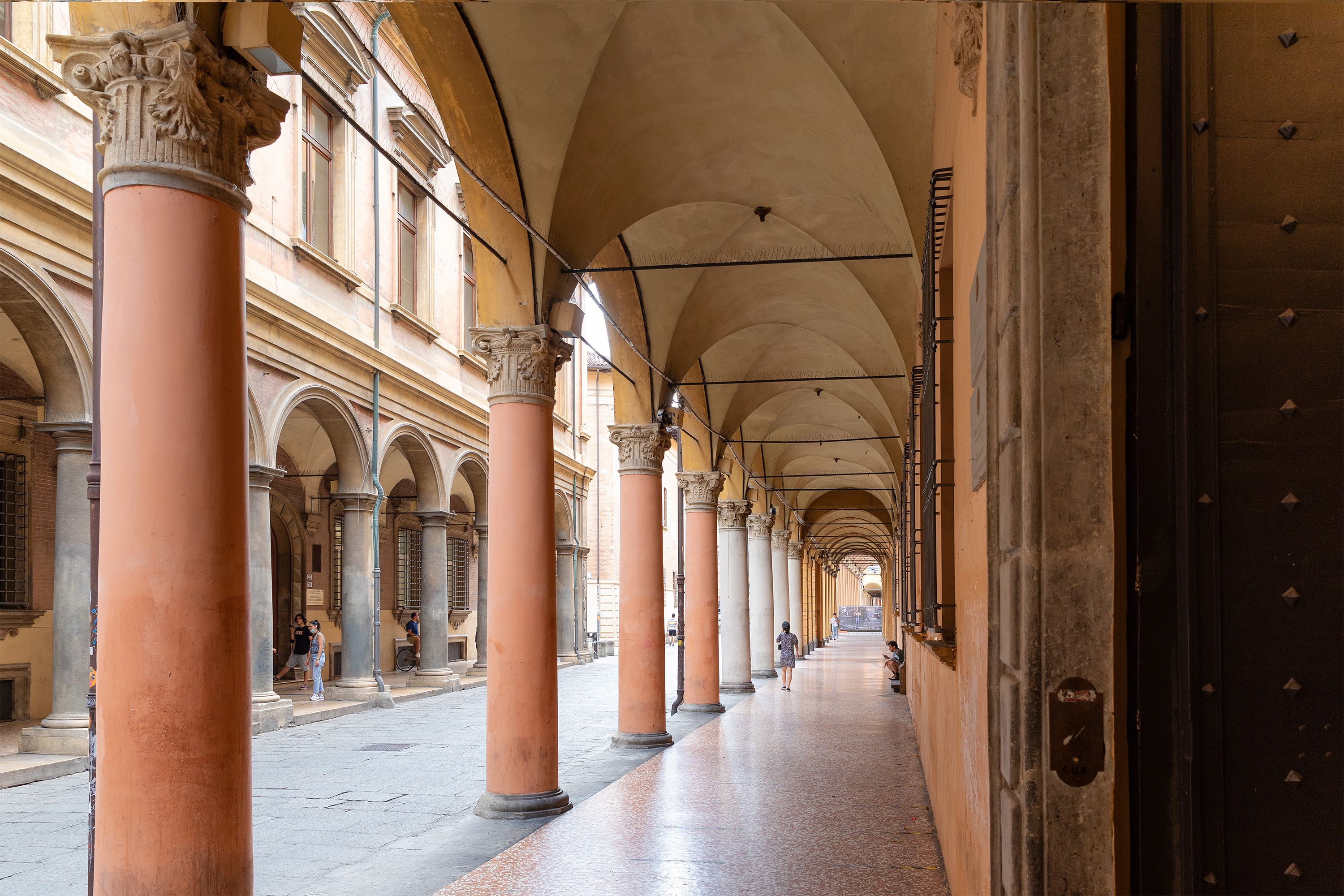
The main thoroughfare of Bologna’s
university district, a renowned historic street linking the Two Towers to the
Pinacoteca Nazionale di Bologna (National Art Gallery) and the historic museums of the University of Bologna, constantly
bustling with students. As you walk along it, you can admire the magnificent historic arcades
listed by UNESCO, the monumental courtyard of Palazzo Poggi (the university’s
scientific hub) and the famous, lively Piazza Verdi.
Address: Via Zamboni, Bologna
Cost: Free
Admission: Always free
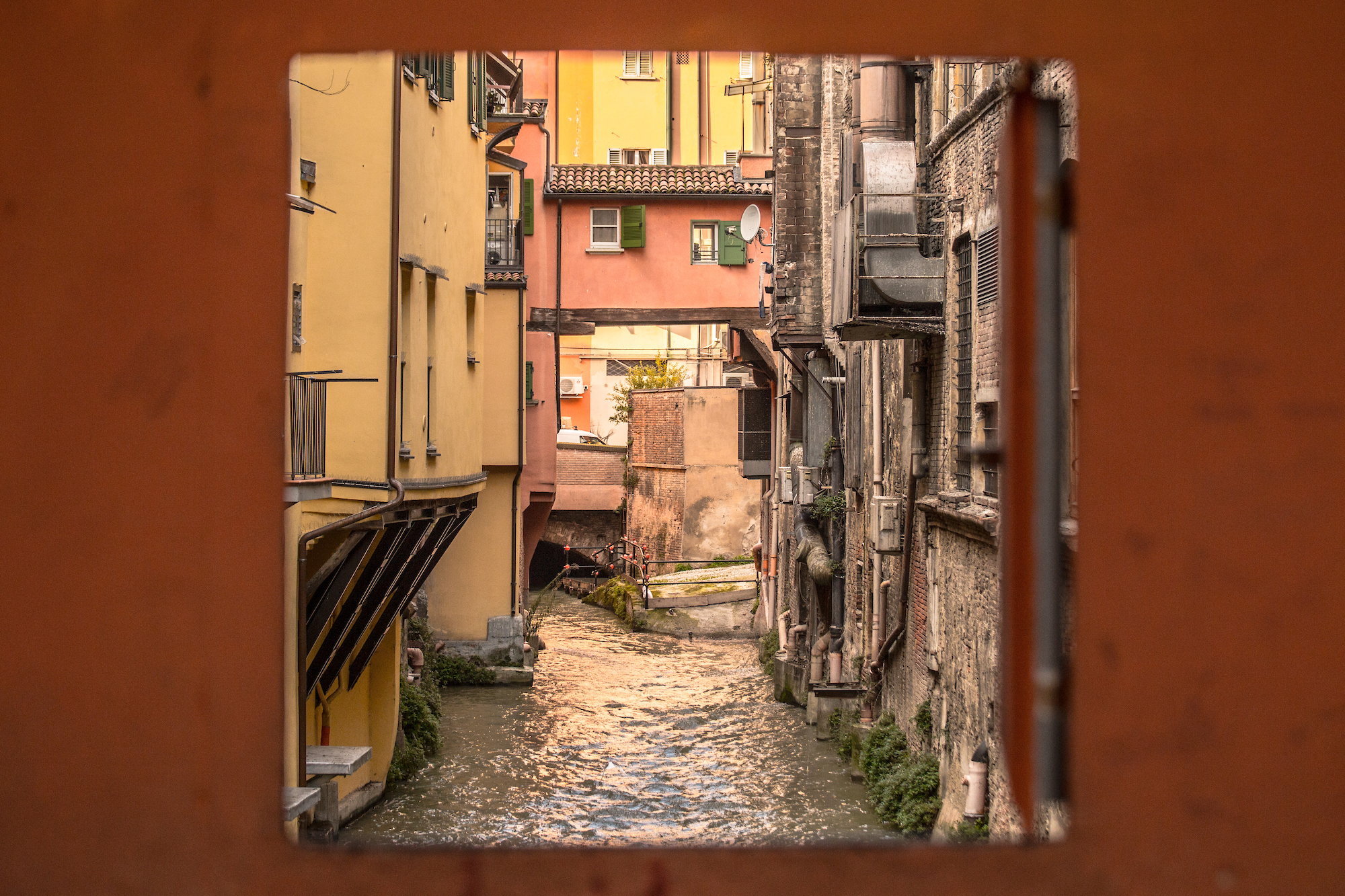
One of Bologna’s most unusual, romantic
and frequently photographed spots. Also known as ‘Little Venice’,
this view offers a glimpse of an unexpected and idyllic
riverine Bologna. We recommend watching the silent flow of
the Canale delle Moline, framed by the little wooden window, and enjoying the
evocative urban panorama from the small bridge on the opposite side of the street.
Address: Via Piella, 16/a – 18/a, Bologna
Cost: Free
Admission: Free
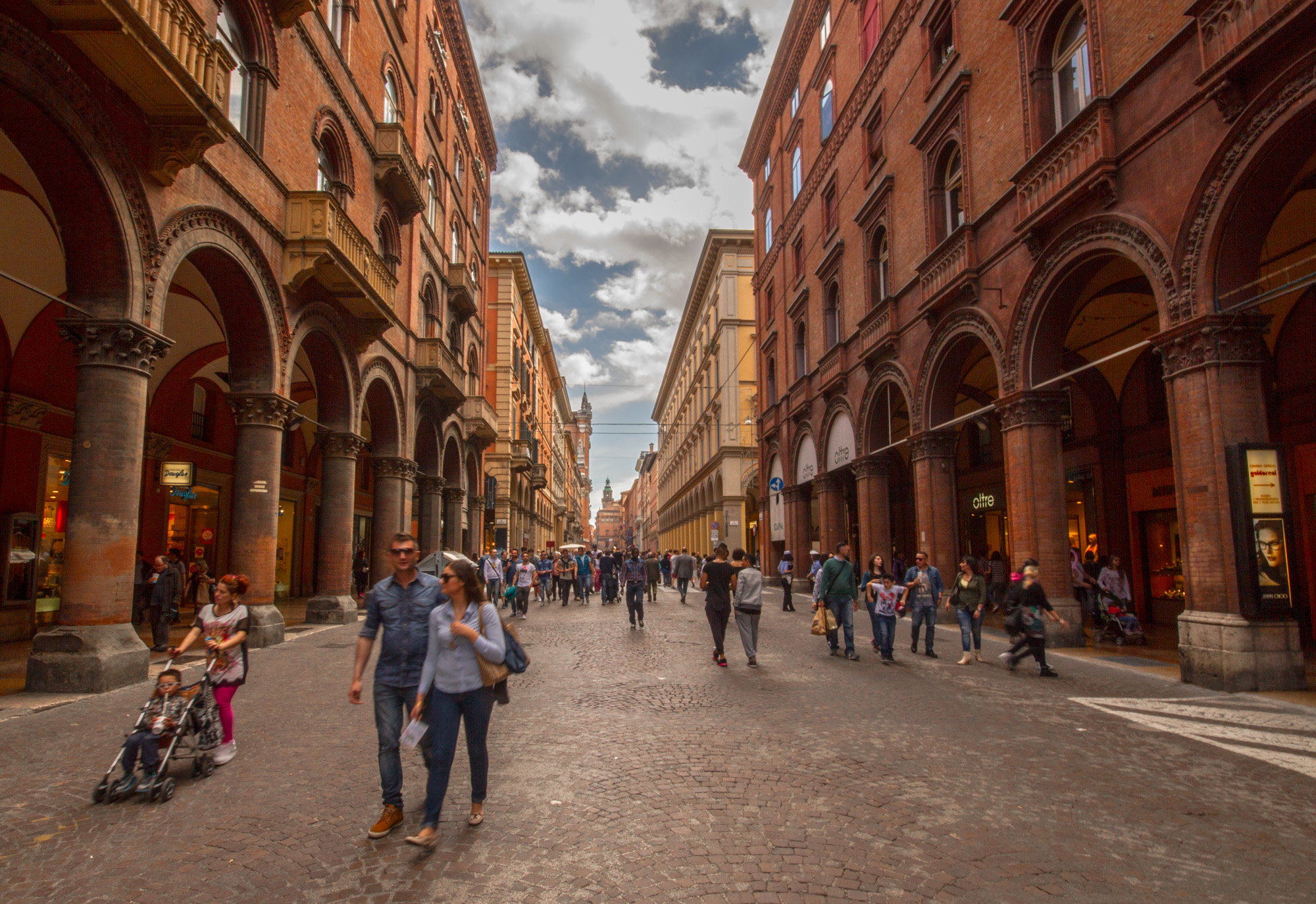
Bologna’s main shopping boulevard
and the street that gently leads back to Piazza Maggiore. A
monumental street characterised by imposing 19th-century arcades and
elegant palaces. On the walk back, it’s lovely to lose yourself amongst the historic boutiques
sheltered by the arcades, and to admire the majestic façade of the Teatro Arena del Sole and the large equestrian statue dedicated to Giuseppe Garibaldi.
Address: Via dell’Indipendenza, Bologna
Cost: Free
Access: Always free
In around three hours, this walking tour allows you to discover the most authentic landmarks and the main attractions of Bologna’s historic centre. The route has been designed to be completed within this timeframe, focusing on viewing the monuments from the outside, making it perfect even for those who are short on time. If, on the other hand, you have more time to spare or wish to extend your experience, remember that the museums and attractions with an admission charge mentioned in the guide are optional stops: you can thus make the most of your visit by stepping inside the historic halls, climbing the Clock Tower or venturing further afield to the spectacular UNESCO-listed porticoes and the city’s other historic districts.