The Church of the "Santa di Bologna": history and curiosity
Updated on 22 July 2026 From Bologna Welcome

Updated on 22 July 2026 From Bologna Welcome
In the historic centre of Bologna, on Via Tagliapietre, stands the Santuario del Corpus Domini or Chiesa della Santa, as it is known to the people of Bologna. The chapel dedicated to her houses the incorrupt body of Santa Caterina de' Vigri, also known as Saint Catherine of Bologna, a nun, artist and co-patron saint of the city. A visit combines history, art and spirituality: from the Renaissance terracotta façade to the Baroque interiors, right through to the works of Marcantonio Franceschini and Ludovico Carracci.
The Sanctuary of Corpus Domini, known to the people of Bologna as the Chiesa della Santa, is situated on Via Tagliapietre, in the heart of the historic centre, just a short walk from Piazza Maggiore and the Basilica of San Domenico. Admission is free and a visit takes very little time, making it an ideal stop to include on a walking tour of Bologna.
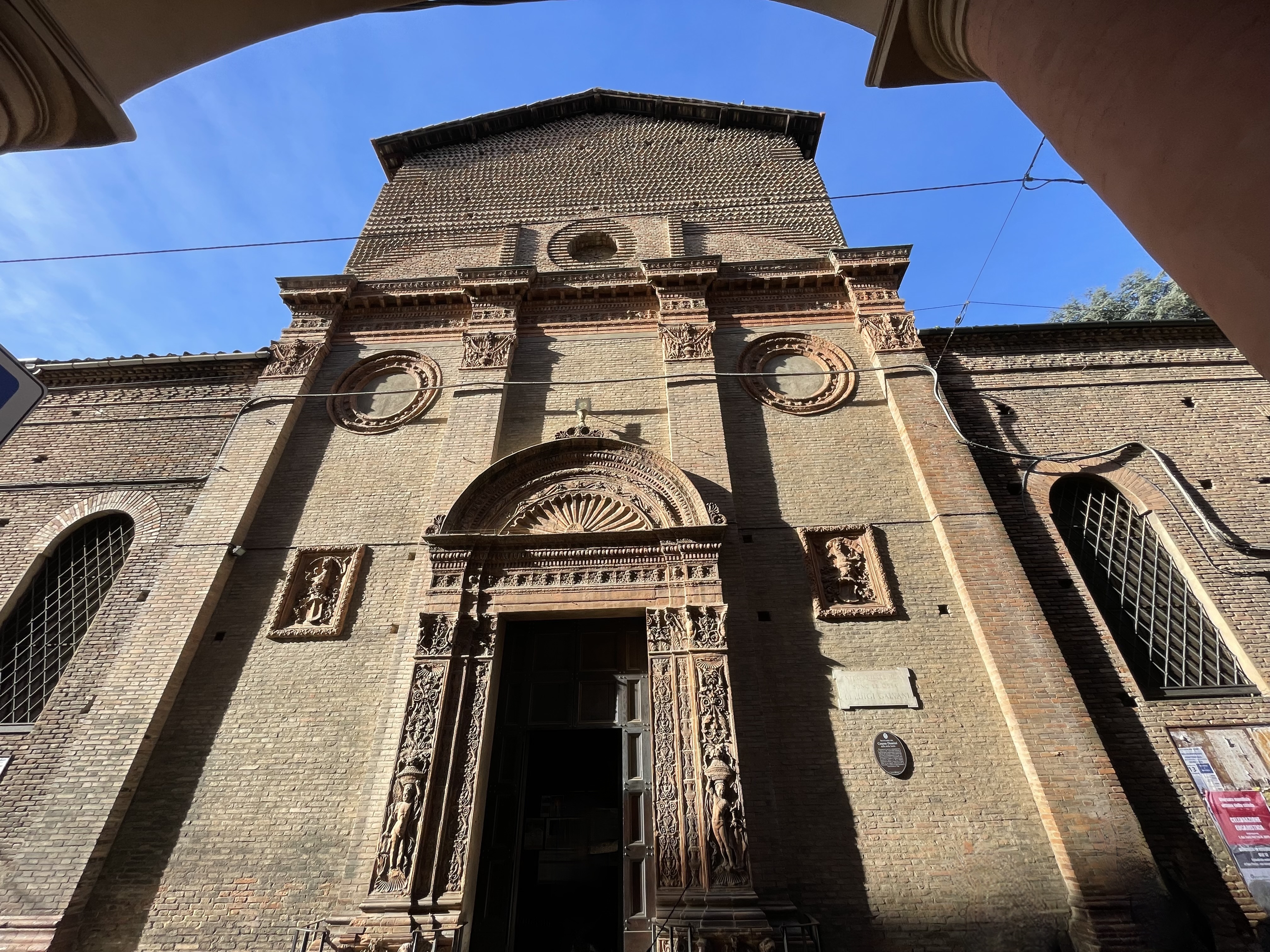
The first thing to catch the eye is the simple Renaissance façade in terracotta, the only surviving element of the original 15th-century building. The interior, however, tells a much more complex story, one of transformations, restorations and rebirths that have shaped its appearance over the centuries.
The tour eventually leads to the chapel dedicated to Santa Caterina de' Vigri, the spiritual heart of the sanctuary and a place that still attracts worshippers and visitors today.
 © Monica Galeotti
The history of the complex began in 1456, when Santa Caterina de’ Vigri founded the first monastery of the Poor Clares in Bologna at the request of the city authorities. A few years later, between 1477 and 1480, the church intended to house the monastery was built, designed by the Tuscan architects Nicolò Marchionne of Florence and Francesco Fucci of Dozza.
➝ Immerse yourself in the past and discover the sites of the Bolognese Renaissance not to be missed
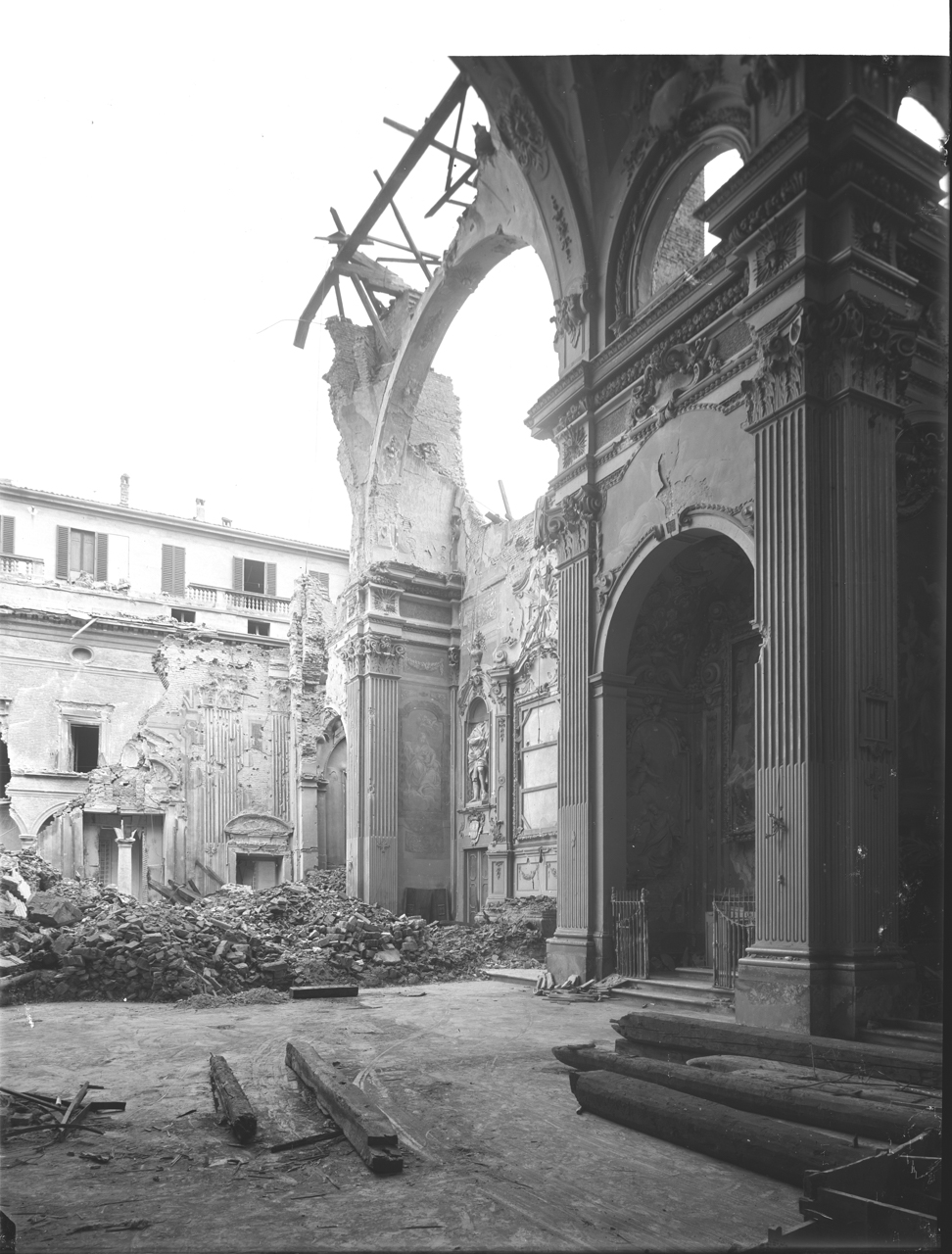
Throughout its history, the complex has undergone numerous changes. At the end of the 17th century, Cardinal Giacomo Monti commissioned a major Baroque-style renovation, enriching the interiors with frescoes, decorations and stucco work that made the church one of the most significant examples of the Bolognese Baroque. During the Napoleonic occupation, the monastery was suppressed and the nuns forced to leave; it was not until 1816, with the Restoration, that the Poor Clares were able to return. In the early 20th century, the historian Alfonso Rubbiani restored the Renaissance façade, returning it to its original appearance. The bombing during the Second World War then caused extremely severe damage to the building, destroying the vaults and much of the Baroque decoration. Subsequent restoration work made it possible to restore the complex and also to restore the historic fifteenth-century façade to its former glory.
 Façade of the Corpus Domini (Church) or Church of the Santa (c. 1946), via catalogo.beniculturali.it
The cloistered monastery remained active until 2023, when the last Poor Clare nuns moved to another location.
Today, the Sanctuary of Corpus Domini remains one of Bologna’s most popular and significant places of worship.
The Corpus Domini is much more than just a monumental church. Here, the history of Bologna is intertwined with that of its patron saint; Renaissance and Baroque aesthetics engage with Franciscan spirituality; and, even today, pilgrims, visitors and art history enthusiasts share a space that preserves over five centuries of faith, culture and the city’s memory.
Externally, the sanctuary is distinguished by its austere brick façade, the only surviving original feature of the 15th-century building. The Renaissance portal in terracotta, embellished with refined bas-reliefs and traditionally attributed to the sculptor Sperandio da Mantova, leads into a space rich in symbols and historical evidence. Above the entrance are preserved the relics of a fellow sister of Saint Catherine, whilst in the adjacent chamber rest those of another Poor Clare, her contemporary, bearing witness to the deep bond with the community’s earliest nuns.
 © Monica Galeotti
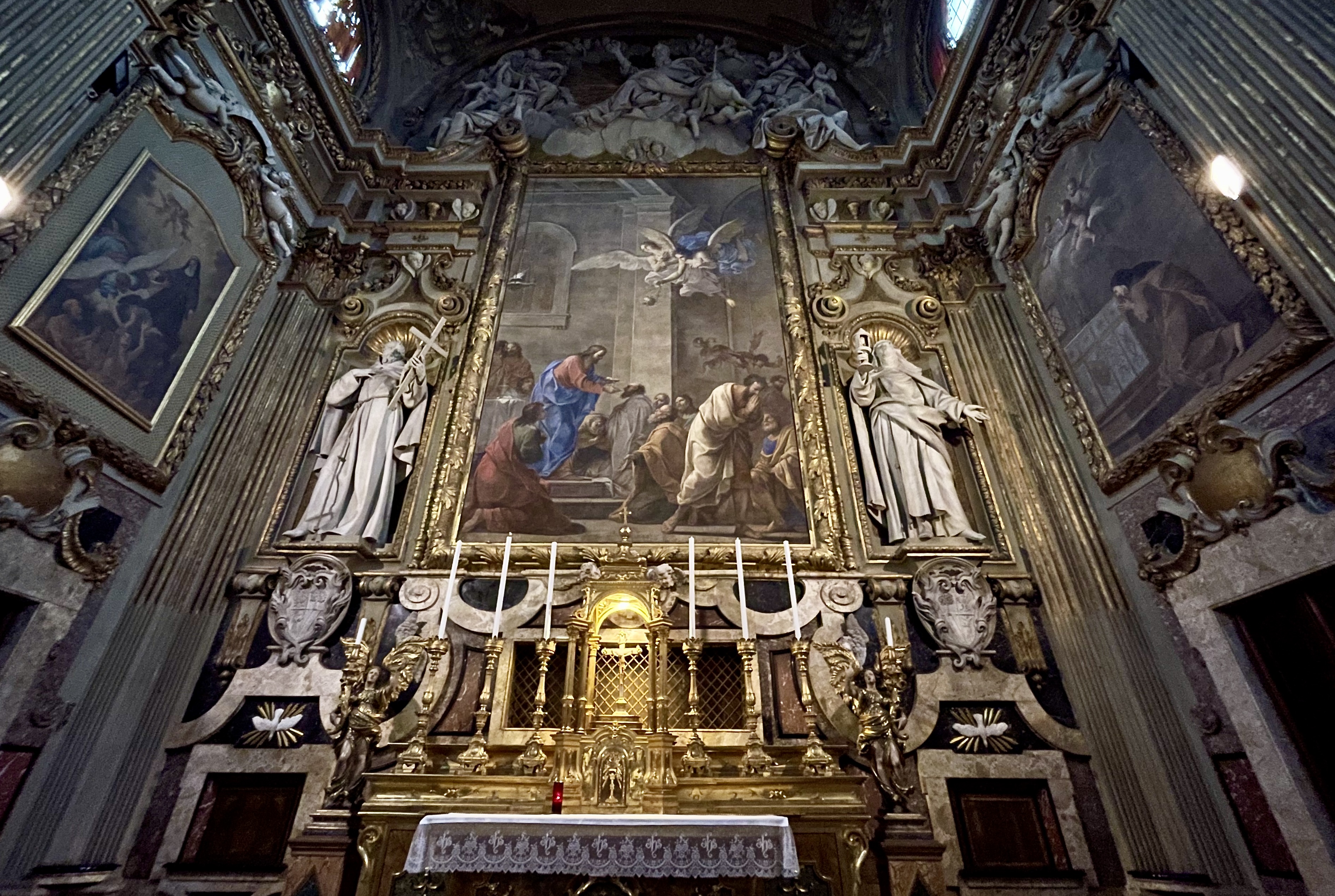
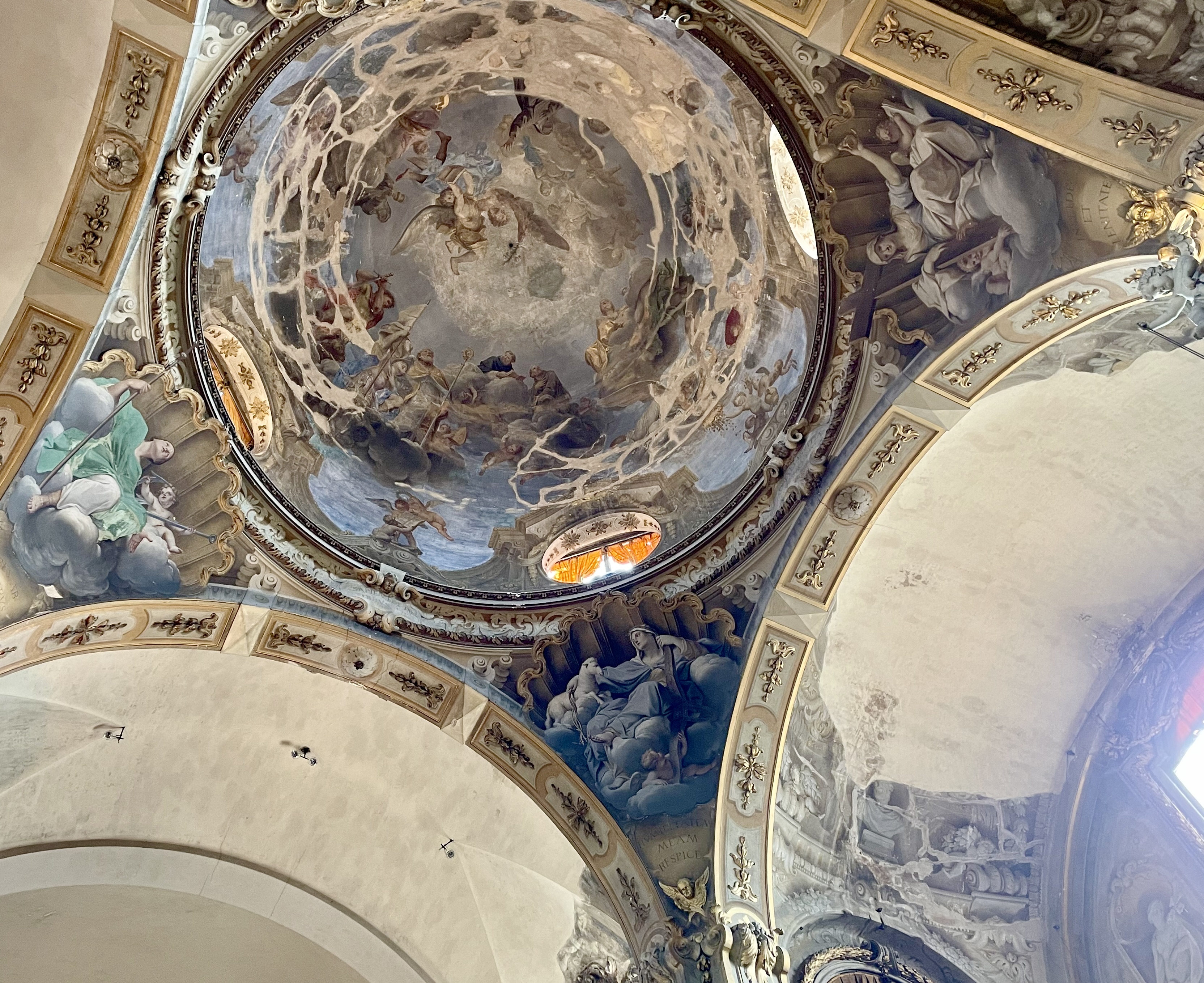
The interior, rebuilt following the severe damage sustained during the Second World War, still retains some of the charm of the major Baroque renovationB undertaken at the end of the 17th century. The single nave, covered by raised barrel vaults, is decorated with stucco work and the surviving frescoes from the cycle created in 1687 by Marcantonio Franceschini and his workshop.
Among the most significant works are also several 17th-century paintings by Ludovico Carracci, which survived the bombing.
Also of particular interest are the funerary monuments dedicated to two central figures in the history of science in Bologna: Luigi Galvani, a pioneer in the study of animal electricity, and Laura Bassi, one of the first women in the world to hold a university chair, commemorated by a marble plaque located in the nave.
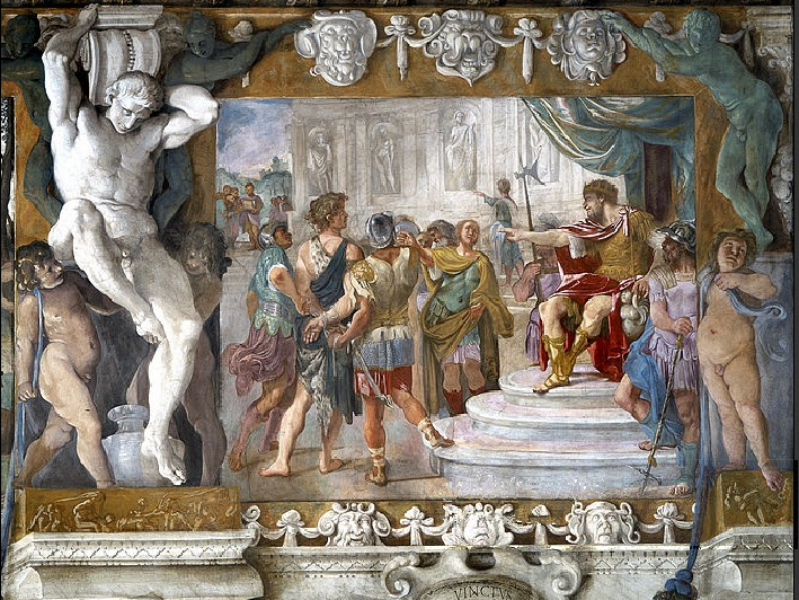
Bologna is the place to go to explore the Carracci’s paintings and the many masterpieces they have bequeathed to the city, making it a key player in a decisive chapter of Italian and international art history.
The heart of the sanctuary, however, is the Chapel of Saint Catherine, where some of the most precious treasures associated with the saint are preserved. Here, visitors can admire original paintings she created, such as the Madonna del Pomo with the Child, alongside her manuscripts, including a breviary and the treatise on the Seven Spiritual Weapons, as well as numerous personal effects. Among these, the famous violet of Saint Catherine stands out; this is in fact a rare 15th-century viella, one of the very few medieval musical instruments to have survived to the present day. The exhibition is rounded off by the bed used by the saint, original furnishings from the convent, reliquaries and vestments donated over the centuries by the faithful.
This collection of works, relics and personal effects offers the most authentic portrait of Saint Catherine and the community that lived here for centuries. For this reason, the Corpus Domini is not merely a site of historical and artistic interest, but a sanctuary that is still very much alive, where cultural heritage continues to interact with daily devotion.
 © Monica Galeotti
If the sanctuary is known to everyone as the Church of the Saint, the credit goes to Santa Caterina de' Vigri (1413–1463), one of the most extraordinary figures of the Italian Renaissance and of Franciscan spirituality.
Born in Bologna in 1413, she spent her youth at the court of the Este family in Ferrara as a lady-in-waiting to Margherita d’Este. Here she received a refined artistic and literary education, in keeping with the upbringing reserved for young noblewomen of the time: she studied music, painting and dance, learnt to compose poetry and became a skilled illuminator and copyist of manuscripts.
At the age of just fourteen, however, she decided to leave court life behind to devote herself to God, joining a community of young women from noble families who lived a communal religious life. In 1429, she took the rule of Saint Clare of Assisi, beginning her cloistered life at the Corpus Domini monastery in Ferrara.
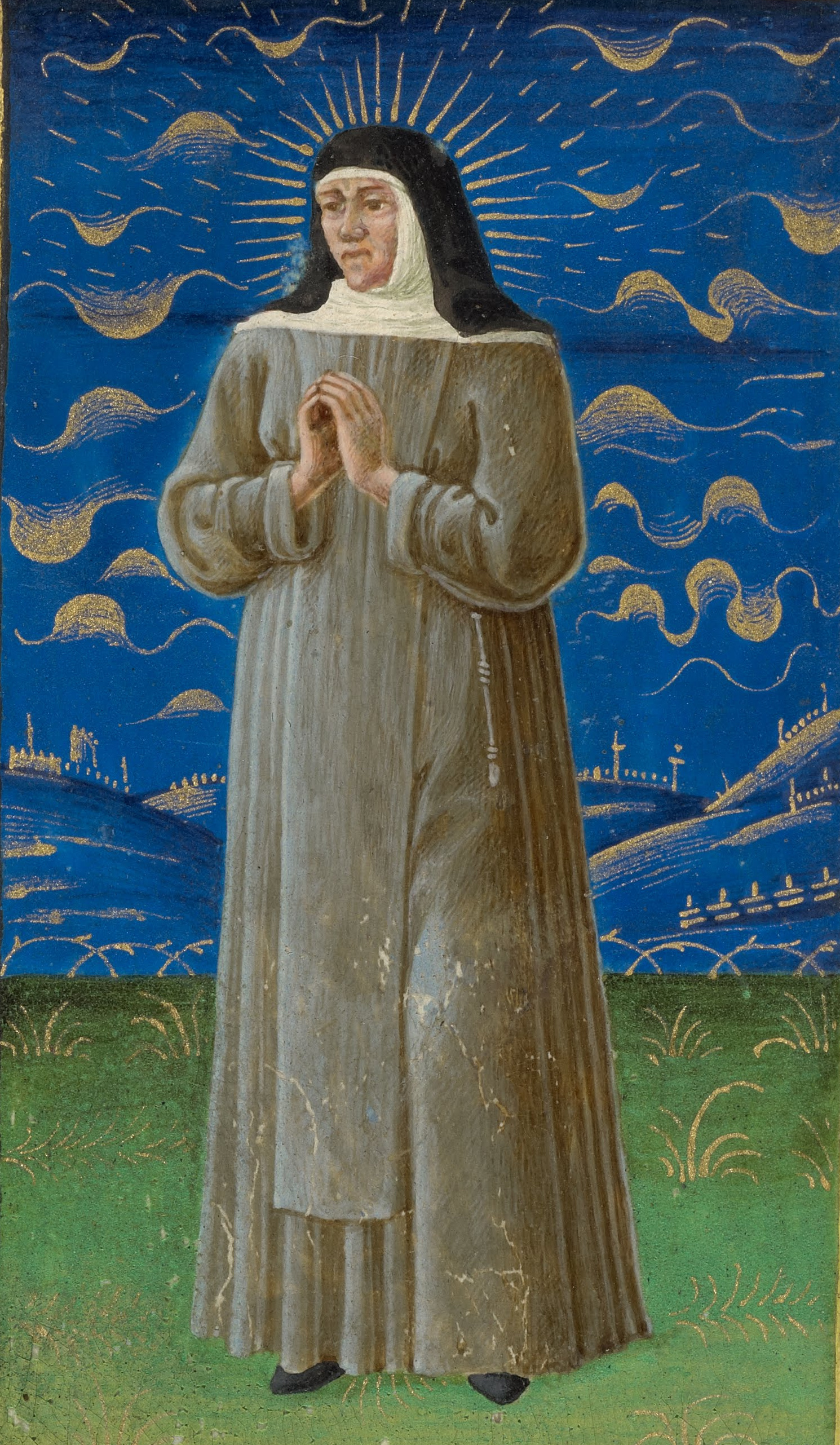 Saint Catherine of Bologna, Guglielmo Giraldi (1445–1489)
Even during her lifetime, she was venerated by the people for her virtues and her charisma, and on 22 July 1456, responding to the urgent invitation of the citizens and the civil and religious authorities, she arrived in Bologna to found the monastery of Corpus Domini. Catherine served as abbess there for the last seven years of her life, until her death on 9 March 1463.
As a member of the Franciscan Observance movement, Saint Catherine succeeded in combining deep spirituality with a genuine love of art and culture, qualities that still today make her a unique figure in the landscape of European spirituality. Among her most important works is the treatise The Seven Spiritual Weapons, considered one of the fundamental texts of the Franciscan tradition.
Her fame is such that, even today, she is simply referred to in Bologna as ‘the Saint’. She is also co-patron saint of the city, alongside Saint Petronius, and continues to be one of the most beloved and venerated figures among the people of Bologna.
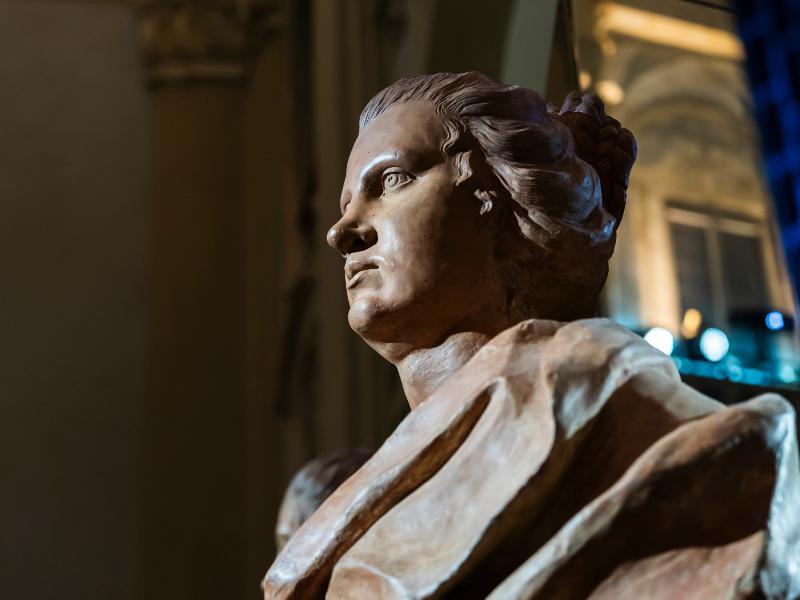
Bologna is a city which, over the centuries, has seen extraordinary women born and raised here. Philosophers, artists, scientists, saints, sculptors and muses: figures who have left an indelible mark on the city’s history and who, even today, bear witness to a legacy of intelligence, creativity and passion.
What makes Corpus Domini one of Bologna’s most important pilgrimage destinations is the presence of the incorrupt body of Santa Caterina de' Vigri, preserved in the chapel dedicated to her. For over five centuries, this place has drawn the faithful and visitors from all over the world, captivated by the saint’s story and the extraordinary preservation of her remains.
According to tradition, after the abbess’s death, the nuns regretted having buried her without a coffin, a practice then common amongst religious orders as a sign of humility. After eighteen days, they obtained permission from their confessor to exhume her body in order to give her a more dignified burial. To their great amazement, they discovered that the body still gave off a sweet scent, its joints were supple, and her face was ‘white, beautiful and soft, as if she were alive’, showing no signs of decomposition. This episode quickly contributed to the spread of devotion to Catherine.
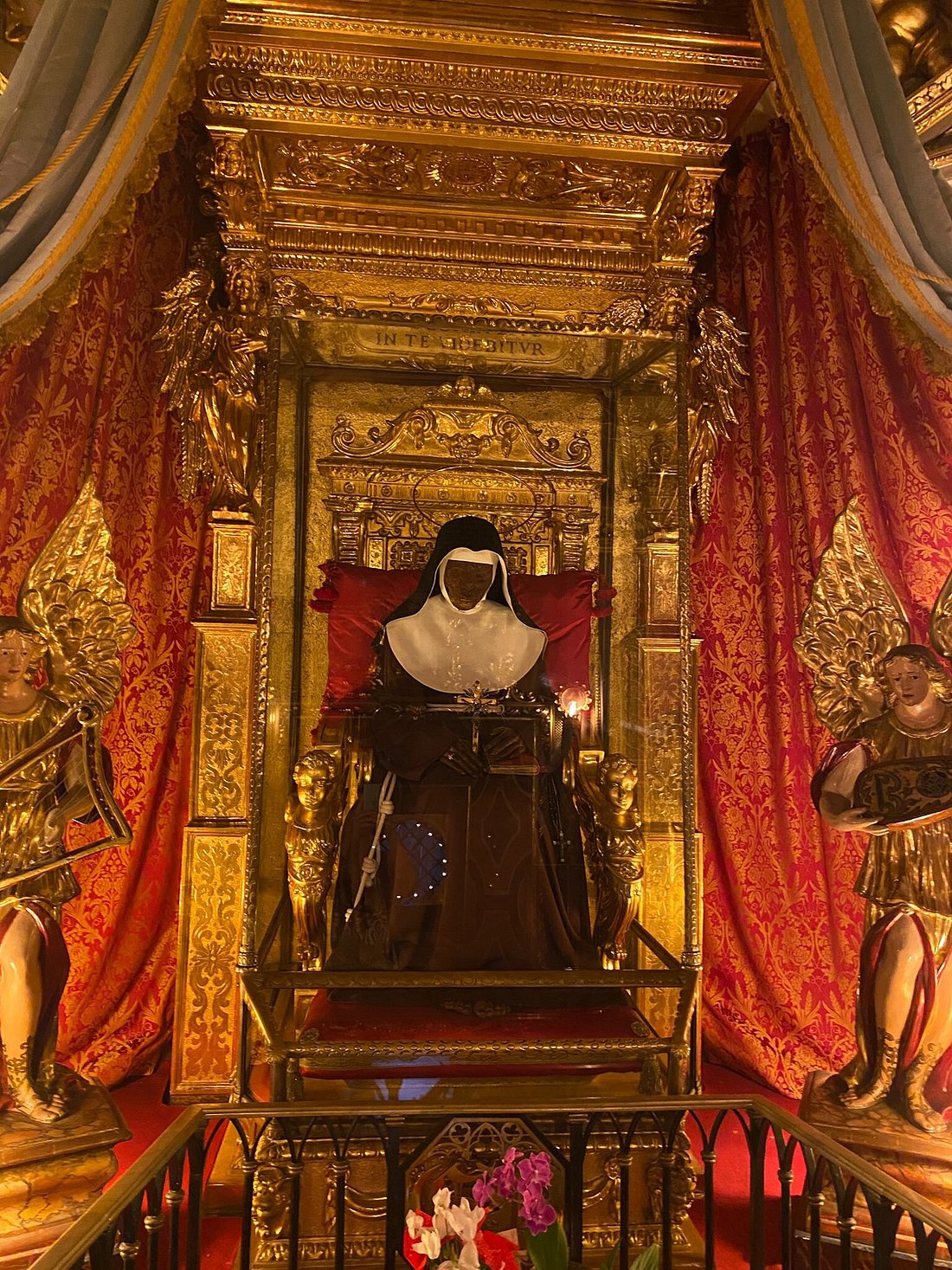
The news soon spread throughout Bologna, and the Poor Clares decided to display the body in the Church of Corpus Domini, which from that very moment began to be known as the Church of the Saint. The nuns placed her seated on a golden throne, a wholly unusual position that has remained virtually unchanged to this day.
The veneration of the saint began immediately and continued uninterrupted until her canonisation in 1712. Even today, thousands of pilgrims visit the shrine to pray before her relics.
The body is now enshrined inside a glass case, seated on an antique throne of gilded wood donated by the Bentivoglio family in 1488. She is dressed in a modern-style Poor Clare habit, different from the one Saint Catherine wore in life; this is replaced periodically by the nuns because, according to the sanctuary, the body continues to exude a clear liquid that soaks into her garments. Although it exhibits the characteristic dark colouring of the skin, attributed to centuries of exposure to the fumes of oil lamps and candles, the body is still preserved in an extraordinary state of integrity.
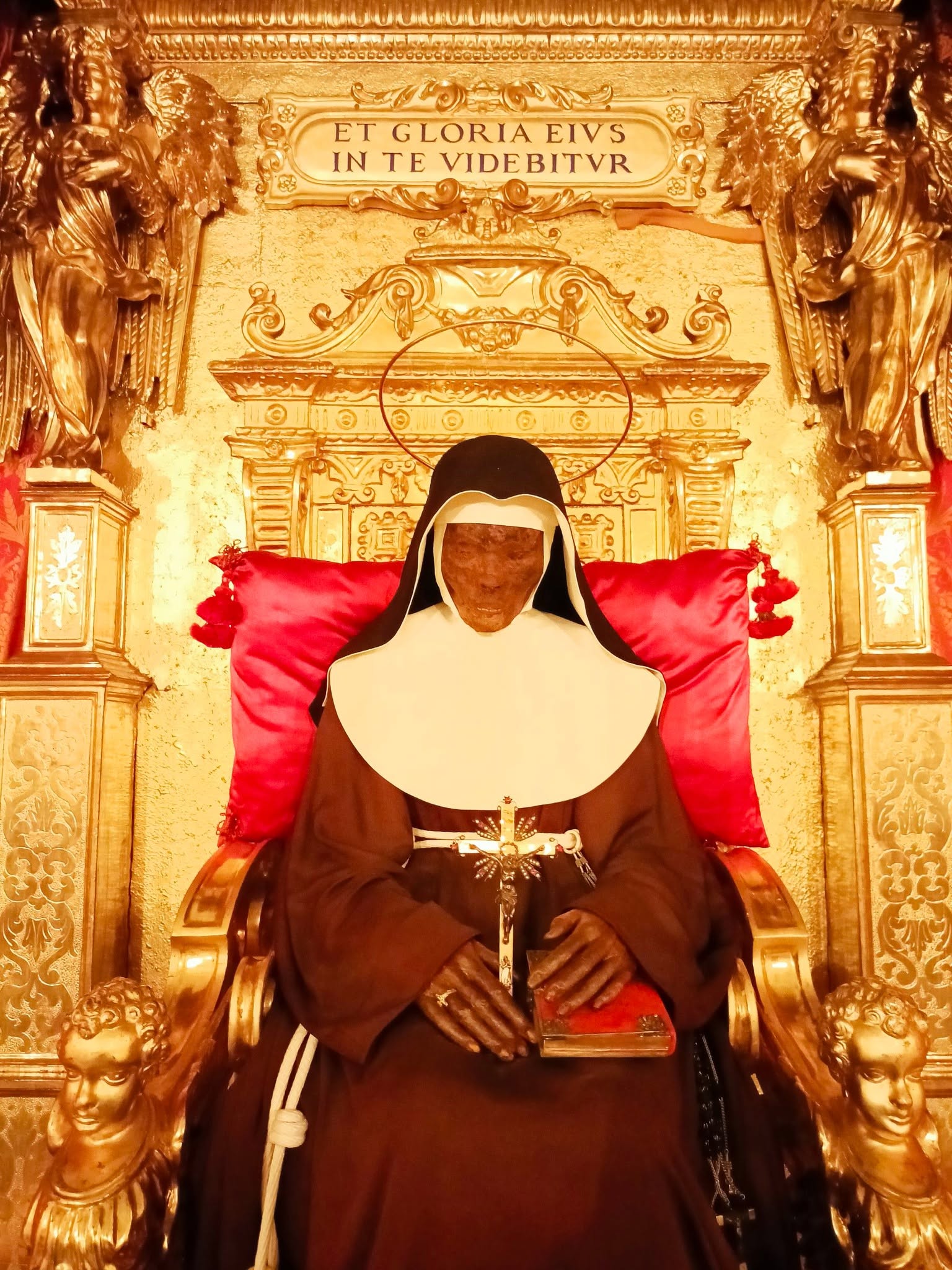
Completing the chapel is the canopy with reliquary, attributed to Giuseppe Mazza, which was installed in 1687, whilst a modern drape supported by four flying angels frames the reliquary. The entire decorative ensemble, which was severely damaged during the bombings of 1943, was subsequently reassembled and restored, although it now differs in some respects from its original configuration.
In the heart of Bologna’s historic centre, a stone’s throw from Via Farini, the Sanctuary of Corpus Domini thus continues to safeguard one of the city’s most precious spiritual treasures: a body that spans the centuries, a symbol of a devotion that is still very much alive and capable of moving believers, curious visitors and history enthusiasts alike.