Certosa di Bologna Historic and Monumental Cemetery
Updated on 30 September 2026 From Bologna Welcome

Updated on 30 September 2026 From Bologna Welcome
The Historic Monumental Cemetery of the Certosa in Bologna
,
one of the oldest monumental cemeteries in Europe, is much more than a place of
burial. Its cloisters, loggias, chapels and monuments
recount over
two thousand years of the city’s history, from Etruscan times to the 20th century. Visiting
the Certosa means discovering a unique heritage of funerary art and architecture,
featuring monumental works, sites of collective memory and the tombs of
illustrious figures
linked to the history of Bologna.
Walking through the halls of the Certosa also means tracing more than a century
of Italian art and architectural history through monuments dedicated
to private, family and collective remembrance.
The Historic Monumental Cemetery of Bologna is a place where
history has accumulated over the centuries, allowing visitors to retrace
important chapters in the city’s development. In 1801, it was decided to repurpose the premises
of the ancient Carthusian monastery, built in the first half of the 14th
century and dissolved at the end of the 18th century, to establish the
monumental cemetery we know today. But the Certosa’s past is even more
ancient. Between 1869 and 1871, an important Etruscan necropolis
was discovered in the area, with tombs dating from the 6th to the 4th century BC. Today, it is possible
to admire the artefacts unearthed during the excavations at the Civic Archaeological Museum
of Bologna.
Furthermore, the portico linking the Certosa to the Sanctuary of San Luca is an
extremely rare example of a modern-era funerary portico. Designed in the early
the nineteenth century, it draws inspiration from Roman-era funerary roads but incorporates the typical
Bolognese roof to allow the faithful to reach the cemetery via
a covered walkway, and to blend in with the city’s architectural style. Since 2021, the
porticoes of the Certosa have been part of the UNESCO Porticoes.
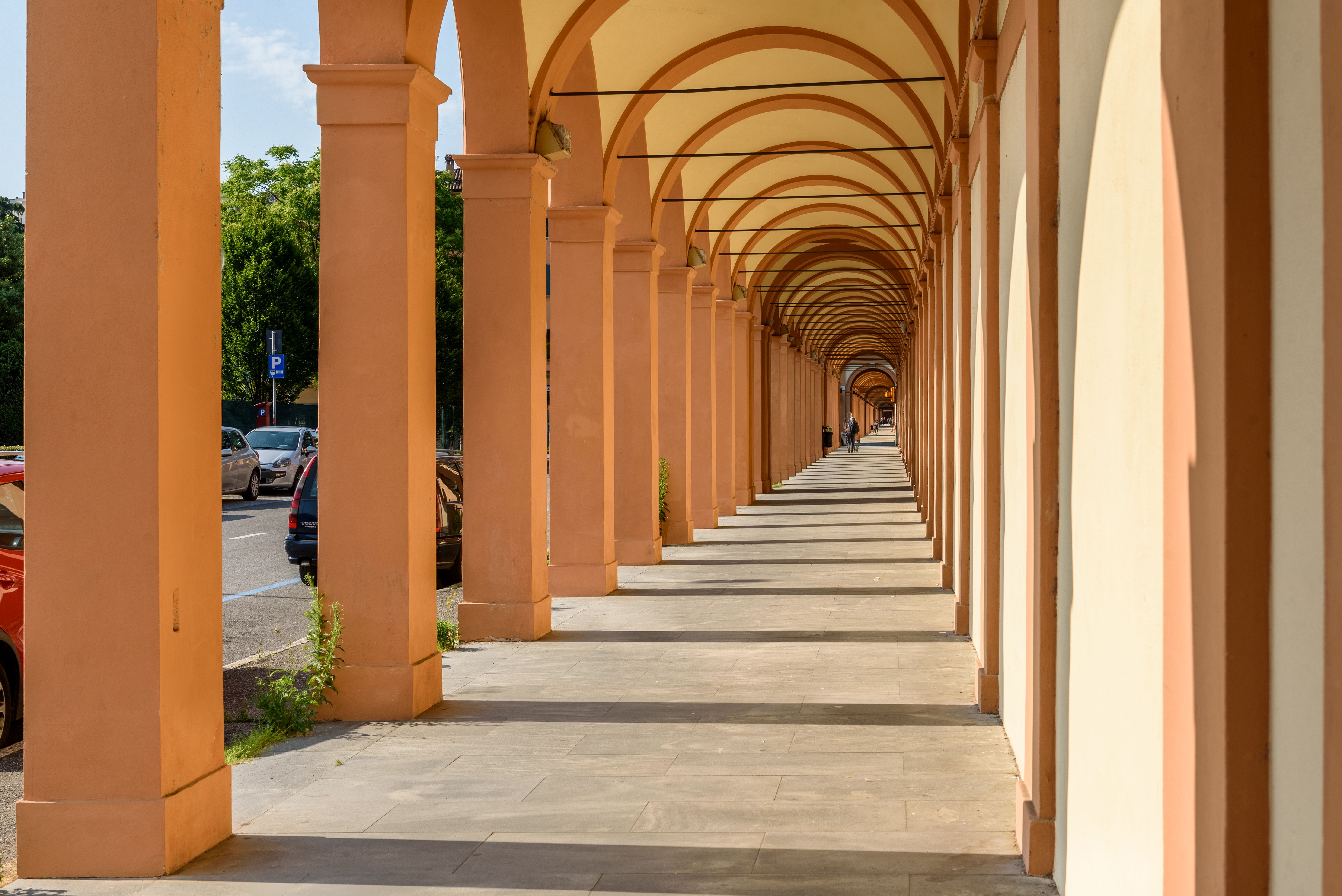
The portico of the Certosa in Bologna
We begin our tour in the cloisters and
covered areas, which form the oldest part of the nineteenth-century cemetery. Here,
the Certosa becomes a veritable city of remembrance, with porticoes,
galleries and halls. As we walk through these spaces, we can trace the history and evolution
of Italian funerary art from Neoclassicism to the Verismo of
the turn of the century. These were the two most iconic artistic styles of the century: the
former drew inspiration from classical Greek and Roman art, seeking perfection and
balance; the latter, by contrast, aimed for a less idealised
representation of reality.
Of extraordinary importance in this regard are the
painted stucco tombs in Cloister III, considered unique in their kind
throughout Europe. In this same cloister, we can also admire
Vincenzo Vela’s famous *Desolazione*, one of the masterpieces of nineteenth-century sculpture preserved
within the complex.
Alongside works by artists such as Giacomo De Maria,
Giovanni Putti and Cincinnato Baruzzi, we encounter some of the key figures
in European history: the Certosa houses, amongst others, a monumental
depiction of Joachim Murat, King of Naples and Napoleon’s brother-in-law,
also created by Vincenzo Vela, and the statue of Elisa Bonaparte sculpted
by Lorenzo Bartolini and subsequently placed in the Malvezzi
Angelelli monument.
We continue our journey through time via the Galleria degli Angeli and Cloister VII, where the sculptures by Carlo Monari, Salvino Salvini, Enrico Barberi and Diego Sarti illustrate the gradual transition towards Verismo and the new artistic sensibilities of the late nineteenth century.
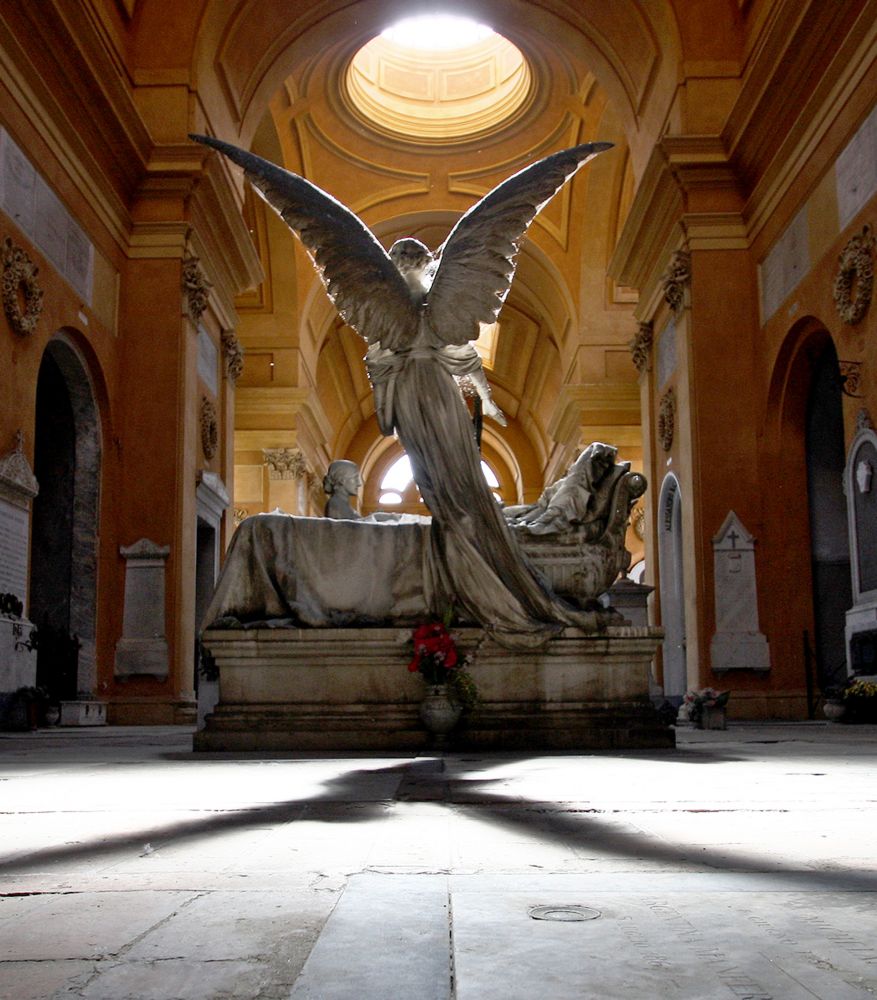
The Bisteghi Tomb by Enrico Barberi – Galleria degli Angeli
Between the late nineteenth century and the early decades of the
twentieth century, the appearance of the Certosa in Bologna changed. The new cloisters and the
rooms built around Cloister VI became more monumental and richly
decorated, whilst the sculptures and architecture reflected a succession of different styles and
design languages. The starkness of Verismo gave way to the
decorative and floral elegance of Art Nouveau and, subsequently, to the
cleaner, more geometric forms of Art Deco and a return to
classically inspired themes.
Among the most significant examples of Bolognese Art Nouveau funerary architecture are the Albertoni Chapel by Giuseppe Romagnoli and the Magnani Chapel by Pasquale Rizzoli. Emblematic examples of the historicist taste of the period, the chapels of the Gancia, Cillario and Talon families demonstrate, by contrast, a revival of forms and techniques inspired by the Middle Ages and the Renaissance. Finally, in the works of Alfonso Borghesani we can recognise Art Deco materials, decorations and influences, which point towards the art of the mid-20th century.
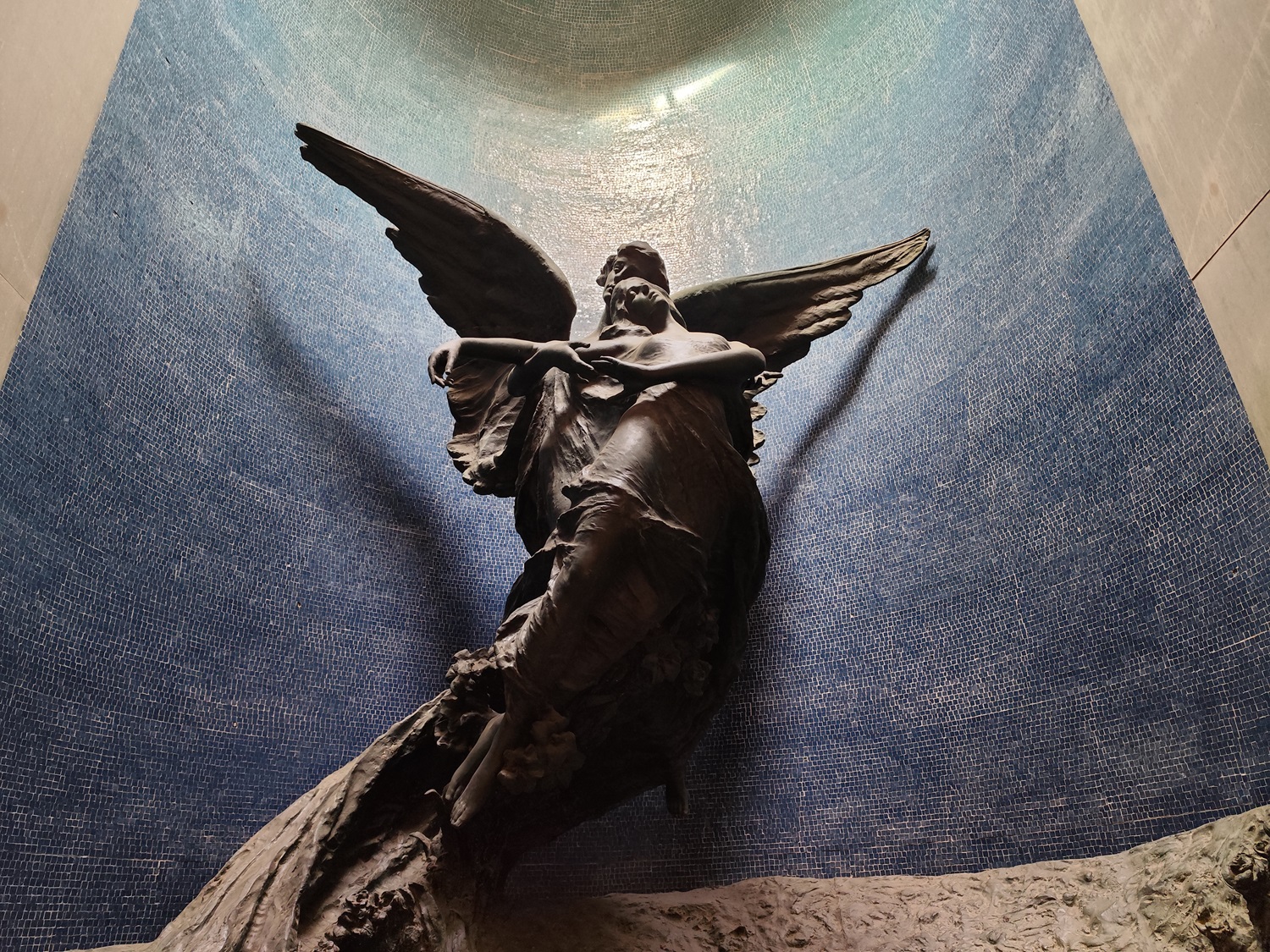
Pasquale Rizzoli’s Magnani Chapel – Cloister VI Gallery
In the north-western part of the cemetery there are areas which, over time, have been set aside for people belonging to different faiths and
funeral traditions, a key testament to the religious
and cultural diversity of Bologna.
Along the approach avenue lies the small Cloister
of the Evangelicals (or Non-Catholics), a small Doric-style enclosure built as early as 1822
where mainly Anglicans and Protestants who lived in Bologna are laid to rest; whilst
a little further on are the first Cremation Altar and the areas connected to the
cinerary.
Of particular importance and size is the Jewish Cemetery of the Certosa, established in the second half of the nineteenth century and expanded over the years to comprise three sections. The oldest part preserves monumental tombs belonging to some prominent families of the Bolognese Jewish community, including the Muggia, Zabban and Zamorani families. These spaces illustrate not only the evolution of funeral practices, but also the presence and integration of non-Catholic communities into city life between the nineteenth and twentieth centuries.
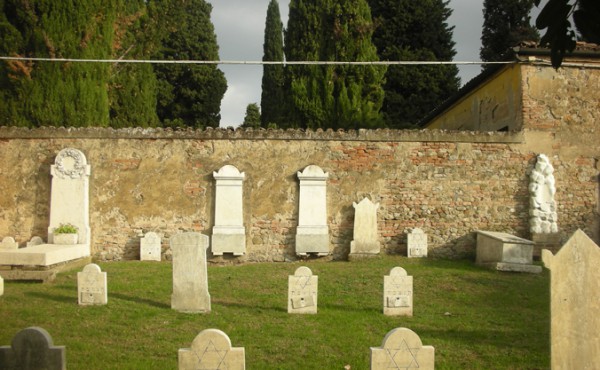
Jewish Cemetery
A key feature of the Certosa in Bologna is the
presence, alongside the tombs and stories of private citizens, of numerous
monuments dedicated to collective memory and to events in
local and national history.
As early as 1828, the Pantheon of Illustrious Bolognese
was erected, celebrating figures regarded as exemplary for the city. The
nearby Hall of Tombs houses Carlo Monari’s great roaring lion, which
dominates the Monument to the Martyrs of Independence, one of the most
spectacular sights in the entire complex.
The most dramatic moments in twentieth-century history, on the other hand,
are found in Cloister VI, where they take on monumental forms linked to
Italian political history. Here, in 1932, at the height of the Fascist era, the
Memorial to the Martyrs of the Fascist Revolution was inaugurated, designed by Giulio Ulisse
Arata as a monument celebrating the regime, and the nearby Ossuary Monument
to the Fallen of the Great War, inaugurated the following year and intended
to house the remains of thousands of soldiers who died during the First
World War.
The Ossuary Monument to the Fallen Partisans takes on a profoundly different significance; it was built after the war in the Campo degli Ospedali to a design by the architect Piero Bottoni, one of the leading figures of Italian Rationalism. Commissioned by the local council led by Mayor Giuseppe Dozza, the memorial honours the fallen partisans and, since 1961, has also housed the remains of some victims of the Gusen concentration camp.
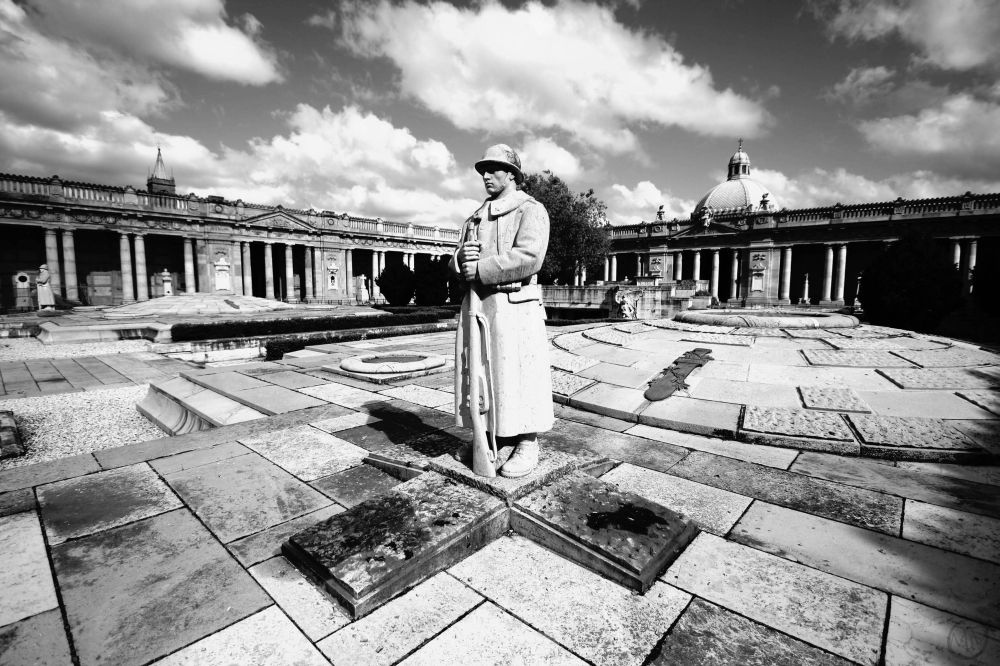
Ossuary monument to the fallen of the Great War by Filippo Buriani, Arturo Carpi and Ercole Drei
Among the famous figures laid to rest at the Certosa, whose
graves are frequently visited by both the people of Bologna and tourists
visiting the city, we should mention:
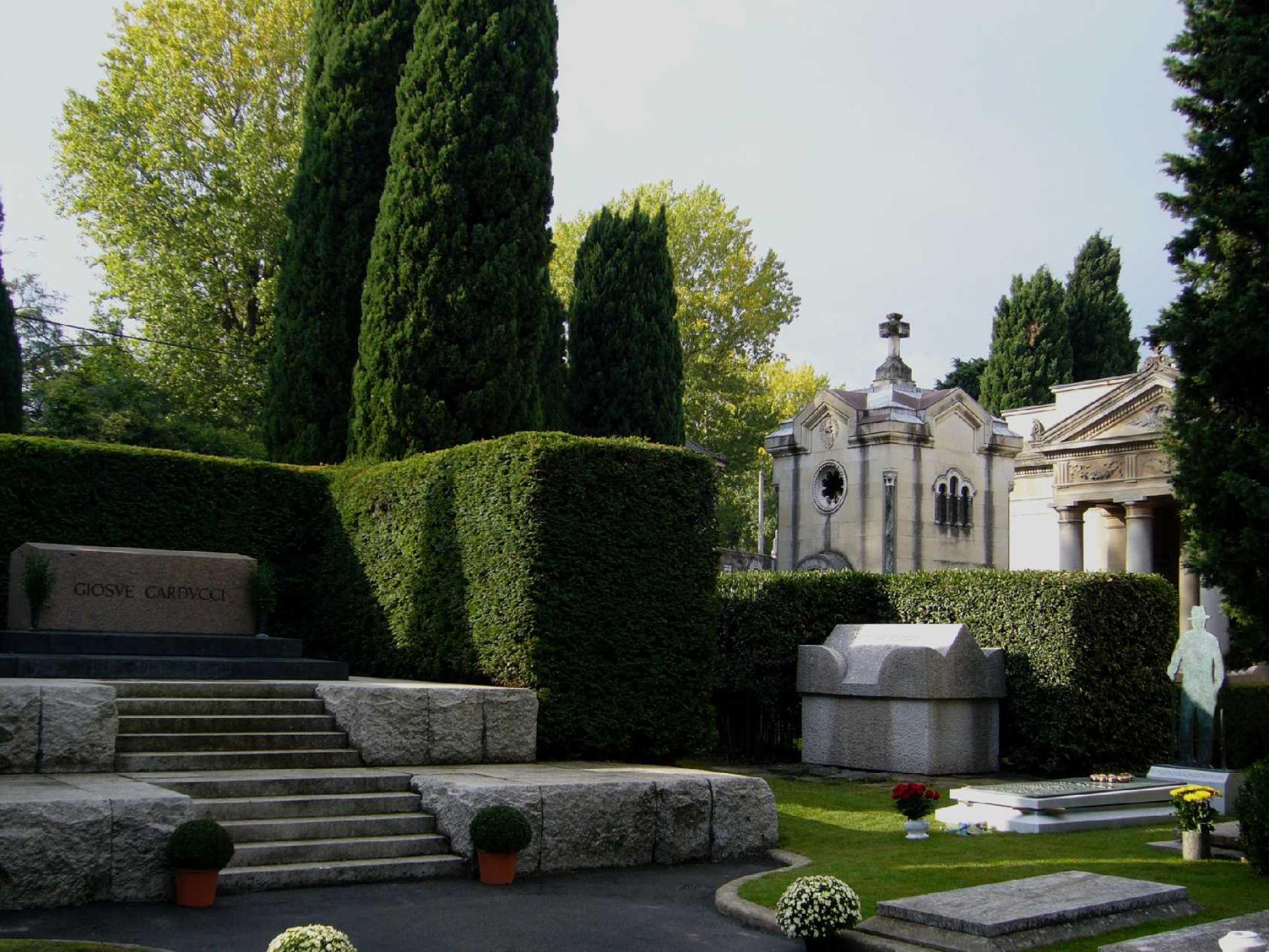
Certosa di Bologna, Campo Carducci. From the left: the tomb of Nobel Prize winner Giosue Carducci (1835–1907); the sarcophagus of the composer Ottorino Respighi (1879–1936) and the monument to the singer Lucio Dalla (1943–2012). © Museo Risorgimento Bologna – via storiaememoriadibologna.it
Which famous figures are buried there?
From Lucio Dalla to Giosuè Carducci, the Certosa di Bologna is the final resting place of some of the city’s most prominent figures from its artistic and cultural history.
When can you visit the Certosa di Bologna?
You can visit the Historic Monumental Cemetery of the Certosa di Bologna on guided tours. Visit the official website to find out the dates and available tours.
Alternatively, admission is free for self-guided visits.
The main entrance is at Via della Certosa, 18.
Visit the official website for information on opening hours.
Why is the Certosa di Bologna described as a “Historic Monumental Cemetery”?
Much more than a burial ground, the Certosa di Bologna is a monumental complex of great historical, artistic and architectural value, so much so that it is a veritable ‘open-air museum’. As far back as the 19th century, it was one of the favourite destinations in Bologna for travellers such as Lord Byron, Charles Dickens and Stendhal during their stays in Italy, and it continues to be so today, thanks to the works it houses and the tombs of illustrious figures.
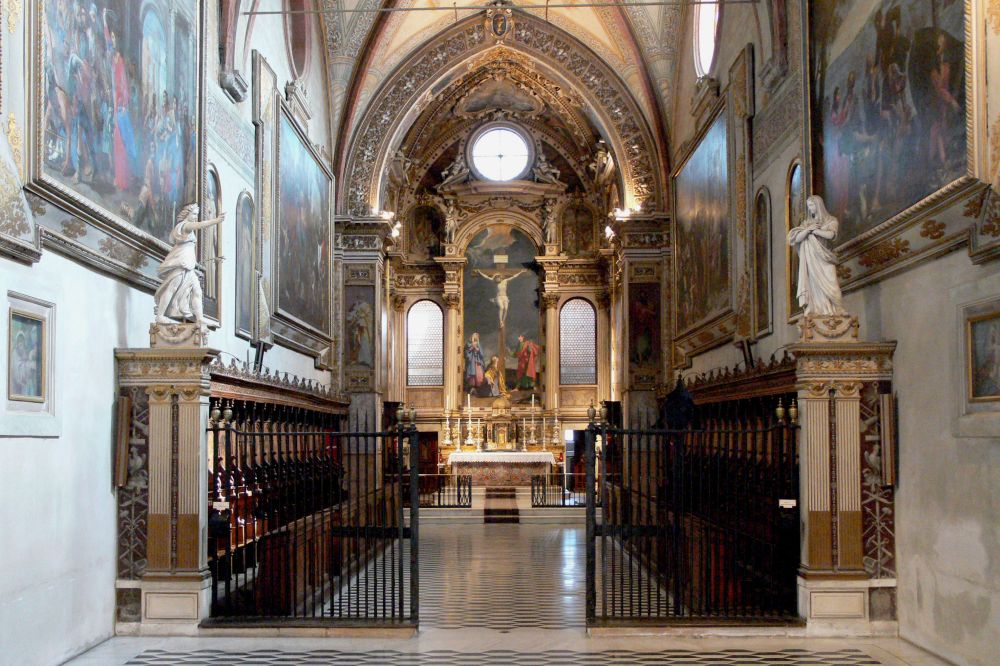
Main chapel of the Church of San Girolamo della Certosa