Basket City Bologna: a tour of the city’s basketball hotspots
Updated on 24 August 2026 From Federico Farinelli

Updated on 24 August 2026 From Federico Farinelli
Bologna is ‘Basket City’ because here, basketball has its own distinctive addresses, buildings and traditions.
Small courts, sports halls and even museums dedicated to basketball can be found throughout the city, all to be explored on this tour, which celebrates the passion, history and culture of this much-loved sport beneath the Two Towers.
The nickname ‘Basket City Bologna’ stems from a history that has filled gyms, squares, parks and sports halls for much of the 20th century and continues to this day.
Virtus and Fortitudo are the two names that have taken this story beyond the city limits. Their rivalry has filled the PalaDozza and marked generations of derbies, with different colours, chants and allegiances all within a few square kilometres. Alongside them, Bologna has had other important teams, from Gira to OARE and Moto Morini. The city’s basketball scene has always had a much broader base than just the two major clubs.
Even the map of Bologna bears this out.
As early as 1932, ‘basketball’ was already being played inside the former church of Santa Lucia. After the war, the Salaborsa in Piazza del Nettuno became a basketball court in the evenings. From 1956, the new Palazzo dello Sport in Piazza Azzarita finally provided the city with a venue built to accommodate thousands of spectators.
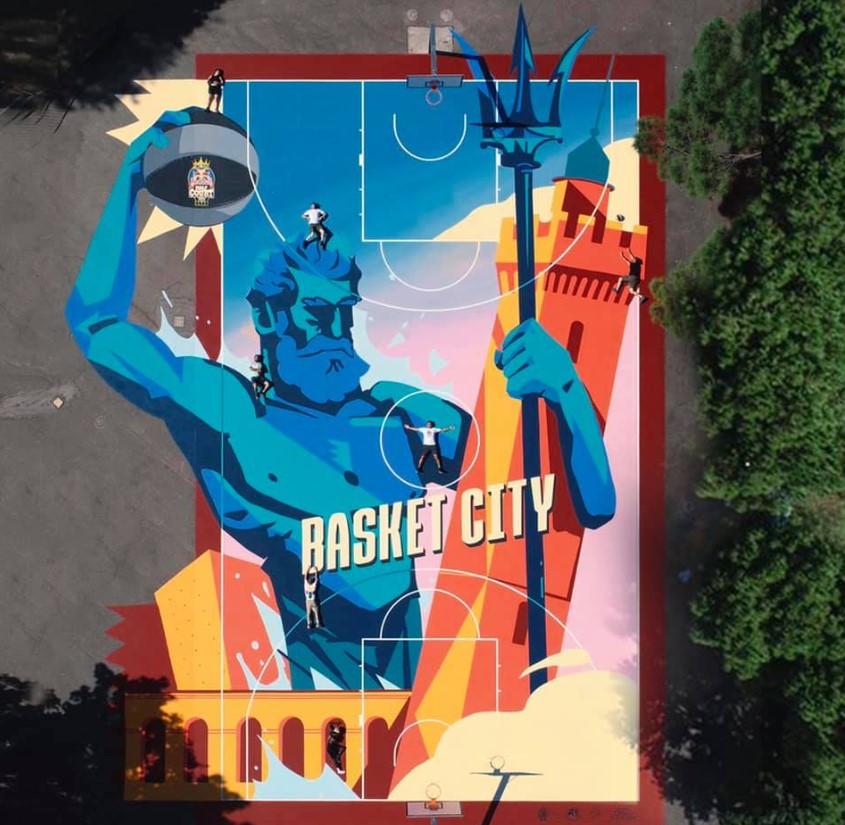
Then there are the playgrounds. At the Giardini Margherita, the summer tournament launched in 1982 brought together local youngsters, Serie A players and big names from far afield. The court at the Gardens is one of the places where the nickname ‘Basket City’ ceases to be just a catchphrase and becomes something you can actually see.
From 2026, there will also be a museum dedicated to Italian basketball. It is, of course, located inside the PalaDozza.
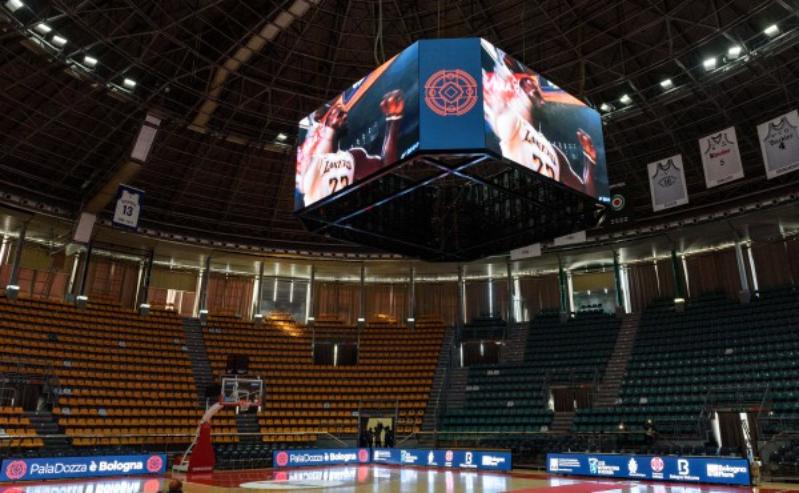
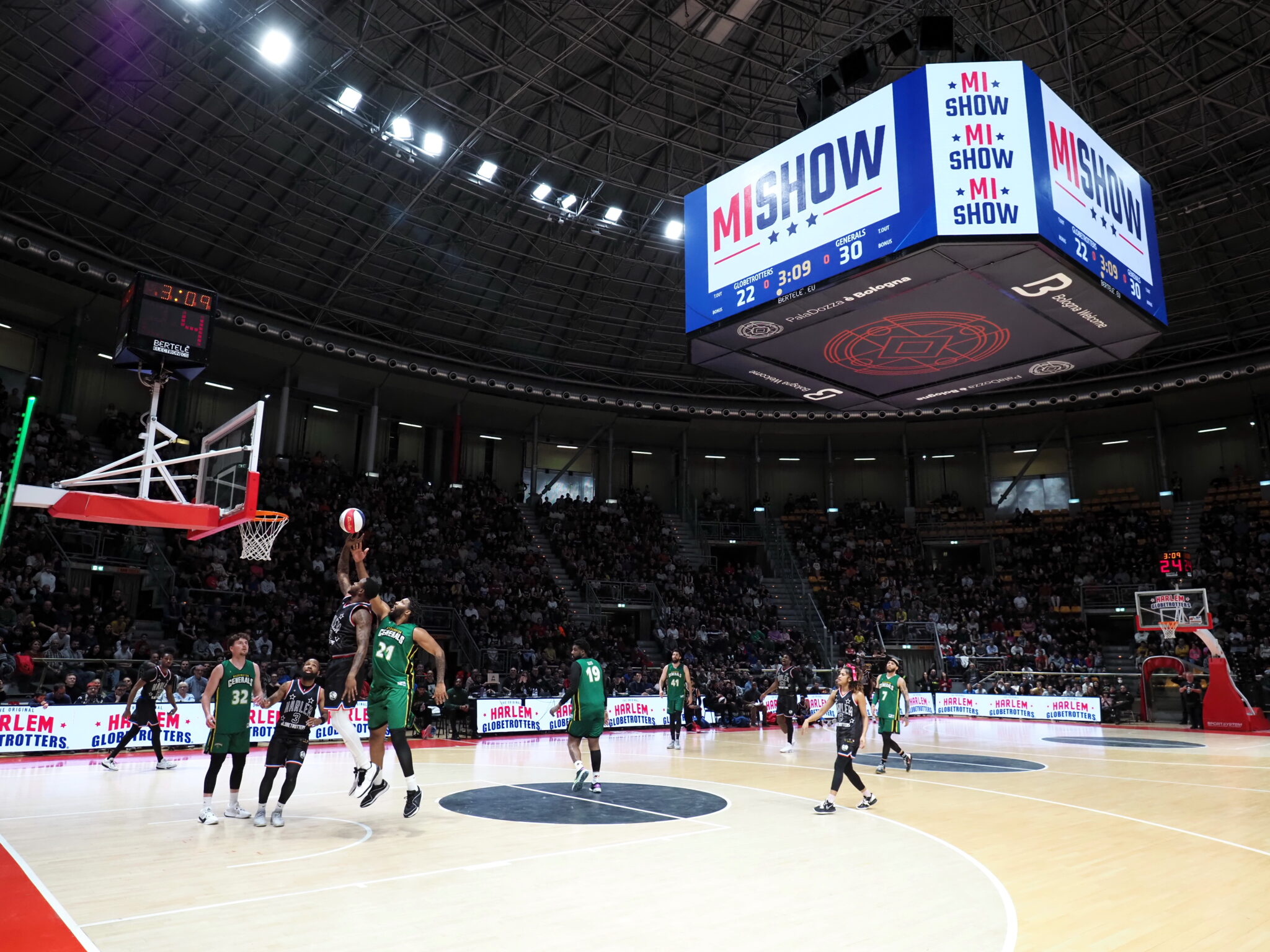
Bologna’s PalaDozza is the place to start if you want to understand the city’s relationship with basketball.
The Palazzo dello Sport opened in 1956, by which time the Sala Borsa had become too small to accommodate the crowds for basketball and boxing. Since 1996, it has borne the name of Giuseppe Dozza, the mayor who commissioned its construction. Piazza Azzarita soon became one of the city’s best-known sporting venues.
Virtus, Fortitudo and Gira have all played within these walls. Derbies, finals and European matches have been contested here; the stands, situated very close to the court, have done the rest. For decades, anyone talking about basketball in Bologna would sooner or later end up beneath the great dome in Piazza Azzarita.
The connection with Fortitudo is also rooted in geography. The historic Palestra Furla is not far away, on Via San Felice. For many blue-and-white supporters, the area between Via San Felice and Piazza Azzarita remains a distinct part of the club’s history.
Virtus’s recent history has become more mobile. In recent seasons, the ‘V Nere’ have played some matches at the PalaDozza and others at the temporary Virtus Arena set up in Bologna’s exhibition centre. Even the Serie A play-offs were held at the arena in the exhibition centre.
Not far away, BolognaFiere’s new multi-purpose hall is under construction on the site of the former Hall 35. The project envisages around 10,500 seats and a space capable of hosting trade fairs, concerts and basketball matches, including those involving Virtus. For the black-and-white club, this will serve as a permanent home within the exhibition centre grounds.
The PalaDozza and the new arena thus represent two distinct phases in Bologna’s basketball history. Piazza Azzarita holds nearly 70 years of matches and memories; the Fiera is preparing the venue for the major fixtures of the coming years.
To attend a match at the PalaDozza, it’s always a good idea to check the up-to-date fixture list: teams, competitions and venues may change during the season.
Address: Piazza Manfredi Azzarita, 3, 40122 Bologna BO
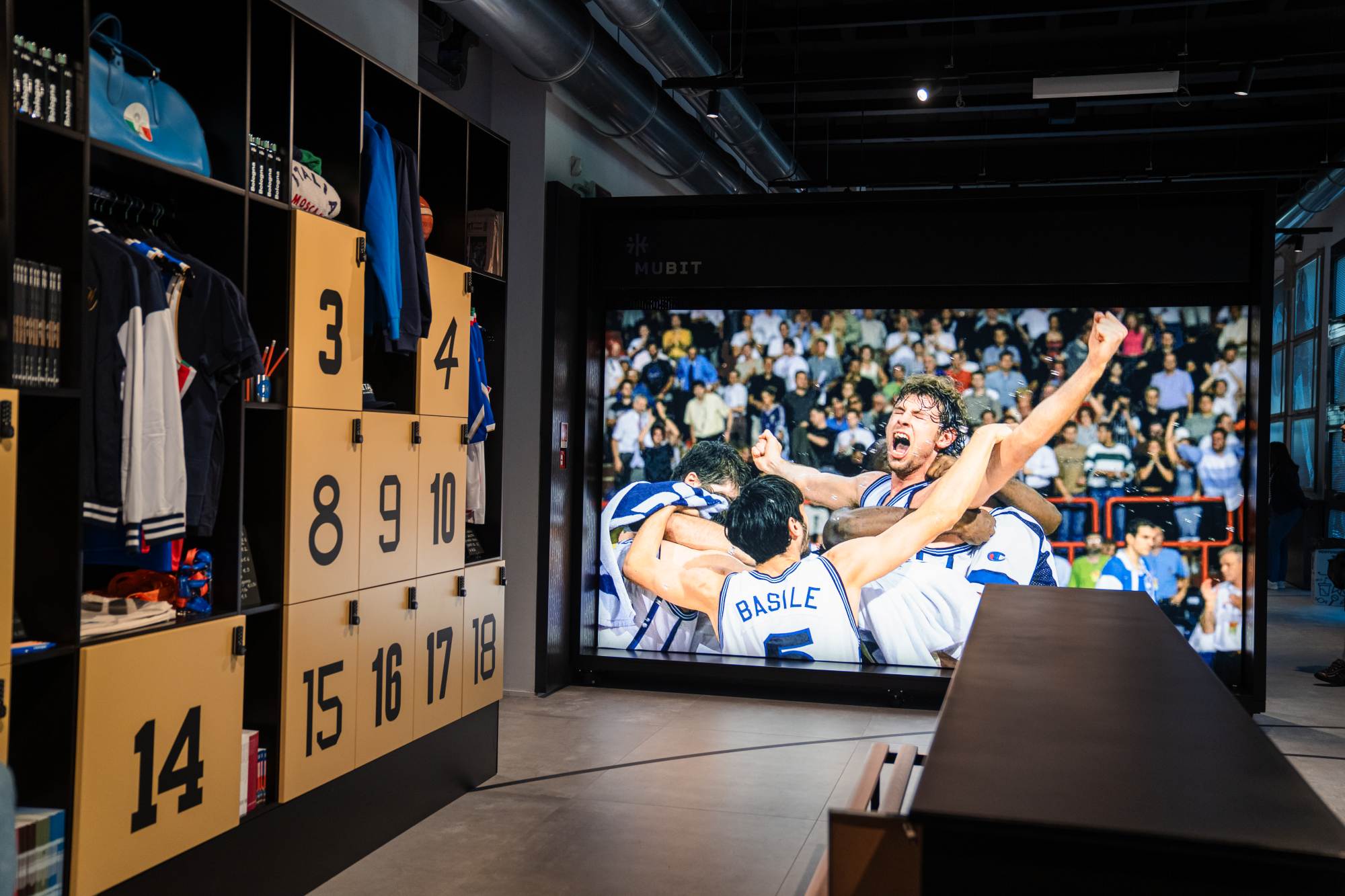
From 18 April 2026, the PalaDozza will also be home to MUBIT, the Italian Basketball Museum. It is the first permanent museum entirely dedicated to Italian basketball.
The choice of the PalaDozza makes immediate sense. The museum is housed in a building where some of the teams and champions featured in the exhibition have played.
MUBIT houses memorabilia, photographs, videos and digital materials. Its opening exhibition, ‘Italbasket: over 100 years of an infinite blue’, traces the history of the Italian men’s and women’s national teams and brings together trophies, jerseys, documents and personal stories.
The exhibition is also well worth a visit for those who know little about Virtus and Fortitudo, as the display focuses on the national history of basketball. Bologna is home to the museum, whilst the narrative spans teams, athletes and national sides from all over Italy.
Opening hours are Friday to Monday from 11.00 to 18.00.
Discover the MUBIT, the Italian Basketball Museum
Address: Piazza Manfredi Azzarita, 40122 Bologna BO
To trace the earliest history of basketball in Bologna, you need to leave Piazza Azzarita and walk towards the city centre. Some of the buildings you come across today served very different purposes when the first basketball hoops arrived.
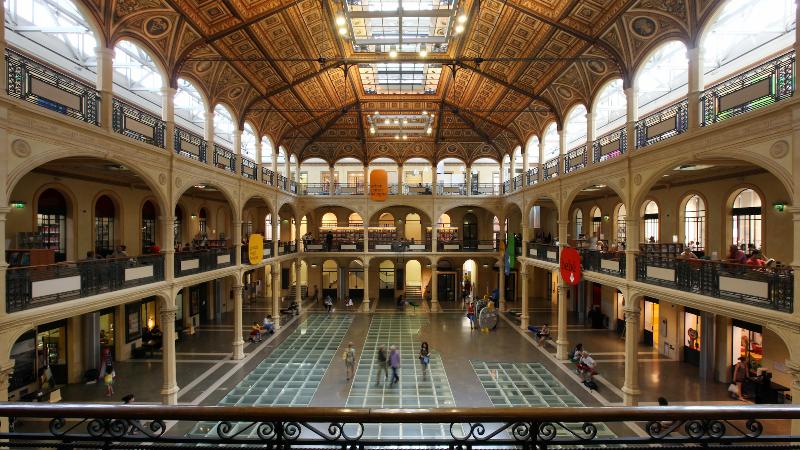
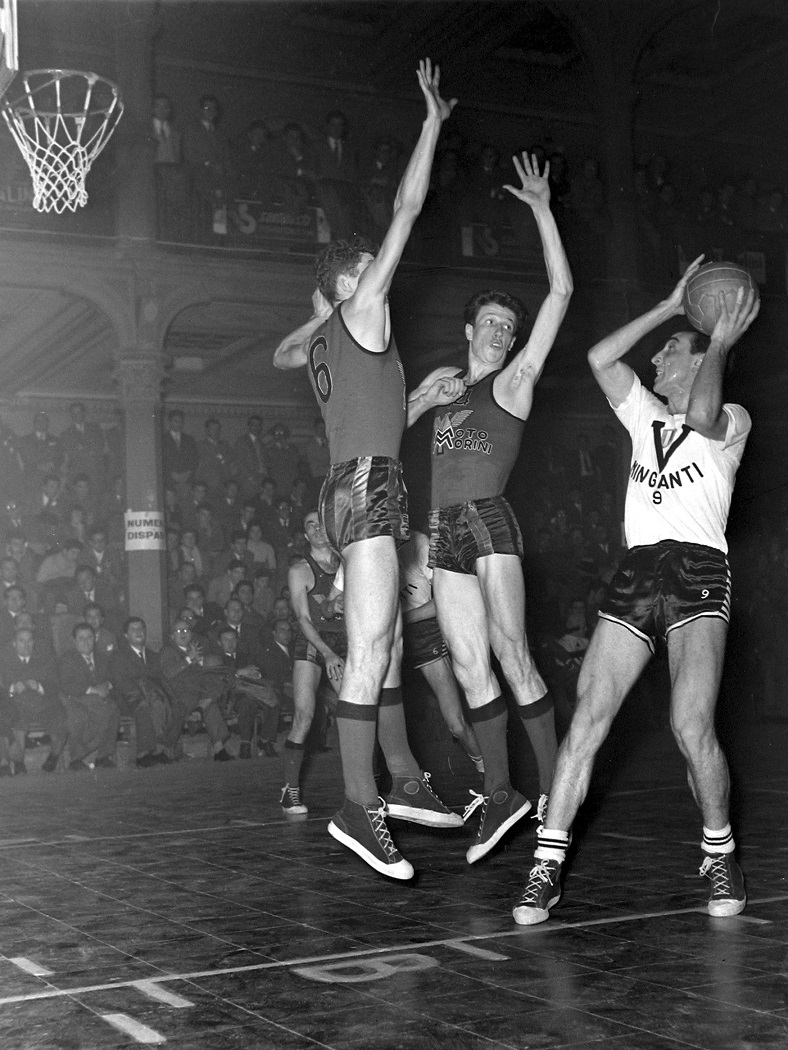
Today, you enter the Salaborsa Library to read, study or visit the archaeological excavations of the ancient Roman settlement. In the post-war period, in the evenings, the hall would become a sports hall.
Stockbrokers worked here during the day. Then the court and the makeshift stands would be set up. The crowd would gather on the balconies and watch Virtus, Gira and OARE from above.
It is hard to find a similar chapter in the history of Italian basketball elsewhere: the hall of a stock exchange, right in the city centre, packed with spectators for a match.
Virtus played here during the years of their post-war league titles. On 1 May 1955, for example, they beat Borletti Milano 72–57 in the final match of the season and won the title.
Then the crowds grew too large. The new Palazzo dello Sport in Piazza Azzarita was built precisely to meet the need for a larger venue.
Address: Piazza del Nettuno, 3, 40124 Bologna BO
The story goes back even further.
The former church of Santa Lucia, in Via Castiglione, was entrusted in 1873 to the Società Sezionale di Ginnastica, the future SEF Virtus. It was here, in 1932, that one of the city’s first matches of what was then known as “palla al cesto” was played.
The following year, the basketball section was established. The V Nere used Santa Lucia as their home ground during the years when Italian basketball was still in the process of establishing its rules, leagues and fan base.
Today, Santa Lucia is the Aula Magna of the University of Bologna. The interior is used for ceremonies and events, and access depends on the University’s calendar. Even when viewed from the outside, the building helps to reveal a part of the city that would otherwise remain unseen.
Address: Via Castiglione, 23, 40124 Bologna BO
On Via San Felice lies another location linked to the city’s history: the Furla Sports Hall, associated with Fortitudo. This place should be considered an off-site stop, as access is not that of a normal attraction open to the public.
Address: Via S. Felice, 103, 40122 Bologna BO
The history of Virtus continues northwards, at the Arcoveggio.
The Gianluigi Porelli Sports Hall, opened in 1981, is one of the venues linked to the black-and-white club’s activities and training sessions. Here too, access to the interior depends on the facility’s schedule.
Address: Via dell'Arcoveggio, 49/2, 40129 Bologna BO
Santa Lucia, Salaborsa, PalaDozza and Arcoveggio thus allow you to trace almost a century of basketball simply by moving from one neighbourhood to another.
Basket City also has its own distinctive sound: that of the ball bouncing on concrete.
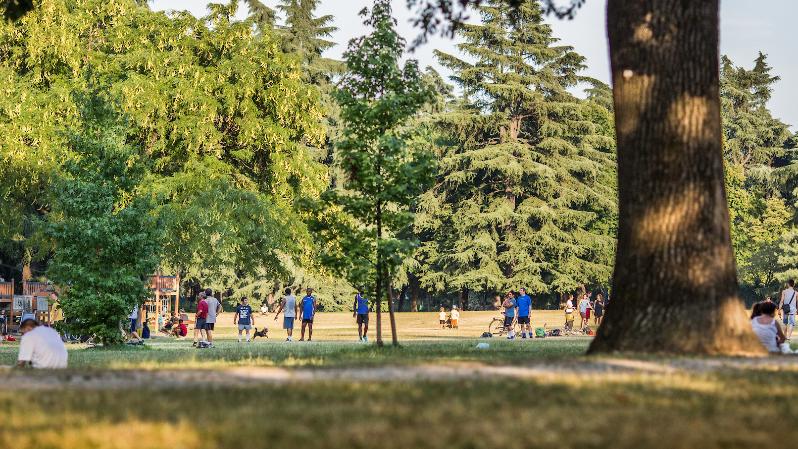
The best-known spot is the playground at the Giardini Margherita, often simply called “the Gardens” by those involved in the Bologna basketball scene. The first official tournament was held there in 1982. Since then, the court has hosted young players, Serie A basketball players, national team members and champions from abroad.
Today, the playground is named after the sports journalist Gianni Cristofori. Every summer, the Walter Bussolari Playground returns, one of the city’s best-known basketball events. The 2026 edition was the 43rd.
Here, basketball has a different rhythm to that of the indoor arena. People arrive by bike, watch from the fence, wait for their turn, or spend an evening watching the tournament matches. The court is situated within one of Bologna’s most popular parks, accessible from Porta Santo Stefano or Porta Castiglione.
Address: Viale Giovanni Gozzadini, 40136 Bologna BO
Behind the PalaDozza, in the Giardino Nanetti, lies the playground dedicated to Federico Dordei. The location speaks volumes: the court is situated between the PalaDozza and the Palestra Furla area, in a part of Bologna steeped in Fortitudo history.
Address: Piazza della Resistenza, Bologna
Not far from the station, the Giardino Graziella Fava has another playground with a strong basketball identity. The court was refurbished with the help of the young people from the ‘Regaz di Fava’ group and, in 2025, was named after Renato Albonico, a Bolognese coach who also worked with Virtus and Fortitudo.
Read also the interview to one of the players of Giardino Fava playground
Address: V. Milazzo, 24, 40121 Bologna BO
Over the years, the City Council has also worked on several other city courts, from the Giardini Penazzi to the Lunetta Gamberini, via Fondo Comini and other neighbourhood parks.
If you want to understand why Bologna continues to be known as ‘Basket City’, the playgrounds are just as important as the sports halls. At the Gardens, at the Fava or behind Piazza Azzarita, basketball returns to its simplest form: a basket, a ball and someone who fancies a game.
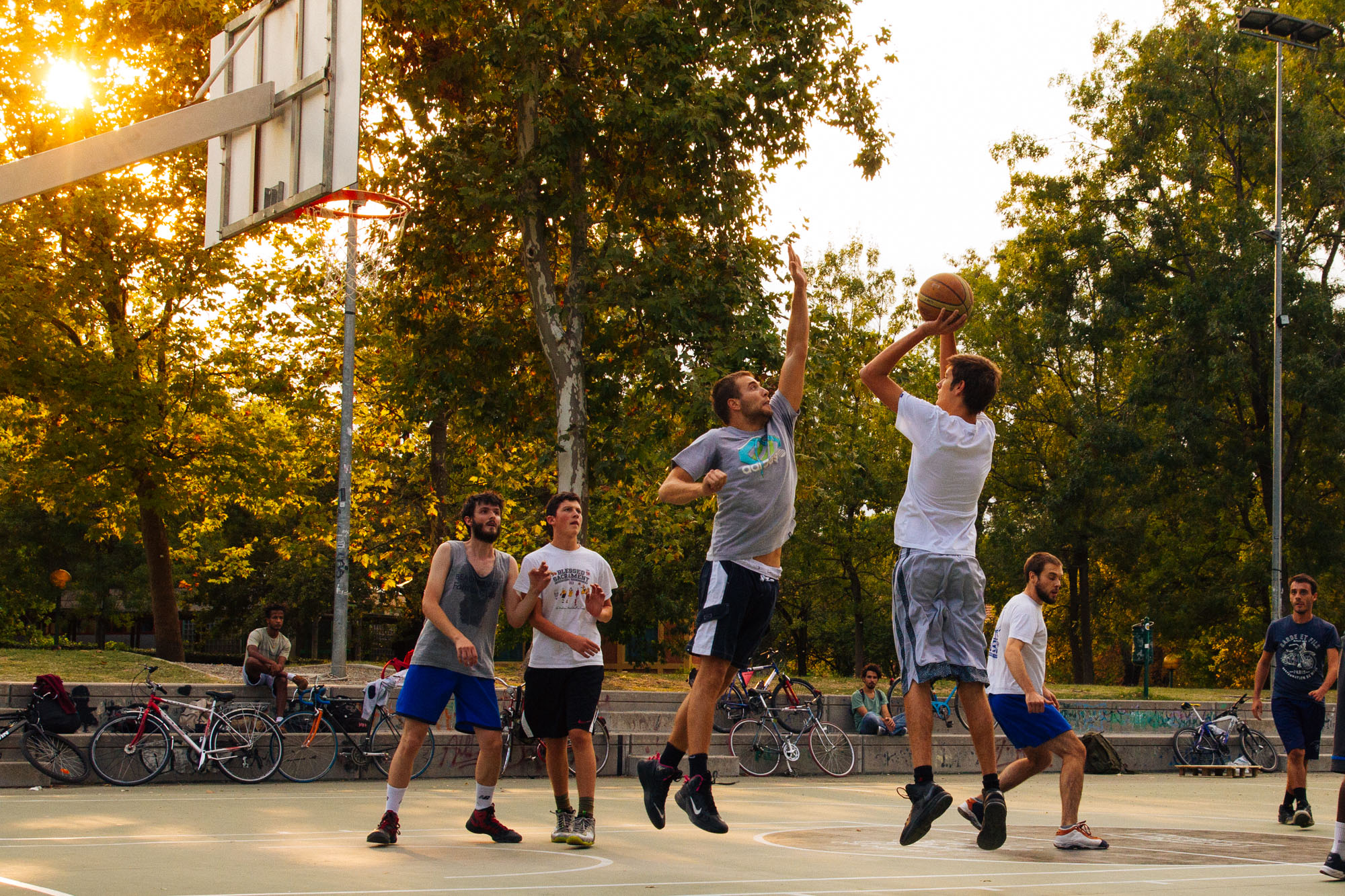
Bologna is known as ‘Basket City’ because of the city’s long-standing connection with basketball. Virtus and Fortitudo, the PalaDozza, the matches played in the old Sala Borsa and at Santa Lucia, the Giardini Margherita tournament and the city’s street courts have all ensured that basketball has a firm place in Bolognese life.
The PalaDozza is open to the public during matches, concerts and events. To see the arena from the inside, it’s therefore best to check the calendar before your visit. Inside the arena, you’ll also find the MUBIT, which has its own opening days and times.
The MUBIT is located inside the PalaDozza, in Piazza Manfredi Azzarita in Bologna. The museum opened on 18 April 2026 and is dedicated to the history of Italian basketball, featuring memorabilia, photographs, videos and interactive displays.
The best-known basketball court is in the Giardini Margherita, often called ‘the Gardens’ by basketball fans in Bologna. Other courts can be found in the Giardino Nanetti, the Giardino Graziella Fava and in various city parks. Organised events and activities may temporarily affect the availability of the courts.
For PalaDozza, MUBIT, Salaborsa, Santa Lucia and Palestra Furla, you should allow around 3 hours, excluding any sporting events. If you’re visiting Giardini Margherita, Giardino Nanetti, Giardino Graziella Fava and the extension towards Arcoveggio, it’s best to set aside at least half a day.