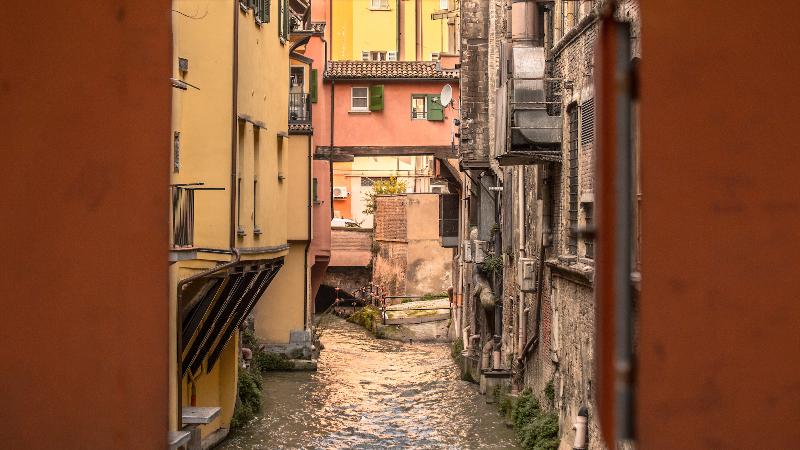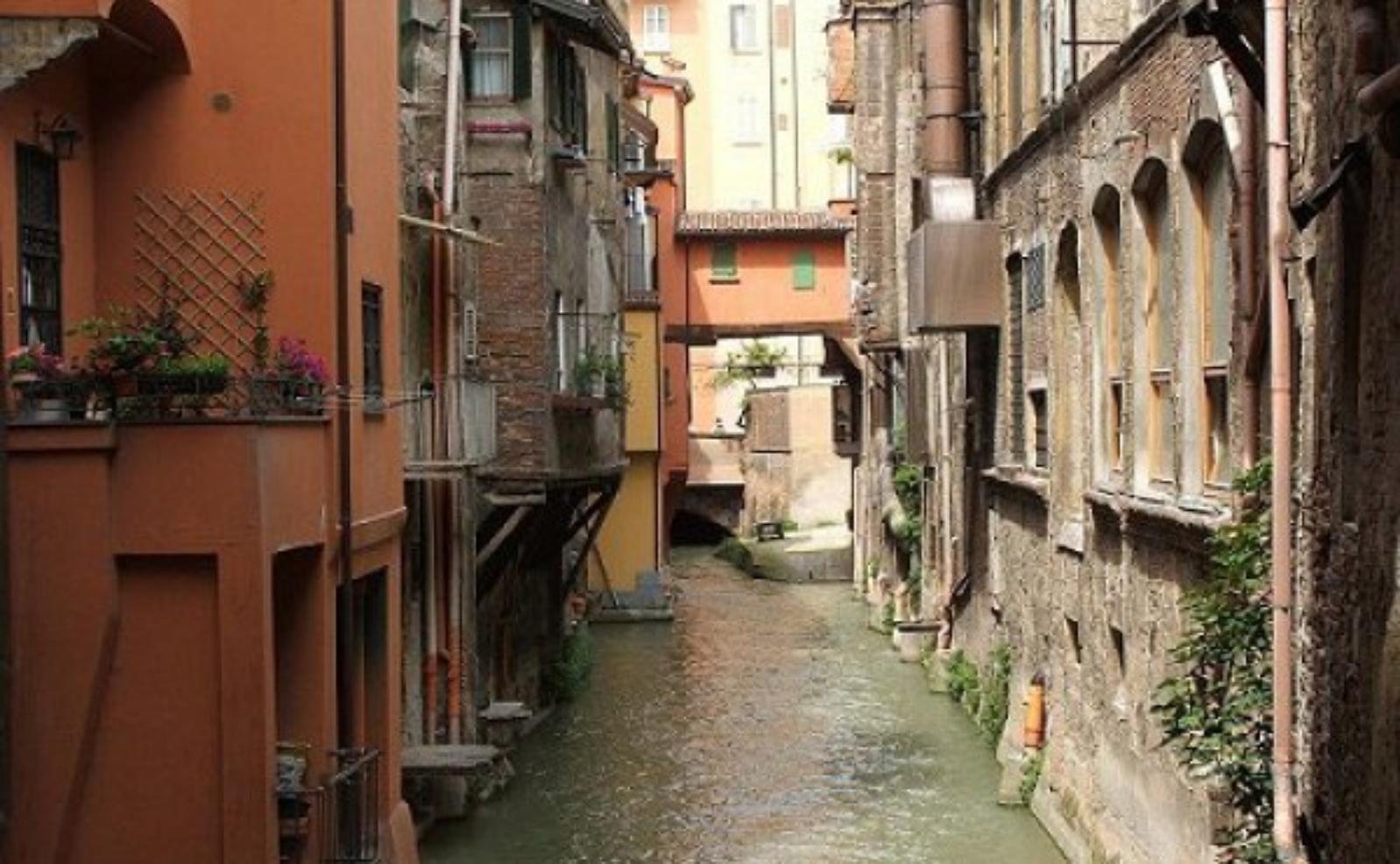
The Canale delle Moline is the continuation of the Canale di Reno beyond the Cavaticcio diversion and Via Indipendenza. Just outside the 14th-century city walls, it joins the Torrente Aposa, which flows beneath Bologna’s historic centre, and together they empty into the Canale Navile near the Bova support structure. For much of its course, the Canale delle Moline runs between buildings, which is why it remained hidden from view for centuries. In recent years, the viewpoints from the bridges on Via Oberdan and Via Malcontenti have been reopened, complementing the picturesque little window on Via Piella.
At the end of the 12th century, through an extraordinary feat of engineering, the people of Bologna created two major hydraulic works that brought water to a city that had none: two artificial canals, extending for a total of more than 27 kilometres, diverted respectively from the Fiume Savena to the east and the Fiume Reno to the west, and channelled into the city centre. The power of the water drove hundreds of waterwheels that supplied energy to silk mills, rice mills and many other manufacturing activities. The Bolognese system was unique because industrial facilities were not located directly on the main canals, but on the numerous secondary canals created through locks and diversions.
In 2023, a memorandum of understanding was signed between Hera and the Bologna Canal Consortia for the restoration project of the Canale delle Moline along its entire covered section. The agreement made it possible to begin the works currently underway, which are scheduled for completion in 2026.
Interests
- Nature & Landscape
Map
Canale delle Moline
Via Capo di Lucca - 40126