Discover the Etruscans
Updated on 17 July 2026 From Davide Sarti

Before the towers, the porticoes and the University, Bologna was Felsina, an Etruscan town that stretched across the south-western part of what is now the historic centre, with necropolises on either side. Even today, from the centre of Bologna to the Apennines, you can discover its history through museums, parks and archaeological sites that take us back over two thousand years.
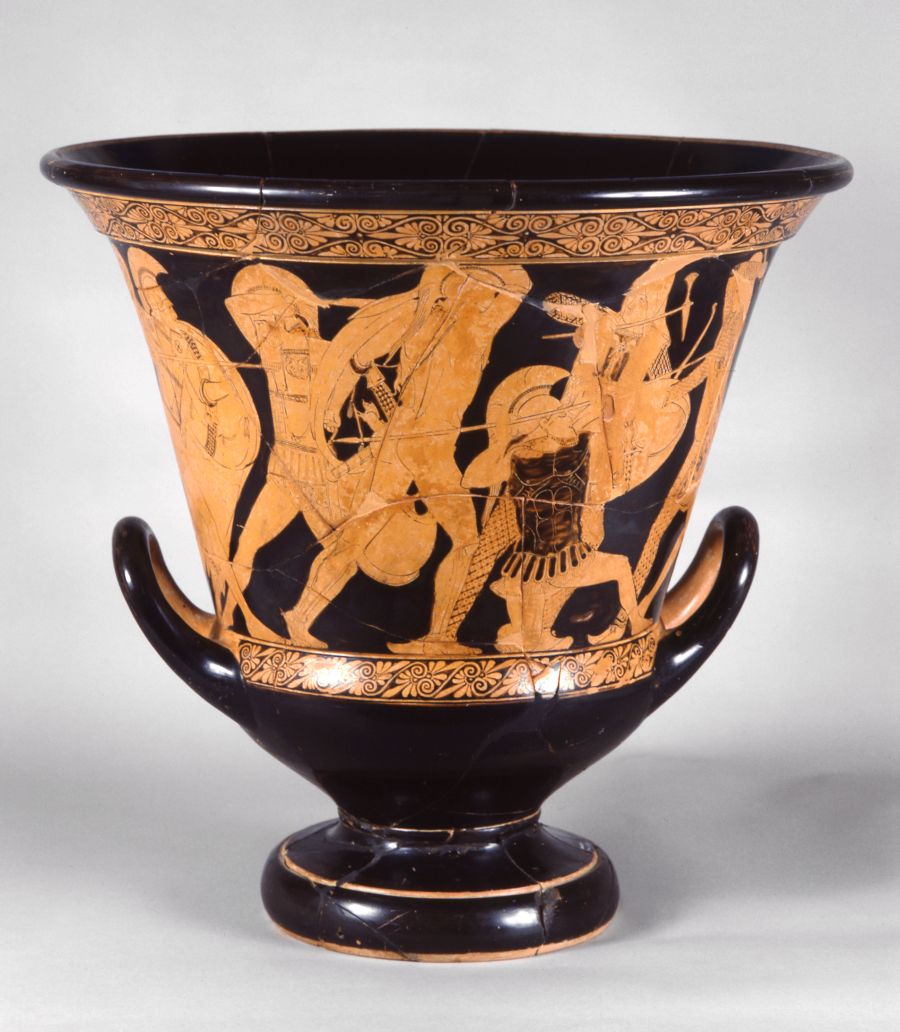
A journey through Etruscan Bologna can only begin at the Civic Archaeological Museum, in the heart of the historic centre. Its collections trace the city’s development from the Villanovan period, dating from the 9th century BC, through to the arrival of the Celts in the 4th century BC and on to the Roman era. Among the most fascinating artefacts are funerary urns, vases, bronze objects and decorated stelae. Don’t miss the famous Situla della Certosa, a bronze vessel used as a precious cinerary urn in a woman’s tomb, decorated with scenes of daily life, hunting and a sequence of real and mythical animals.
Why visit: it offers the most comprehensive overview of Etruscan Bologna and allows you to admire some of its most precious artefacts.
➝ Address: Via dell’Archiginnasio 2, Bologna
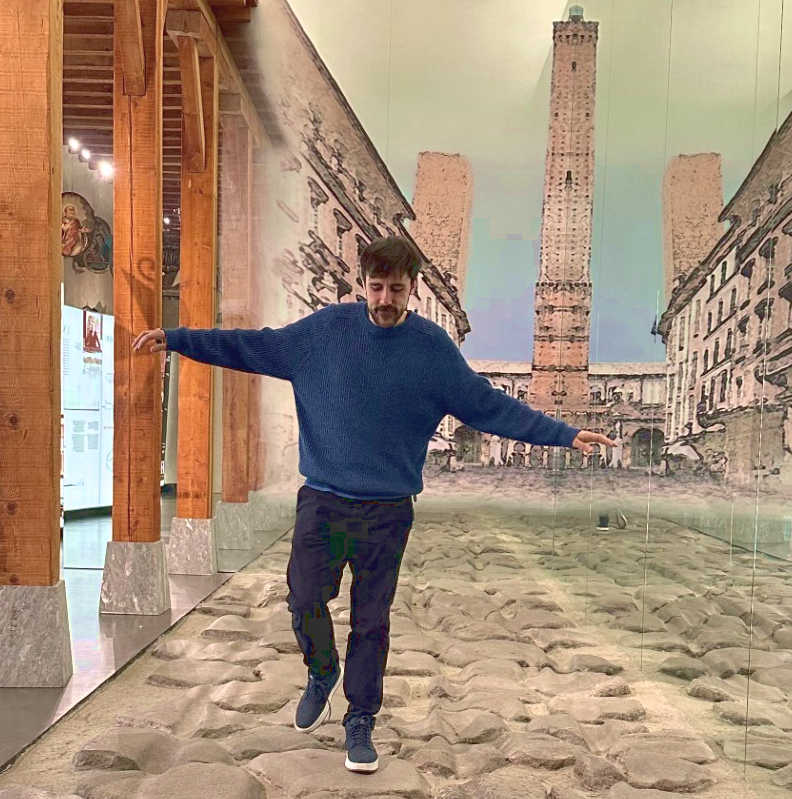
Just a short walk away is Palazzo Pepoli, which houses the Bologna History Museum. Archaeological finds, reconstructions and multimedia installations guide visitors on a journey through the city’s history, beginning with its foundation as an Etruscan settlement. The first section also features a reconstruction of a small cave, inside which you can admire original artefacts.
Why visit: it’s ideal for anyone looking for an engaging, multimedia introduction to the city’s history.
➝ Address: Via Castiglione 10, Bologna
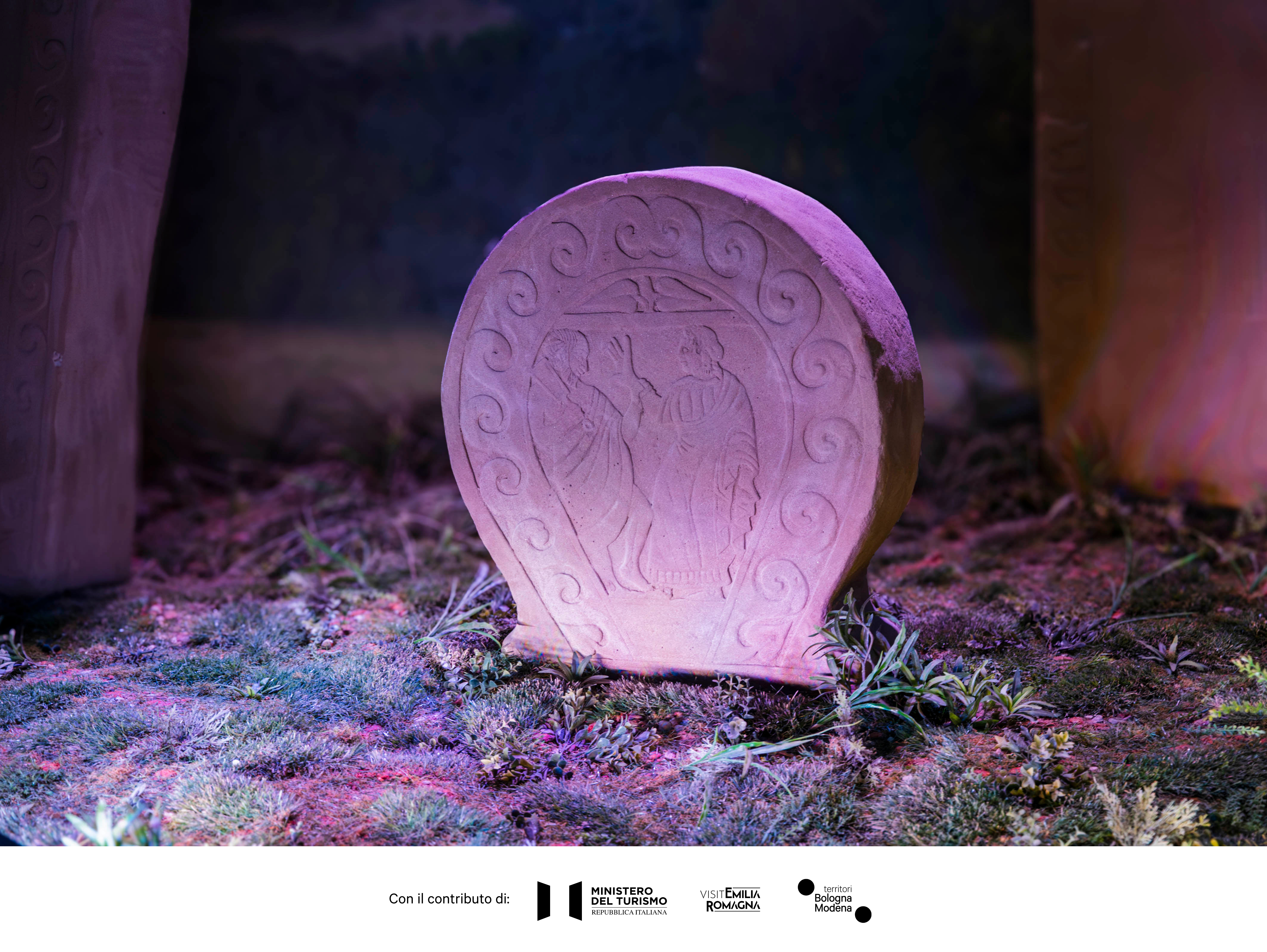
Even one of the parks most loved and frequented by the people of Bologna harbours an ancient past. During the construction of the Margherita Gardens in the late nineteenth century, over 230 Etruscan tombs were discovered. The finds included vases, personal items and bronze vessels used during funeral rites. As you stroll through the park, you can still see a genuine stone sarcophagus and a reconstruction of a Villanovan hut, reminders of the people who inhabited the area almost three thousand years ago.
Why visit: it allows you to combine a stroll through the greenery with the discovery of archaeological traces hidden within the city.
➝ Address: Viale Giovanni Gozzadini, Bologna
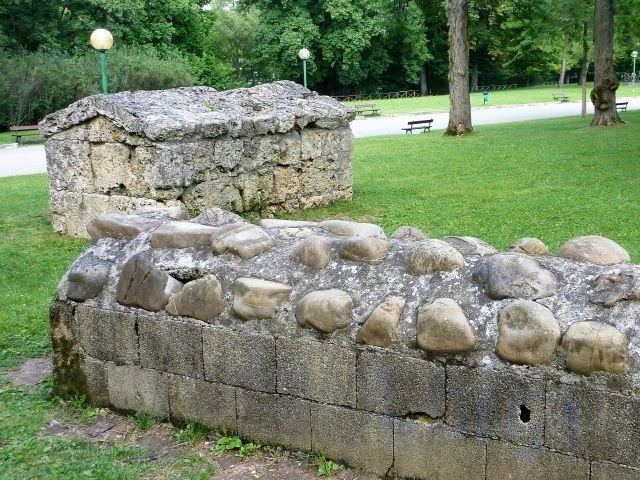
via bibliotecasalaborsa.it
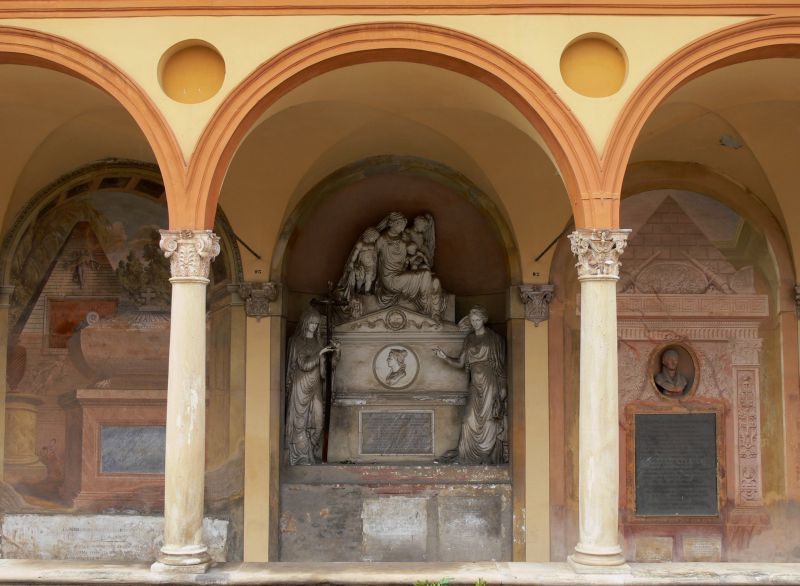
Another important Etruscan necropolis was discovered within the Certosa in Bologna during extension works in 1869. The excavations brought 417 tombs to light. Many of the artefacts found are now housed in the Civic Archaeological Museum. The Certosa is also the final resting place of Antonio Zannoni and Giovanni Gozzadini, key figures in the rediscovery of Etruscan Bologna.
Why visit: it allows you to immerse yourself in the monumental beauty of the Certosa whilst, at the same time, taking a journey back into Bologna’s most ancient history.
➝ Address: Via della Certosa 18, Bologna
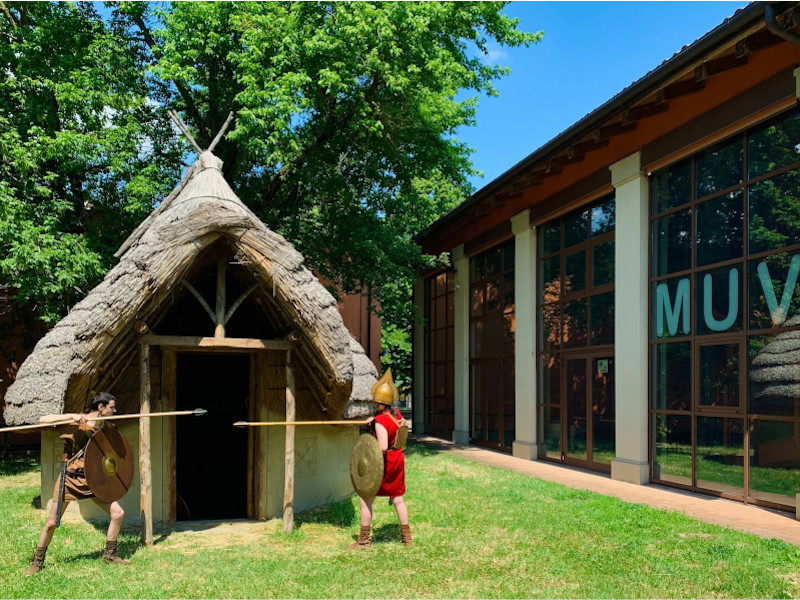
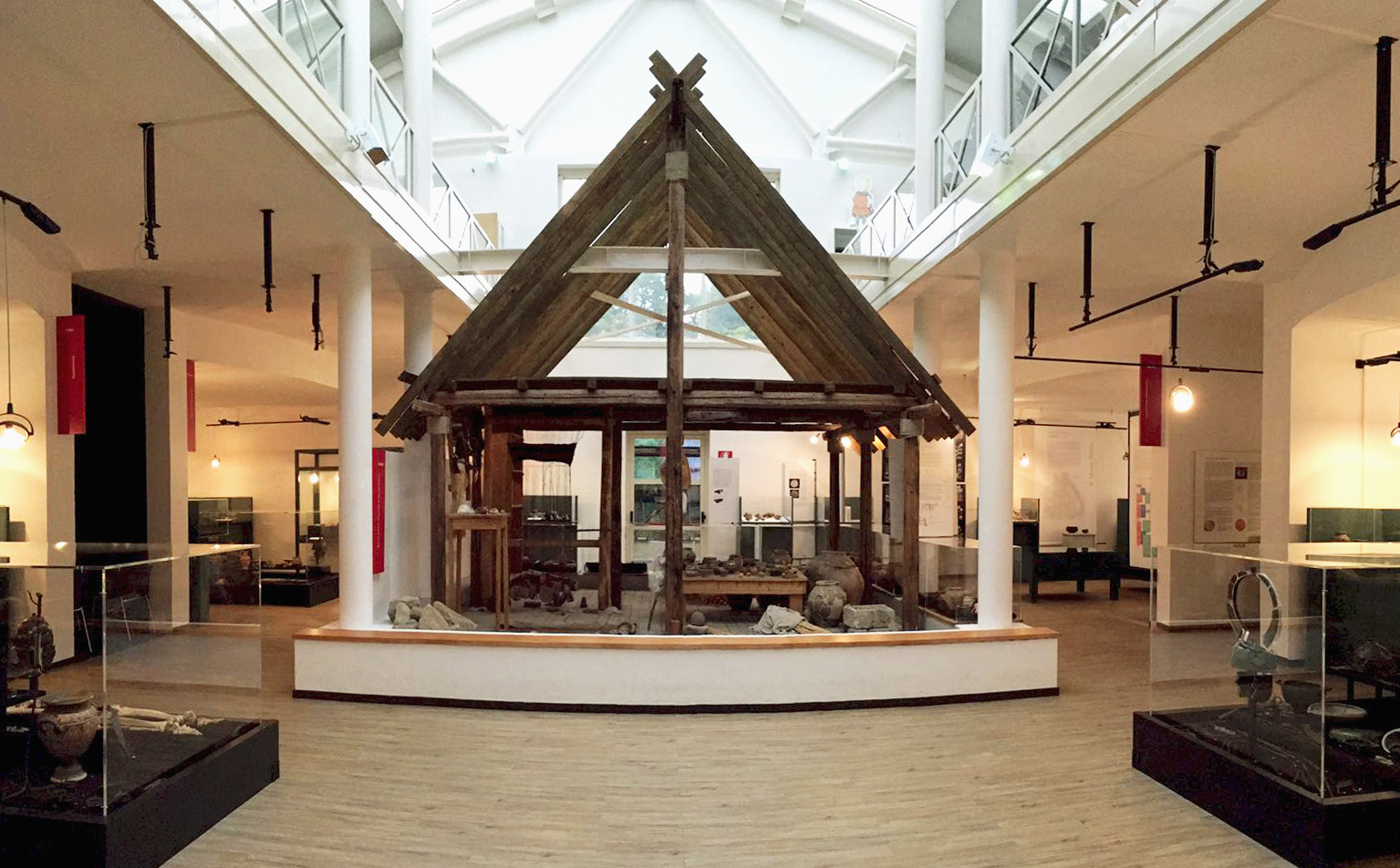
Just a few kilometres from the town centre lies the MUV – Museum of Villanovan Civilisation in Castenaso. It was in the nearby hamlet of Villanova, starting in 1853, that Count Giovanni Gozzadini discovered traces of a previously unknown culture, to which he gave its name. The museum displays artefacts from the excavations at Marano di Castenaso and recounts the earliest phase of Etruscan civilisation, which flourished between the 9th and 7th centuries BC, through an evocative, multimedia exhibition that combines archaeology with the history of the local area. A hut has also been reconstructed in the garden to illustrate daily life at that time.
Why visit: it helps visitors learn about the earliest origins of Etruscan civilisation through artefacts, reconstructions and an exhibition suitable for all ages.
➝ Address: Piazza Raffaele Bassi 1, Castenaso
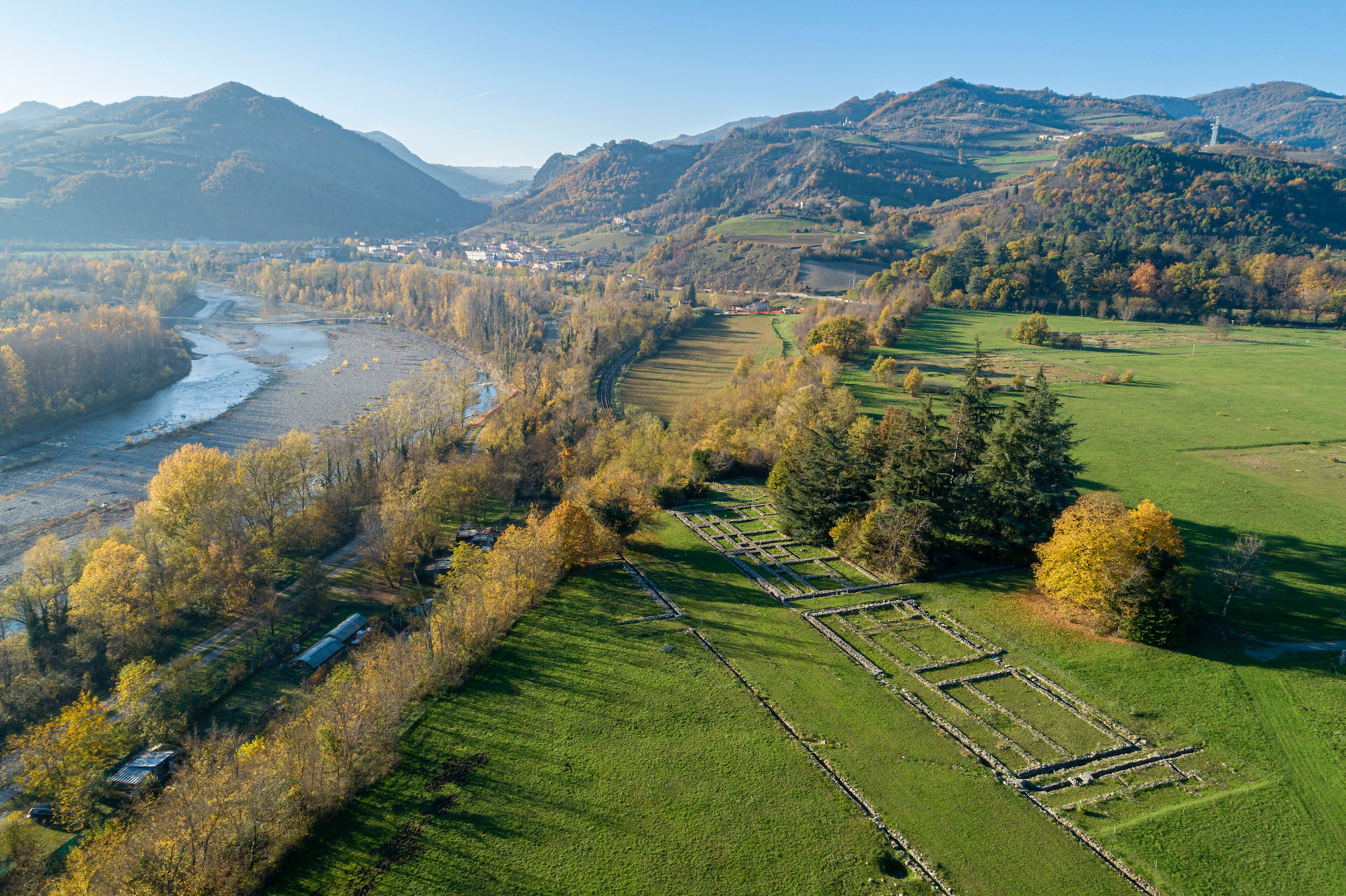
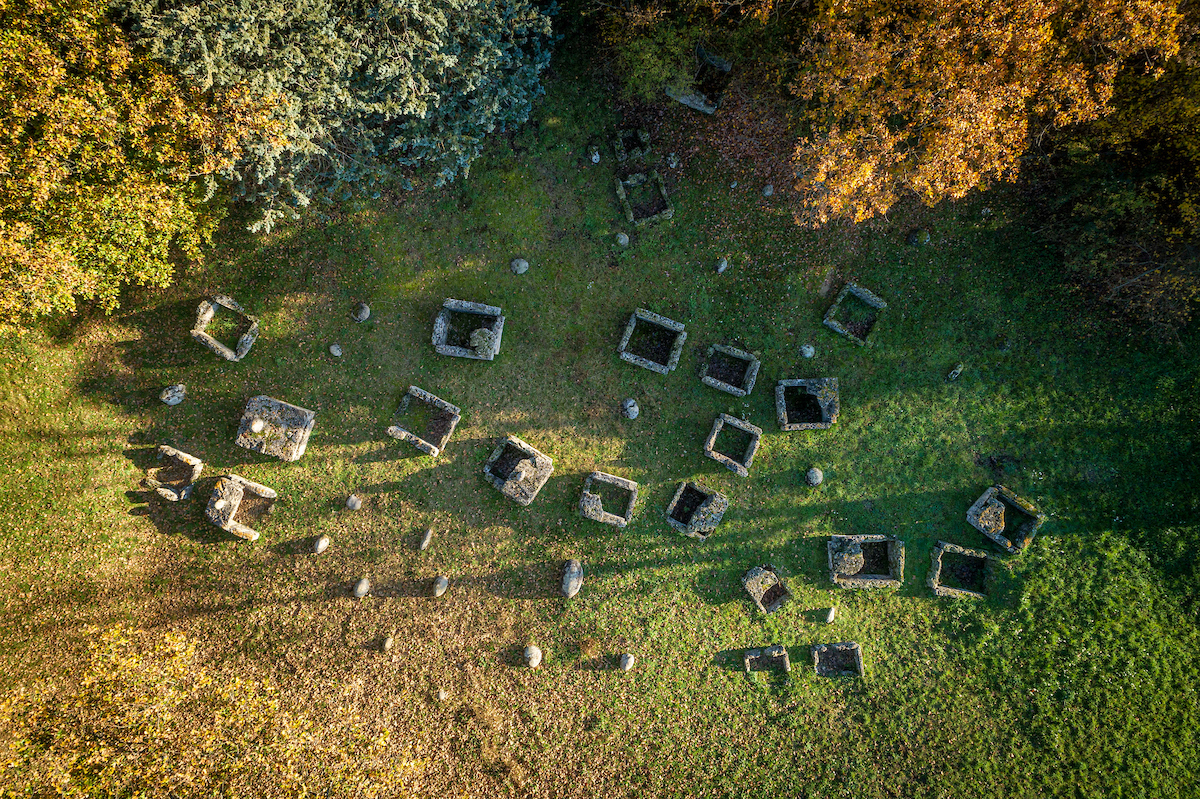
Continuing towards the Apennines, you reach Marzabotto, home to the Pompeo Aria National Etruscan Museum. Here you can visit the archaeological site of ancient Kainua, one of the best-excavated Etruscan cities, walking along the route of the ancient roads and recognising the spaces once occupied by dwellings, workshops, sacred buildings and necropolises.
Why visit: it offers the unique experience of walking along the streets and amongst the buildings of an authentic Etruscan city.
➝ Address: Via Porrettana Sud 13, Marzabotto
The Luigi Fantini Archaeological Museum recounts the encounter between the Celts and the Etruscans through weapons, burials and artefacts unearthed in the Idice Valley. The exhibition also features tactile reproductions, a reconstructed hut and a rare sundial. The visit then continues to the archaeological site of Monte Bibele, which can be reached via a short walk through the woods, amongst the remains of the ancient fortified village.
Why visit: it combines an interactive archaeological tour with a walk through the natural beauty of the Apennines.
➝ Address: Via del Museo 2, Monterenzio
For cycling enthusiasts, the Cycle Route in the Footsteps of the Etruscans combines archaeology and nature along a mountain bike route linking Comacchio to Piombino. In the Bologna area, the route passes through Budrio, Villanova di Castenaso, the historic centre of Bologna, Sasso Marconi and Marzabotto, before continuing through Monte Sole Park, Grizzana Morandi, Montovolo and the Suviana and Brasimone Lakes Park. An original way to discover the sites of Etruscan civilisation whilst cycling through towns, villages and natural landscapes.
Why cycle it: it allows you to explore some of the region’s main Etruscan sites by cycling through towns, villages and natural landscapes.